Skip to main content

Moving Tips

Free Office Relocation Checklist Excel Template

Office Relocation Timeline Checklist

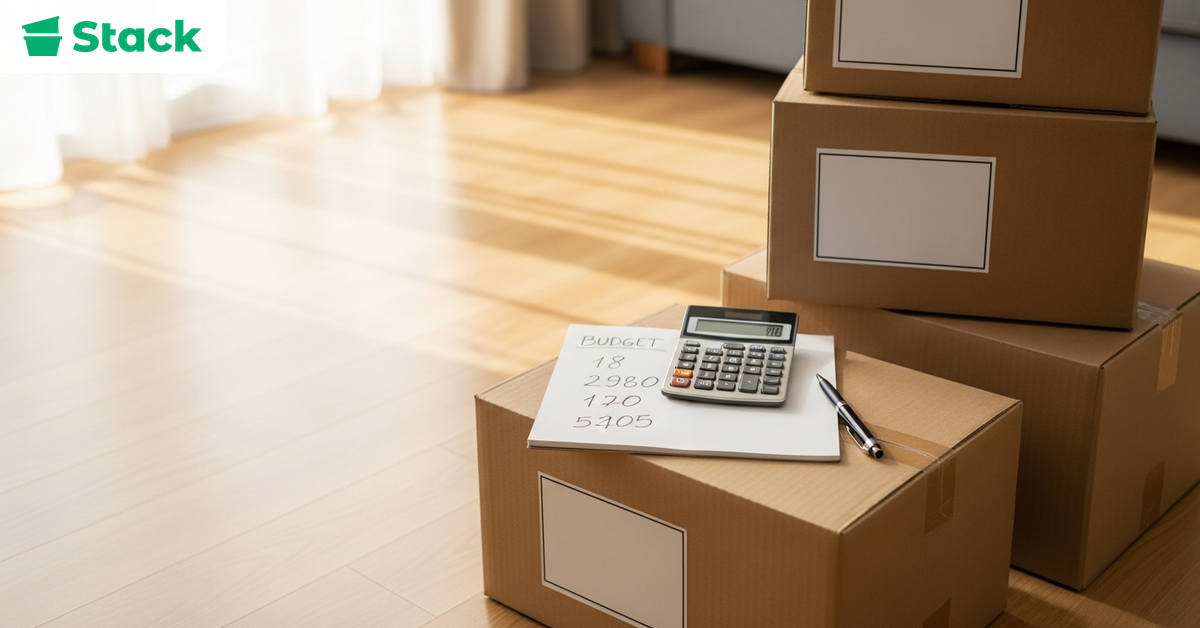
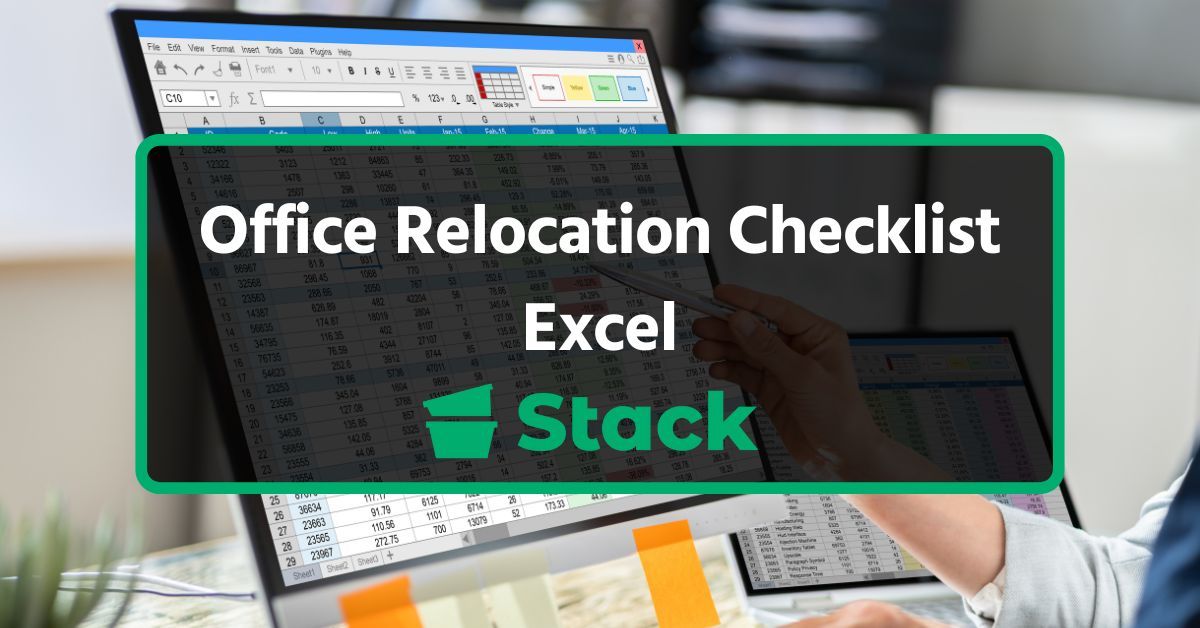
An office relocation involves dozens of moving parts, and without an office relocation checklist, it's easy for important tasks to slip through the cracks during the moving process. That's why many businesses use an office move checklist template to organize responsibilities, track progress, manage budgets, and keep every department aligned before, during, and after the move. Our free office relocation checklist Excel template gives you a simple way to stay organized at every stage of the move from start to finish.

At Stack Moves, we help businesses simplify office relocations with our reusable plastic moving boxes. These boxes are designed to protect office equipment and make packing more efficient no matter the size of your move. Contact us today to book your plastic moving boxes in time for your upcoming move.

In this blog, you'll learn how to create a fool-proof office relocation checklist Excel file for your business. We'll cover the key sections every office move spreadsheet should include, how to use Excel features like formulas and practical tips to help your team stay organized throughout the relocation process.

Why Use Excel for Your Office Move Checklist?

Why Use Excel for Your Office Move Checklist

From our experience we've noticed that the companies with the smoothest moves almost always have a detailed relocation checklist. The biggest benefit of using Excel for your office moving checklist is that it offers flexibility and customization that most tools can't match. Instead of being stuck with a template, you can build your checklist from scratch or customize an existing one.

It also comes with built-in features like filters, conditional formatting, and formulas, which make it easier to stay focused on what's urgent. It's also easy to update and share with team members in real time. Saving your file on a cloud platform like Google Drive or OneDrive allows everyone to access the most current version, preventing miscommunication or outdated lists.

In addition to this, the file is accessible on multiple devices. Whether you're at your desk or on-site at the new office, you can open, edit, or check off tasks on a laptop, tablet, or smartphone. And finally, you can list budget and vendor information in the same file. This means you can record costs, vendor names, and even their contact information, all in one place.

What to Include in Your Office Move Spreadsheet

Each column in your checklist should serve a purpose and make it easier to coordinate across teams and timelines. A well-structured Excel file will help you organize your entire move in one place.

  • Task – What needs to be done (e.g., “Pack IT Equipment,” “Confirm New Internet Setup”).
  • Department – Which team or unit is responsible (e.g., HR, IT, Facilities)?
  • Assigned To – The person responsible for completing the task.
  • Start Date – When the task should begin.
  • Due Date – When the task must be completed.
  • Status – Progress stage (e.g., Not Started, In Progress, Completed).
  • Priority – Level of urgency (e.g., Low, Medium, High).
  • Estimated Cost – Expected expense for that specific task.
  • Actual Cost – Real expense incurred.
  • Completion% – Useful for multi-phase tasks or sub-tasks.
  • Notes – Extra context, updates, or dependencies.

How to Create an Office Relocation Checklist in Excel

How to Create an Office Relocation Checklist in Excel

Before building your moving checklist, first think about how your office move will be managed. We've found that many teams start with a simple task list but quickly realize they also need to track responsibilities, budgets, vendor information, and deadlines. Treating your spreadsheet as a central project management tool from the beginning can save a lot of confusion later in the relocation process.

1. Create Columns for All Key Relocation Components

Think of this spreadsheet as your command center. Create columns like task, assigned to, department, start date, due date, estimated cost, etc. A structure like this makes it easy to track tasks, responsibilities, budgets, and anything else you want to keep tabs on.

2. Use Data Validation to Create Dropdowns for Status and Priority

There's a higher tendency to make mistakes or enter data inconsistently, for example, “in progress” vs. “In Progress,” which can make filtering or sorting difficult. With data validation in place, you can add a dropdown list for fields like priority, e.g., Low, Medium, or High. This will help your team update the sheet without any guesswork or confusion.

3. Apply Conditional Formatting to Highlight Critical or Overdue Tasks

When you have a long checklist, visual cues can help you focus better. Use conditional formatting to highlight important tasks in bold colors, for example, overdue tasks in red. This helps your team spot time-sensitive issues without going through the entire sheet.

4. Use Filters to Sort Your Checklist by Person, Department, or Task Status

A move can be a busy period, and you may not always have time to go through everything in detail. Excel filters let you drill down into information based on what's most relevant. For example, a team member might want to see all the tasks assigned to them; this is possible with filters. In the end, they save you time and reduce information overload.

5. Use Formulas to Track Completion Rates and Budget Totals

Formulas make it possible to track your progress and costs. These simple formulas provide real-time insights into your move, helping you monitor budget and progress at a glance.

Goal Formula What It Does
Calculate how many tasks are completed =COUNTIF(StatusRange, “Completed”) Count the number of completed tasks
Get the percentage of tasks completed =COUNTIF(StatusRange, “Completed”)/COUNTA(StatusRange) Show progress as a percentage
Total estimated costs =SUM(EstimatedCostRange) Adds up your expected moving expenses
Total actual costs =SUM(ActualCostRange) Tracks your real spend as you go
Difference between actual and estimated =SUM(ActualCostRange)-SUM(EstimatedCostRange) Helps you stay on budget by flagging overruns

To get the most out of your spreadsheet, share it with your team to make real-time collaboration possible. You can save it to a shared drive or cloud storage service like OneDrive or Google Drive, then set appropriate permissions to prevent version control issues.

How to Minimize Downtime During an Office Move

How to Minimize Downtime During an Office Move

The best way to reduce downtime during an office move is to treat the move like a sequence of priorities, not just a big move everything at once event. Start with the essentials your business can’t function without and make sure these are fully set up and tested in the new office before staff even walk in. If those aren’t ready, everything else grinds to a halt.

It also helps a lot to move in phases instead of shutting everything down at once. You can relocate non-essential teams first or move departments in stages so parts of the business are still running while others transition. It feels a bit more organized, and it keeps revenue and operations from stopping completely during the process.

Before anyone officially resumes work, your IT team should do a proper run-through of everything. Think of it as a pretend workday where you catch problems before real work starts. That alone can save you from a lot of chaos on day one.

And finally, timing matters more than people expect. Try to schedule the actual move outside working hours, like evenings or weekends, and keep everyone aligned on a clear timeline so things don’t drag. The smoother the coordination between movers, vendors, and your internal team, the less downtime you’ll end up dealing with.

Tips to Protect Office Equipment During a Move

Tips to Protect Office Equipment During a Move

After supporting office moves of different sizes, we've learned that equipment damage is often caused by small packing mistakes rather than major accidents. Which is why knowing how to protect your gear is one of the important things to consider when relocating a business. Taking a little extra time to protect and organize your equipment before moving day can prevent expensive replacements and unnecessary disruptions

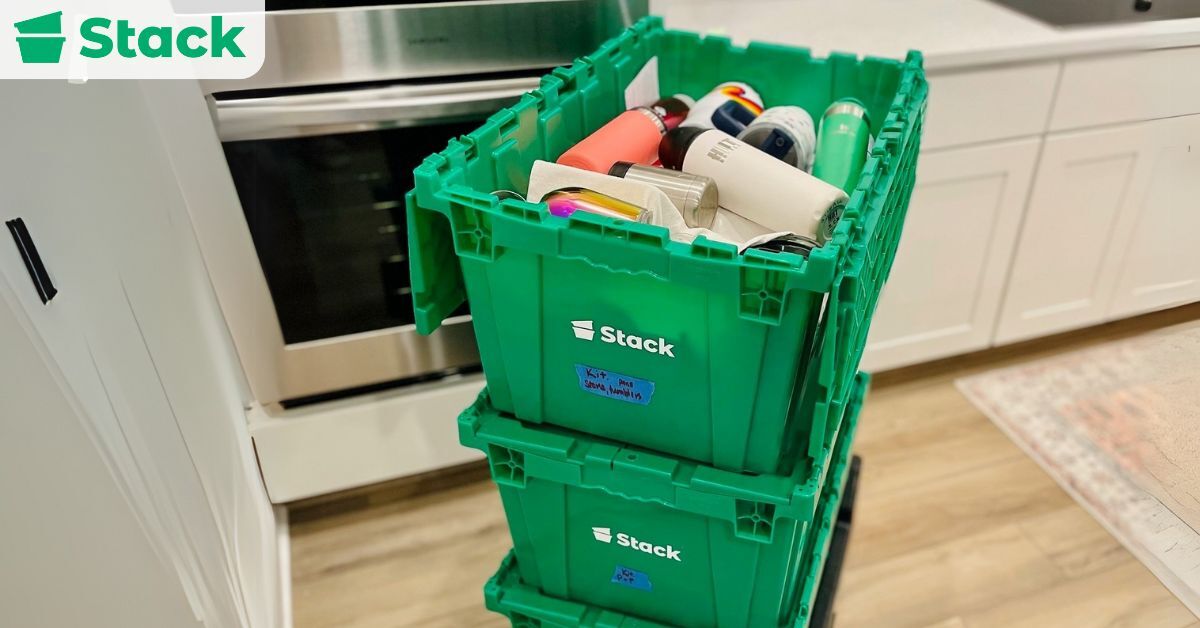
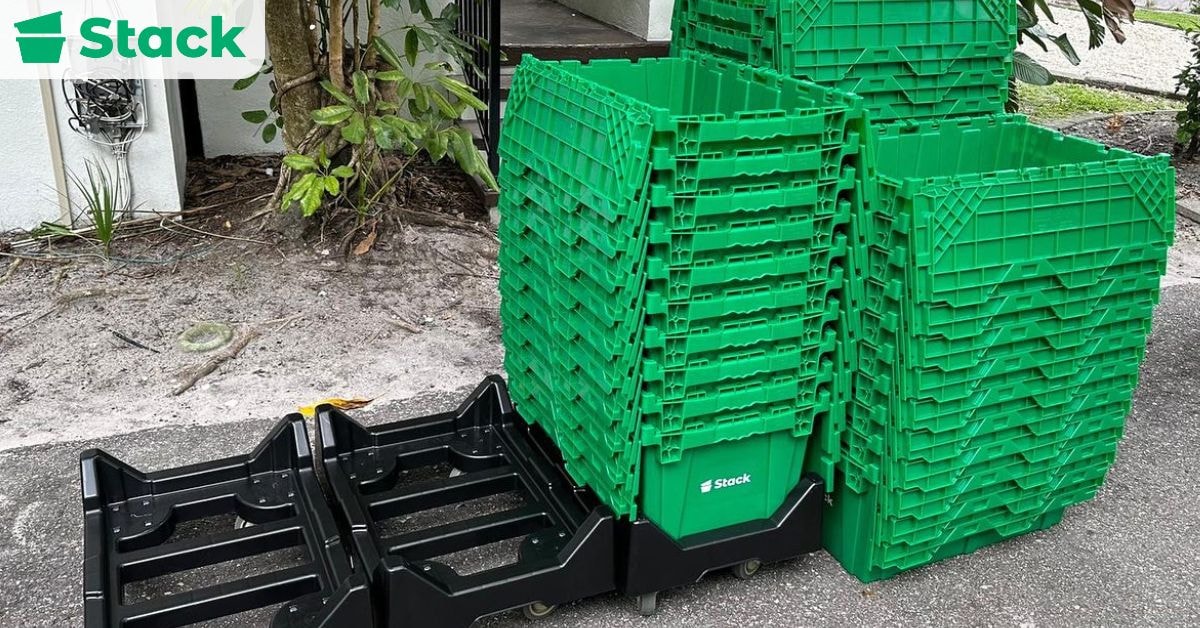
  • Use plastic boxes: These boxes are more durable than cardboard boxes and offer better protection against moisture and impact. They're also designed to be stacked on top of each other, helping you maximize space. Plus, they have lids too.
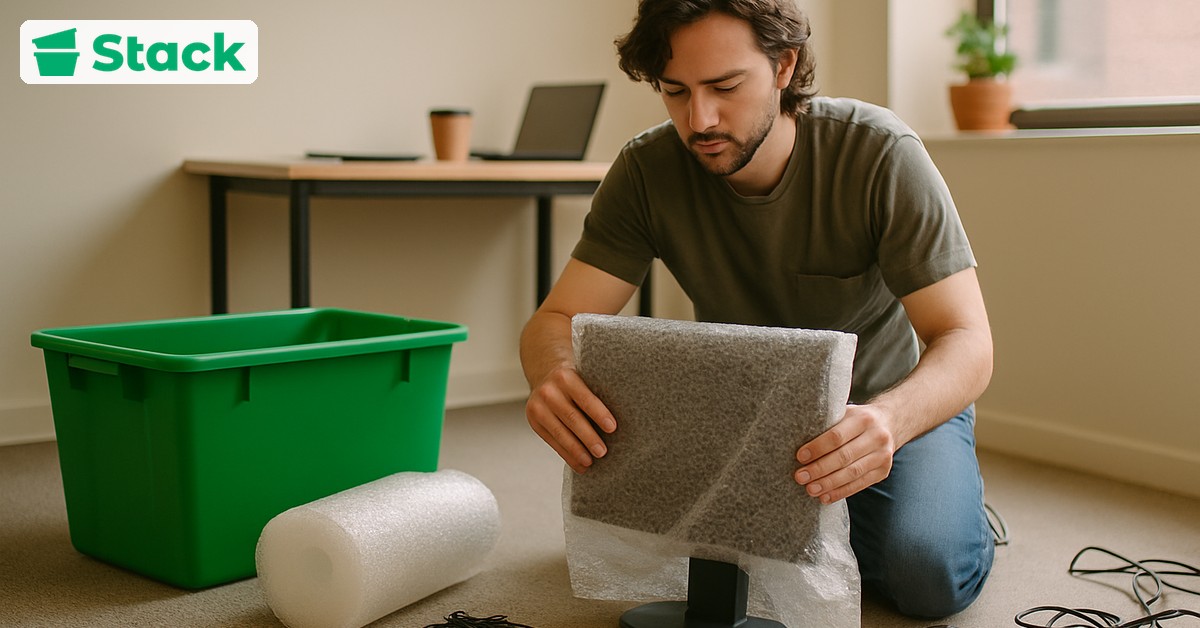
  • Wrap equipment in bubble wrap: Before you place your electronics in a box, wrap them in bubble wrap or any kind of protective padding. This will cushion the effect of any impact and prevent damage during a move.
  • Label fragile boxes clearly: Clearly label your boxes that contain breakable items. In addition to this, also list out the contents of the box and where it should be placed. This tells your movers to handle the box with care and to keep it where it will be safe.
  • Disassemble large electronics before packing: When possible, take apart large electronic devices. Doing this reduces the likelihood of anything getting damaged and makes it easier to keep them safe.
  • Organize accessories in labeled bags: Use a small bag or container to store wires, chargers, and other accessories. Furthermore, label the bag to make organizing them quick and stress-free.
  • Use climate-controlled transportation: Sensitive equipment like servers or hard drives may be affected by heat or humidity. With a climate-controlled vehicle, you can maintain a stable environment during the move.
  • Don't stack heavy items on fragile boxes: Never place heavy boxes on top of boxes containing sensitive equipment. This prevents pressure damage and ensures fragile items aren't crushed in transit.
  • Use anti-static bags for electronics: Static electricity can damage electronic components. Items like circuit boards, memory sticks, or processors should be placed in anti-static bags to prevent electrical discharge.
  • Hire experienced movers: Not all movers have the experience to handle sensitive equipment. Always work with a professional team that understands the special requirements of handling these electronics.
  • Create a moving checklist: Keep a detailed list of every fragile item you're moving and check them off when you arrive at your new space. Tracking them this way makes sure nothing gets lost or left behind.

Want to Simplify Your Office Move?

A well-structured office relocation checklist can differentiate your move from a chaotic one to a smooth one. With a checklist, you'll be better prepared to tackle each phase of the move without unnecessary stress. Take the checklist we've outlined and make it your own by customizing it to fit your company's specific needs, timelines, and team structure.

In addition to having a checklist, having the right packing supplies can also make your move more seamless. Our sturdy, reusable boxes protect your equipment, cut down on packing waste, and make transport easier. If you're planning a move and want to simplify the process, contact us to speak with a relocation expert. Let's make your next move your easiest one yet.

Frequently Asked Questions

Moving into a new office location comes with a lot of practical questions. To make things easier, we’ve answered some of the most common questions businesses have when preparing for an office move.

What Should an Office Relocation Checklist Include?

An office relocation checklist should include all the tasks, timelines, responsibilities, and costs associated with the move. Important sections typically cover pre-move planning, communication, IT setup, packing, move-day logistics, and post-move tasks. Your Excel checklist should also include columns for assigned team members, deadlines, status updates, and estimated versus actual moving costs.

How Far in Advance Should You Plan an Office Move?

You should begin planning your office relocation at least 6 to 12 months before the move date, especially for larger offices. Early planning gives you enough time to coordinate vendors, notify employees, prepare IT infrastructure, and avoid unnecessary downtime. Starting early also makes it easier to create a realistic relocation timeline and budget.

Can I Use Google Sheets Instead of Excel?

Yes, you can. Google Sheets is a great alternative for teams that need to collaborate in real time throughout the move. Since the spreadsheet is cloud-based, employees can update tasks, monitor progress, and access the checklist from different locations and devices. However, Excel may offer more advanced features for formulas, reporting, and large-scale project tracking.

How Do You Track Office Moving Costs?

The easiest way to track office moving costs is by adding estimated cost and actual cost columns to your relocation spreadsheet. This allows you to monitor spending on movers, packing supplies, equipment setup, cleaning services, furniture installation, and other relocation expenses. You can also use formulas in Excel to calculate totals automatically and identify areas where your moving budget may be going over target.

How Much Does It Cost to Move in NYC?

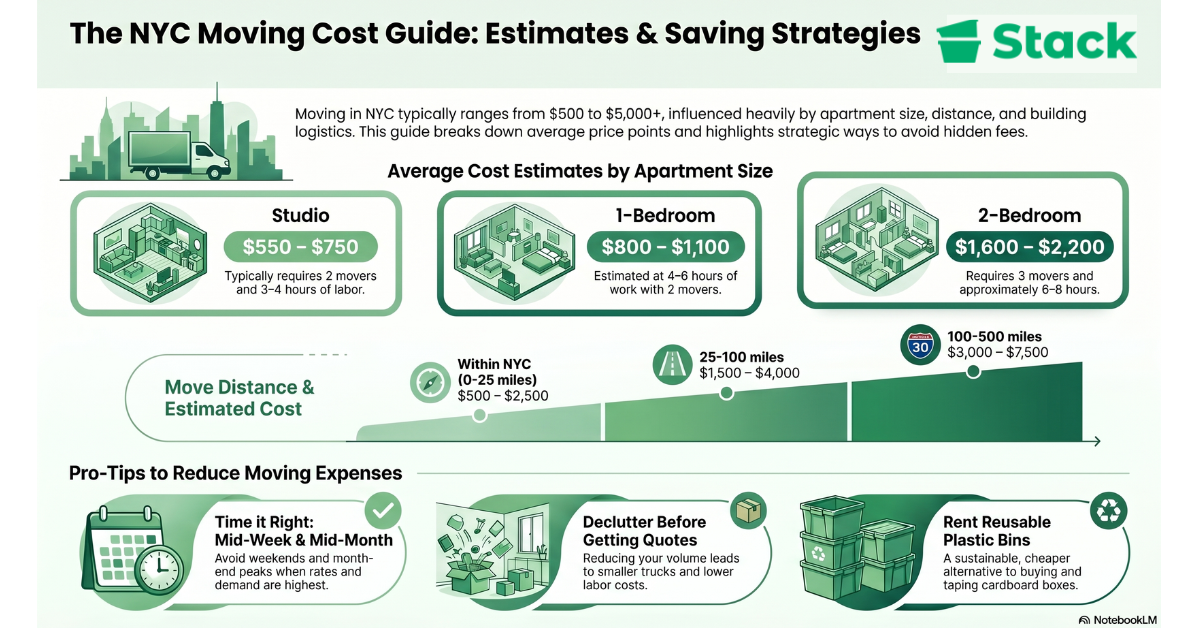
On average, moving costs in NYC range from about $500 to $5,000 and more. The final price can change based on factors like your apartment size, the distance of your move, the time of year, and the services you choose. Understanding what affects moving costs ahead of time can help you budget more accurately and avoid unexpected fees on moving day.

If you are trying to cut costs for your upcoming NYC move, renting moving boxes instead of buying them is a smart place to start. Stack Moves offers durable, stackable bins at affordable rates and we deliver them straight to your door. Contact us today to schedule your moving boxes in NYC today.

In this blog post, we’ll break down the average moving costs in NYC and the factors that impact those costs. We will also point out overlooked expenses that tend to drive up your moving costs and share tips on how you can save money when moving.

How Much Will It Cost to Relocate Within NYC? Factors to Consider

Stack Moves reusable moving box rental service

Movers typically charge based on the size and complexity of your move or based on an hourly rate, which can be more beneficial for smaller moves. Outside of your moving company’s base fees, there are several other moving expenses you’ll want to plan for to get a good idea of how much your move will cost.

Average Cost by Apartment Size

These estimates include basic services like loading, transport, and unloading within the five boroughs. Extras like packing services, certificates of insurance (COIs), long carries, or stair fees come at an additional cost. Based on the size of your apartment, you can expect to pay:

Home Size Average Moving Cost Movers Needed Est. Hours
Studio Apartment $550-$750 2 3-4
1-Bedroom $800-$1,100 2 4-6
2-Bedroom $1,600-$2,200 3 6-8
3-Bedroom+ $3,800+ 4+ 7+

Average Cost by Distance

The cost of a long-distance move or the cost of moving out of state is usually higher than a local move because of the amount of time, resources, and effort needed to complete these moves. In general, the farther you move from NYC, the more you can expect to pay.

Move Distance Move Type Estimated Cost
Within NYC (0-25 miles) Local move $500–$2,500
25-100 miles Short-distance move $1,500–$4,000
100-500 miles Interstate move $3,000–$7,500
500+ miles cross-country move $5,000–$12,000+

Moving Company NYC: What Influences Your Moving Cost?

What Are the Average Moving Costs in NYC?

Your final bill depends on many factors, starting from how much stuff you have to move to what time of the year you are moving. A solid understanding of what influences your moving costs can help you plan your upcoming move in the Big Apple better.

Size of the Move

The more belongings you have, the longer the process takes, which means a higher moving cost. A studio apartment usually needs 2 movers and a few hours to wrap up, but a two-bedroom apartment will need more laborers and time. Local moving companies usually try to find out the size of your move and give you a quote based on that.

Distance

Local moves are generally more affordable, but if you’re crossing state lines, expect a significant jump in moving expenses. Don’t forget that traffic and parking challenges in NYC can also increase the time your movers spend in transit, which may add to your final bill, especially if you’re being charged by the hour.

Time of Year and Day

If you’re looking to save, try scheduling your move mid-month and mid-week, when availability is better and rates are often lower. Last-minute bookings can also come with premium pricing, so booking in advance gives you a better shot at transparent pricing and more flexibility when choosing local NYC movers.

Walk-Up vs. Elevator Building

Be prepared for additional fees if you live in a walk-up building. Movers tend to charge more if they have to carry heavy furniture up several flights of stairs or navigate narrow hallways. On the other hand, buildings with elevators generally make for easier moves, but only if the elevator is available and appropriately sized. Otherwise, the moving process may still require extra time and effort.

Packing Services and Materials

The type of packing service you opt for can affect your overall moving cost. If you choose to hire full-service movers for your upcoming move, you’ll enjoy a less stressful move, but it’ll come at a steep cost. If you opt for a partial packing service or professional help for fragile items only, you’ll save money.

Your packing materials, like moving boxes, can also drive up your cost. One sustainable way to manage this is to rent affordable moving boxes. You can even use a moving box calculator to help you figure out how many bins you’ll need, so you don’t overpay for more than you need or run out of boxes mid-move.

Specialty Items

If you’re transporting custom furniture or anything that can’t easily fit through a standard doorway, expect higher fees. Specialty items like pianos, artwork, and delicate antiques need careful handling, which often comes with an extra charge. Heavy and bulky pieces like furniture also attract higher charges because local moving companies need specialized equipment to properly handle these items.

Permits and Parking Tickets

Parking permits and tickets are an easily overlooked moving expense. To secure a parking spot in NYC, you’ll need a permit. Some moving services expect you to secure a permit yourself, while others may simply include any parking fines on your final bill. It’s important to ask your movers whether parking permits are required and who’s responsible for obtaining them.

NYC Movers vs. DIY Moving: Cost Comparisons and Considerations

What Impacts the Cost of Moving in NYC?

Professional movers cost more than doing it yourself, but DIY moves require more time and effort and come with some hidden expenses. The best time to hire professional movers is when your move is time-sensitive or physically demanding. DIY moves work better for smaller, short-distance moves or when you’re on a tight budget and have help.

How Much Does It Cost to Move with Professional Movers?

On average, local NYC movers will charge between $500 and $3,500 for a move, depending on certain factors. The size of your apartment is a major one, followed by the number of things you’re moving, the distance of your move, and how easy it is to access the building. If you’re moving a small studio or one-bedroom within the city, costs tend to stay on the lower end, while larger apartments or long-distance moves quickly push prices higher.

Several factors influence this estimate, including apartment size, distance, building access, and the level of service you choose. On top of this, there are often additional or hidden costs like stair fees, long carries, storage, and insurance requirements that can increase the final price. Because of these variables, professional movers are best suited for people who want a hands-off, efficient experience or who are dealing with larger, more complicated moves.

How Much Does a DIY Move Cost in NYC?

DIY moving is generally cheaper upfront and works best for smaller apartments or short-distance moves. If you don’t have much furniture and can get help from friends or family, handling the move yourself may help you save money. In most cases, DIY moving costs in NYC range from a few hundred dollars to around $1,500, depending on truck rental size, mileage, tolls, and packing materials.

Keep in mind a DIY move requires significantly more time, physical effort, and coordination, especially in a city where parking and traffic can slow everything down. Costs can also rise unexpectedly because of logistics issues like having to make multiple trips due to limited truck space. Many people also forget to factor in the value of their time or the risk of damage or injury when lifting heavy furniture. While DIY moving can be a smart choice for small, simple moves, it becomes less practical as the size and complexity of the move increases.

  DIY Move Full-Service Movers
Who Packs? You Movers
Who loads the truck? You Movers
Who handles transport? You Movers
Cost Costs the least Costs the most
Best for Short moves on a tight budget Stress-free, hands-off experience

5 Simple Tips that Will Help You Save Money When Moving in NYC

DIY vs Professional Movers Cost Difference

The first thing you’ll hear when you tell anyone you’re moving to NYC is how expensive it is. And while NYC is expensive, there are a few simple strategies that can help you cut your moving expenses every time.

1. Book Movers Early and Avoid Peak Days

Avoid the most expensive moving periods like weekends, end-of-month dates, and peak summer season. During these times, demand is high, and moving services charge premium rates. Instead, try to go for mid-week and mid-month for your move. Movers are more available, and prices tend to drop during these off-peak windows, helping you stay within budget.

2. Declutter Before Moving

The less you move, the less you pay. Moving companies often base their moving price on the volume of your move, so trimming down your load can make a noticeable difference. Take the time to get rid of anything you no longer need. For you, this means fewer packing materials, smaller trucks, and potentially lower rates from your movers.

3. Use Reusable Moving Boxes

A more affordable and eco-friendly alternative to buying boxes is renting plastic moving bins. These sturdy, stackable boxes help you pack efficiently, prevent damage, and eliminate the need for additional packing materials like tape because they come with secure lids.

4. Ask for Multiple Quotes and Compare Services

Get quotes from multiple moving companies and take the time to compare what’s included in each one. Some moving companies may offer better rates on specialty items, while others may charge for additional services you don’t need. The more informed you are, the easier it is to spot hidden fees or inflated prices.

5. Negotiate Flat Rates

With a flat rate, you’re less likely to get a higher bill than anticipated. If you’re working with a reputable moving company, ask if they’re willing to give you a flat rate instead of charging by the hour. This will be helpful if your move involves a lot of stairs and traffic delays that could increase the duration of the move.

Need Reusable Plastic Bins When Moving in NYC?

The cost of moving in NYC can range from a few hundred to several thousand dollars, depending on your apartment size, the services you choose, and how far you’re going. Before deciding on what moving service to go for, think about your budget, timeline, and how much help you’ll realistically need. A full-service move may cost more, but it can save you time and physical strain. In contrast, if you’re looking to cut costs, small choices like when you move can make a big difference.

A simple way to keep moving costs in check is to rent plastic bins. It’s a cleaner, smarter, and more cost-effective alternative to buying cardboard boxes. If you’d like to make your move significantly less stressful, just contact us to book your moving boxes.

FAQs

Moving in NYC comes with unique challenges, so it is completely normal to have a few questions about the process. For personalized guidance or specific moving dilemmas, please reach out to us directly.

How Much Money Do You Need to Move to NYC?

It depends on how far you’re moving and how much stuff you have. Local moves within NYC usually cost $500–$2,000+, while long-distance moves from out of state can reach up to $10,000 or more. Be sure to budget for rent, security deposits, and setup costs once you arrive.

How Much Money Should You Have Before Moving Out in NYC?

Besides your moving expenses, you’ll need enough money saved up to cover your rent, utilities, furniture, and unexpected fees. A solid safety net is at least 3–4 months’ worth of living expenses, especially in a city as expensive as New York.

What Is the Cheapest Way to Move in NYC?

The cheapest way is a DIY move using friends, public transportation (if feasible), and rented moving bins. You can also save by moving mid-month, avoiding weekends, and decluttering to reduce how much you need to move.

How Many Moving Boxes Do You Need to Move in New York City?

The number of boxes you need to move depends on your living space and how much stuff you own. With a moving-box calculator, you can get an accurate estimate based on the size of your home.

Do Moving Companies Pack for You?

Yes, most moving companies offer packing services and can handle everything from wrapping fragile items to boxing up your entire home. However, not all movers pack for you, as some companies only provide transportation while others offer partial packing services for certain items. Whether you choose to hire professional packers or plan to do some of the packing yourself, having strong, high-quality moving boxes can make the entire process smoother, safer, and far more organized.

Stack Moves helps make moving simpler with durable reusable moving boxes delivered directly to your door. Our plastic moving bins are designed to keep your belongings protected, organized, and easier to pack whether you’re moving yourself or working with professional movers. Contact us today to book your moving boxes and get started.

In this blog, we’ll explain how moving company packing services work, what movers will and won’t pack, how much packing services cost, and whether hiring professional packers is worth it.

Do Moving Companies Pack for You?

Stack Moves reusable moving box rental service

Yes, many moving companies offer packing services either as part of a comprehensive moving package or as an optional add-on. It all depends on whether you’re working with a full-service or self-service moving company.

Full-service movers typically handle every part of the move, and if you’re looking for a stress-free experience, this can be a convenient option. On the other hand, a self-service moving company focuses strictly on transportation. They do not help with packing, loading, or unloading your items. A self-service option is generally more budget-friendly and gives you full control over how your items are packed.

Ultimately, whether you go full-service or self-service depends on your budget, timeline, and comfort level with outsourcing the packing process.

What Are Professional Packing Services and How Do They Work?

Do Moving Companies Pack for You?

Professional packing services are services provided by moving companies to help homeowners safely prepare their belongings for a move. Depending on the company and the package you choose, packing services can range from partial packing for select belongings to full-service packing for your entire home. Some movers also offer unpacking services at your new destination to make the moving process even more convenient.

The process usually starts with an assessment of your home and belongings. The moving company may provide an in-home or virtual estimate to determine how many supplies, movers, and hours will be needed. On packing day, the crew arrives with boxes, tape, bubble wrap, packing paper, labels, and other packing materials. Then they systematically pack, label, and organize your belongings before loading them onto the moving truck.

One of the biggest advantages of professional packing services is the reduced risk of damage. Experienced movers know how to properly secure delicate items, maximize box space, and safely handle bulky or high-value belongings. For busy households, long-distance moves, or homes with many fragile items, professional packing services can save a significant amount of time and stress.

What Is Included in Professional Packing Services?

This majorly depends on the moving company and the package you choose. Here’s what is typically included in professional packing services:

  • Packing Supplies and Materials: Movers usually provide boxes, packing tape, bubble wrap, packing paper, and labels. Some companies may charge separately for specialty materials or custom crates.
  • Packing Household Belongings: Professional movers can pack common household items like clothing, dishes, books, toys, decorations, electronics, and small appliances. They organize and label boxes to make unpacking easier later.
  • Fragile Item Packing: Delicate belongings such as glassware, artwork, mirrors, antiques, and TVs are carefully wrapped using extra padding and protective materials to reduce the risk of damage during transport.
  • Furniture Preparation: Movers may disassemble furniture, wrap large items in protective blankets, and secure loose parts before loading everything onto the moving truck.
  • Labeling and Inventory Management: Most movers label boxes by room and contents while also creating an inventory list to help keep track of your belongings throughout the move.
  • Partial Packing Services: If you do not need help packing your entire home, you can hire movers to pack only certain rooms or difficult items. Many people use partial packing for kitchens, fragile décor, or bulky specialty items.
  • Unpacking Services: Some full-service moving companies also offer unpacking services at your new home. This may include unpacking boxes, placing items in rooms, and removing used packing materials after the move.

Types of Packing Services

When it comes to moving, one of the biggest decisions you’ll face is whether to pack your belongings yourself (DIY packing) or to hire movers. Fortunately, it doesn’t have to be one or the other. There are different types of packing services to fit a range of needs and budgets.

1. DIY Packing

For DIY packing, you get to save costs as you’re packing your belongings yourself and avoiding the fees associated with getting professional movers. You also have control over how things are organized and packed. However, DIY packing is a time-consuming process and can be stressful, especially when juggling it with other responsibilities.

Moreover, there is a higher risk of damage during transport when you do not have proper knowledge of packing techniques. Professional movers have the right materials and knowledge to pack your belongings securely, especially delicate or fragile items that need extra care. If you would still prefer handling the packing yourself, learning how to pack moving boxes properly can help reduce damage and make loading much more efficient.

2. Full-Service Packing

Opting for a professional moving company is a convenient option because it optimizes efficiency. Hiring movers who are experts is a safe option, as they have access to high-quality packing materials and have expertise in packing techniques. 

But it’s not the first choice for people, as getting a professional moving service is more expensive. It also gives you less personal control over how items are organized and packed. Understandably, some people may also feel uneasy about strangers handling their personal belongings or may prefer to organize their items in a specific way that only they can achieve.

3. Partial Packing Service

Partial packing services offer a much-needed middle ground between DIY and full-service moves. With this service, you can pack most of your household items yourself, but leave specific items to the professionals. Partial moving services can also be more affordable than full-service packing while still offering the benefit of professional handling where it counts.

It’s a great way to remain involved in the moving process while outsourcing the most time-consuming or fragile tasks. We recommend this option for people who are comfortable doing the packing themselves but would like some professional help for specialty or breakable items.

Service Type What’s Included Best For
DIY Moving You pack everything Budget-conscious moves
Partial Packing Movers pack select items Fragile or specialty items
Full Service Packing Movers pack entire home Busy households or long-distance moves

What Professional Movers Will Not Pack for You

Types of Packing Services

For safety, liability, and compliance reasons, moving companies usually have a list of items they cannot legally or safely pack or move. Since these restrictions can vary between movers, it’s always a good idea to ask for their prohibited items list before packing day. Items movers commonly refuse to pack or move include:

  • Hazardous Materials: Paint, gasoline, propane tanks, fireworks, chemicals, and other flammable or explosive materials are usually prohibited.
  • Firearms and Ammunition: Many movers will not transport guns, ammunition, or other weapons due to liability and legal restrictions.
  • Perishable Food: Refrigerated, frozen, or open food items may spoil during transit and are often not accepted for long-distance moves.
  • Important Documents: Passports, birth certificates, financial records, medical files, and legal documents are usually best kept with you.
  • Jewelry, Cash, and Valuables: Movers may refuse high-value personal items or limit liability coverage for them during the move.
  • Live Plants and Animals: Plants can be damaged during transport, and movers generally cannot transport pets or live animals.
  • Prescription Medications: Medications should stay with you to ensure easy access and proper storage during the move.

Do Moving Companies Provide Boxes and Packing Materials?

In many cases, they do. Most full-service movers arrive with their own packing supplies, so you don’t have to run around looking for boxes or tape the week of your move. This might not always be the case, so it helps to ask whether moving boxes and packing supplies are included in your estimate or charged separately.

Another thing to remember is that the pricing of mover-supplied boxes is also usually higher. If you’re trying to keep moving costs down, it might be a better idea to source your own high-quality moving boxes ahead of time.

Will Movers Move Things Not in Boxes?

Yes, movers can often move items that are not packed in boxes, but this depends on the item and the moving company’s policies. If you’re unsure about whether everything has to be in boxes for movers, it’s always best to check with the company beforehand.

Large belongings like couches, mattresses, bicycles, patio furniture, rugs, and some exercise equipment are commonly moved without boxes. However, loose or unpacked items can shift during transportation and may be more likely to get damaged.

Smaller household belongings should still be packed securely in sturdy containers whenever possible. Some movers may also refuse to move certain loose items if they believe they are unsafe or difficult to transport properly. For better protection and organization, it is usually best to pack as many belongings as possible into durable moving boxes or reusable moving bins before moving day.

Factors to Consider When Choosing Packing Services

Not all packing services offer the same level of quality, protection, or value. Some movers handle fragile items with care and communicate clearly throughout the process, while others may surprise you with hidden fees. Before hiring a moving company, it’s important to compare more than just the price so you can choose a service that actually fits your move and your expectations.

Cost

Cost is one of the biggest factors people consider when hiring professional packers. Packing service pricing usually depends on how many belongings you have, how difficult they are to pack, how many movers are needed, and how long the job will take. Because of this, moves involving larger homes, fragile items, and specialty packing materials can increase your final cost.

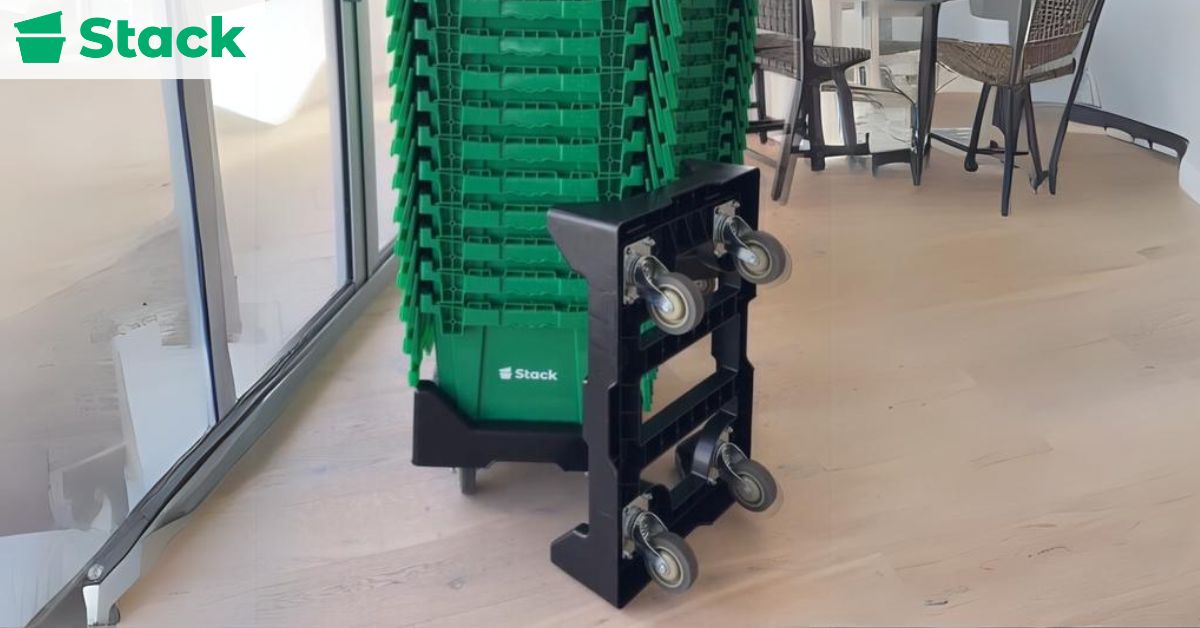
Packing supplies themselves can also become a major expense. Some movers include boxes and materials in their pricing, while others charge separately for them. If you want to cut down on moving costs, renting reusable moving bins can be a more affordable option and often includes extras like labels and dollies.

It’s also worth asking whether the company offers discounts for off-season moves, bundled services, or flexible scheduling. Getting multiple quotes can help you better understand what’s actually included and avoid unexpected charges later.

Insurance Coverage

Professional moving companies usually offer different levels of liability coverage for your goods. Basic coverage is often included, but you may want to consider purchasing additional valuation coverage for peace of mind, especially for high-value items. Items packed by the movers are generally covered under their insurance policy. However, items you pack yourself might not be covered or could have limited coverage. So, it’s important to understand the policy details.

Online Reviews and Testimonials

Reviews and testimonials can give you a better idea of what working with a moving company is actually like. Look beyond star ratings and pay attention to comments about professionalism, punctuality, communication, damaged items, or surprise fees. It also helps to ask friends or family members for recommendations if they’ve recently used professional movers. A company with consistently positive reviews and clear communication is usually a much safer choice than one offering unusually cheap estimates with little transparency.

Licenses & Certifications

Also, check if the moving company has any industry certifications or affiliations with reputable organizations. Memberships in organizations like the American Moving and Storage Association (AMSA) can indicate a commitment to industry standards. In addition, reputable companies will offer to conduct an in-home estimate or a virtual survey to assess your packing needs and provide a more accurate quote. Be wary of companies that give a low estimate without seeing your home or the items you need to pack.

Looking for an Easier Way To Pack for Your Move?

Will Movers Move Things Not in Boxes?

Most moving companies will pack your belongings for you, especially if you’re using a full-service moving option. It’s one of the easiest ways to take a huge amount of stress off your plate, particularly when time is tight or you’re dealing with a full household move.

That said, even with professional help, the packing process is only as reliable as the materials you use. Strong, reliable boxes make a real difference in how safely and efficiently everything gets packed, moved, and unpacked. Which is why more people are switching from cardboard boxes to plastic moving boxes. Ready to make packing easier? Contact us to rent our durable plastic bins and take the hassle out of your next move.

Frequently Asked Question

If you’re still figuring out how packing services actually work, you’re not alone. These are some of the most common questions people ask when deciding whether to hire movers, pack themselves, or go for something in between.

Do Movers Pack For You?

Yes, most full-service moving companies offer packing services and can handle everything from a few rooms to an entire home. However, some movers only provide transportation, so it depends on the type of service you book.

How Long Does Professional Packing Take?

It depends on the size of your home and how much stuff you have. A small apartment may take a few hours, while larger homes can take a full day or more.

Do You Need To Pack Before Movers Arrive?

Not always. If you booked full-service packing, the movers will handle most of the packing for you. However, you should still set aside personal essentials and important documents you want to keep with you.

Will Movers Pack A Messy House?

Yes, movers will usually still pack your home even if it’s not perfectly organized. That said, heavy clutter can slow things down and may increase the time (and cost) of the job.

Do Moving Companies Unpack For You?

Some full-service movers do offer unpacking, but it’s not always included automatically. It’s usually an add-on service where movers help unpack boxes and place items in the right rooms.

What Are Red Flags With Moving Companies?

Be cautious of movers who give vague estimates, demand large deposits upfront, or avoid written contracts. Another red flag is a company that refuses to do an in-home or virtual assessment before giving pricing.

What Will Professional Movers Not Pack?

Most movers won’t pack hazardous materials, firearms, perishable food, or live plants. Valuable items like jewelry, cash, and important documents are also typically excluded for safety and liability reasons.

Is It Worth Paying For Professional Packing Services?

It can be worth it if you’re short on time, moving a large home, or have fragile or valuable items. It saves time and reduces stress, but DIY packing is still a good option if you’re trying to cut costs.

What to do With Moving Boxes After Moving

If you’re staring at a mountain of empty boxes after a long move, you probably want to know how to clear that clutter without just tossing it in the trash. While it’s often a relief to get them out of the house, finding a second life for your supplies is a great way to reduce waste and help out a neighbor. You can either keep them for storage, sell or donate them to someone else, or dispose of them responsibly.

At Stack Moves, we’ve helped thousands of people avoid the post-move clutter by providing a smarter way to pack. Our reusable moving bins for rent serve as a convenient alternative to cardboard boxes, allowing you to skip the stress of disposing of cardboard altogether. To get started on your hassle-free move, contact us today.

We are going to walk you through the most practical ways to handle your leftover boxes so you can enjoy your new home.

15 Practical & Creative Ways to Reuse Moving Boxes

How to Organize Your Moving Boxes After You Move

After a move, you’re usually left with a stack of empty boxes and one big question: what now? Instead of tossing them right away, there are plenty of practical and creative ways to reuse moving boxes that can save you money and reduce waste.

A. Creative Ways to Reuse Moving Boxes

Cardboard is surprisingly versatile, and a little creativity can save you money while cutting down on waste. If you’re not in a rush to get rid of them, these ideas are worth trying first.

1. Turn Boxes Into Drawer or Closet Organizers

This is a simple way to stay organized without buying storage bins. Start by measuring your drawer or shelf so you know what size inserts you need. Cut your moving boxes down to fit, then place them inside to separate clothes, accessories, or office supplies. Smaller boxes are perfect for this since they already fit tighter spaces. If you want a cleaner look, line them with paper or fabric before placing items inside.

2. Build a DIY Kids’ Playhouse or Fort

Large moving boxes are perfect for creating a playhouse or fort. It’s an easy project that turns your leftover packing supplies into something fun, especially if you’re exploring moving box alternatives beyond traditional uses. Start with one or two large moving boxes and tape them together if you need more space. Cut out doors and windows using a box cutter, then fold back flaps to create openings. Use tape to reinforce weak corners so the structure holds up during play. Once it’s set up, let kids decorate with markers, stickers, or paint.

3. Create a Cozy Pet House or Cat Scratcher

Cardboard moving boxes can double as a low-cost alternative to store-bought pet furniture. Pick a sturdy box that’s large enough for your pet to sit or lie down comfortably. Cut a wide opening on one side so they can easily get in and out. Add a soft blanket or cushion inside to make it more inviting. For cats, you can stack or layer pieces of cardboard inside to create a scratching surface.

4. Use Cardboard as a Weed Barrier in Your Garden

Place flattened cardboard boxes over soil to block weeds naturally. Add mulch on top to hold everything in place and improve the look. This method helps retain moisture while reducing the need for chemicals. It’s especially useful for garden beds or landscaping projects. Just make sure to remove tape and labels first.

5. Get Creative With DIY Cardboard Projects

Moving boxes are great for DIY projects like wall art, storage bins, or even small furniture. You can cut, paint, and shape them into just about anything. We recommend this for anyone who enjoys hands-on projects and wants to reduce waste. It’s also a fun way to personalize your space on a budget.

6. Compost Cardboard for Eco-Friendly Disposal

Composting is a great option if you’re looking into how to get rid of moving boxes in a more eco-friendly way. It’s simple and good for your garden long-term. Plain cardboard can be added to your compost pile as a carbon-rich material. Tear it into smaller pieces so it breaks down faster. Bear in mind that this works best for boxes without heavy ink or coatings. For best practices, resources like the US Composting Council offer helpful guidance on composting cardboard safely.

B. Practical Things to do With Moving Boxes

If you’re looking for more straightforward ways to handle leftover moving boxes, there are plenty of practical options too. These ideas focus on saving money, staying organized, or helping someone else out. Most of them take little effort but can make a big difference.

7. Keep Boxes for Future Storage Needs

Hold onto sturdy moving boxes for seasonal storage like holiday decorations or clothing. This saves you from buying new storage bins; plus, it’s one of the easiest ways to reuse moving boxes long-term. Most moving boxes are designed to stack and handle weight fairly well. Just be sure to label them clearly so you can find your things later. For long-term storage, it helps to understand how to store moving boxes properly so they stay in good condition.

8. Protect Floors During Painting or Renovations

Flatten your boxes and lay them across areas where you’ll be painting or working. Overlap the edges slightly to make sure no part of the floor is exposed. Tape the corners or edges down so they don’t shift while you move around. This creates a protective layer against paint, dust, and debris. It’s a quick setup that can save you from costly cleanup later.

9. Use Boxes for Garage or Attic Storage

Moving boxes are perfect for organizing items in your garage or attic. Group similar items together and label each box clearly. This helps reduce clutter and makes storage more efficient. If possible, place them on shelves or pallets to avoid moisture damage. This keeps your storage organized and protects your belongings long-term.

10. Make Dividers for Fragile Items

Measure the inside of your box and cut cardboard into equal strips based on the size of your items. Cut small slots halfway through each strip so they can slide into each other and form a grid. Place the grid inside the box, then fit each glass or item into its own section. This keeps everything separated and prevents movement during storage or transport. It’s a simple way to protect fragile items without buying inserts.

11. Repurpose Boxes for Shipping and Packaging

Shipping items can get expensive when you have to repeatedly buy materials for each shipment. Fortunately, moving boxes can double as ready-to-go shipping supplies. It’s one of the easiest ways to get extra value out of your boxes. Just remove the old labels and reinforce the edges with tape, and they’re good to use again. This works especially well if you’re selling items online or sending packages regularly. You save money, reduce waste, and still get reliable packaging that holds up during transit.

12. Sell Your Used Boxes for Extra Money

This is a simple way to recover some of your moving costs when you consider how much moving boxes cost. Start by setting aside clean, sturdy boxes in good condition. Bundle them by size or type to make your listing more appealing. Take clear photos and list them on platforms like Facebook Marketplace or Craigslist with basic details.

13. Give Away Free Moving Boxes Locally

If you don’t want to sell, offering free moving boxes is the fastest way to get rid of them. Many people are actively looking for free packing supplies. It’s not only convenient but also helps someone else save money. Post them in local groups or community boards for quick pickup.

14. Donate Boxes to Schools or Small Businesses

Schools, nonprofits, and small businesses often need boxes for storage or shipping. Start by identifying local schools, nonprofits, or small businesses that might need boxes. Call ahead or send a quick message to confirm they accept donations. Bundle your boxes neatly to make drop-off easier. Focus on giving away clean, sturdy ones that can be reused.

15. Use Boxes for Donations and Decluttering

One problem with donating items is that you need to present them in a way that looks presentable. Loose items or overstuffed bags can make donations look messy and harder for organizations to handle. Moving boxes solve that instantly by giving you a sturdy, stackable way to sort clothes, books, and household items neatly. It’s a simple way to declutter your space while making your donations more presentable and useful.

How to Properly Recycle Cardboard Boxes

Donate Moving Boxes

Start by breaking down your moving boxes so they lay flat and take up less space. Make sure your boxes are dry and free from food, grease, or moisture, as contaminated cardboard is often rejected from recycling programs. Go even further to remove tape, labels, and any packing materials first to improve your chances. If you’re unsure where to go, a quick search for the local recycling centers in your area will show drop-off locations and accepted materials.

Flattening and bundling your unused moving boxes also makes pickup or drop-off faster and more efficient. When done right, recycling keeps a large amount of waste out of landfills and supports local waste management systems.

Where to Donate Moving Boxes

Before recycling, set aside any gently used boxes that are still sturdy and intact. These sturdy cardboard boxes are often in high demand, especially from people trying to avoid the cost of having to buy cardboard boxes for their own move. Boxes with lids, uniform sizes, or minimal wear tend to get picked up fastest.

Start locally. Reach out to local businesses like liquor stores, bookstores, or small e-commerce shops. Many reuse moving boxes for shipments or storage and are happy to take clean extras. You can also contact nonprofit organizations, schools, or community centers, which often need packing supplies for events, donations, or storage.

For faster results, list your unused boxes on neighborhood apps or local marketplaces where people actively look for free cardboard boxes. Be clear about quantity, size, and condition to avoid back-and-forth messages. Donating this way not only clears space quickly but also helps someone else cut moving costs while keeping usable materials in circulation.

How to Organize Your Moving Boxes After You Move

Stack Moves reusable moving box rental service

Moving is just the beginning; you still have to arrange everything you came with, including your moving boxes and other packing materials. Knowing how to organize your moving boxes properly helps you save space and makes future moves easier. Here are four tips to help you keep things tidy and manageable:

  1. Assess the Condition of the Boxes: Before you actually start organizing your boxes, take a moment to inspect them. Check if the boxes made it through the move unscathed or if they sustained some damage. Only keep sturdy moving boxes (boxes still in good condition) since they can be reused in the future.
  2. Sort by Size and Type: To arrange your boxes by size, stack smaller ones on top of the larger ones to maximize space. Also, group them by type to make finding a box easier when you need it. For instance, sturdy boxes that can be reused should be kept together, and flimsy ones should be kept in a separate pile.
  3. Plan for Next Steps: Now that you’ve got all your boxes in one place, decide on what you’re going to do with them. If they’re still in good condition, you could reuse them or give them out to someone who needs them. Damaged boxes should either be recycled or properly disposed of.
  4. Avoid Leaving Boxes Around the House: Leaving your boxes scattered around the house creates clutter and makes it harder to settle in. When unpacking, try to put things in their proper places at the same time, including the boxes. If you’re having a difficult time getting rid of your boxes all at once, gradually dispose of them over time instead.

What’s the Best Way to Get Rid of Moving Boxes After Moving?

Sustainable Moving Boxes

At this point you know that you can either reuse, donate, recycle, or even sell your moving boxes after your move. Depending on how much time and effort you want to put into handling them after the move, each of these options work just fine

But if you’d rather skip the stress of figuring out what to do with your boxes after the move, consider renting your moving boxes instead. These reusable bins are picked up once you’re done. You don’t have to worry about disposal, storage, or extra clutter afterward; it’s all handled for you. It’s a cleaner, more convenient approach that also cuts down on waste.

Ready to make your next move easier? Contact us today or schedule your moving box delivery and skip the post-move cleanup altogether.

Frequently Asked Questions

Still have questions about what to do with your moving boxes? Here are quick answers to help you recycle, donate, or reuse them the right way.

Where Can I Find Free Cardboard Boxes Near Me?

You can find free cardboard boxes through local marketplaces, neighborhood groups, and platforms like Freecycle. Many people give away gently used boxes after a move to avoid disposal. You can also check with local businesses like grocery or liquor stores that regularly receive shipments.

Should I Recycle Or Donate Moving Boxes?

If your moving boxes are still in good condition, donating is the better option. Sturdy cardboard boxes can be reused by others, reducing the need to buy cardboard boxes. Only recycle boxes that are damaged, wet, or no longer usable.

What Types Of Cardboard Boxes Cannot Be Recycled?

Boxes with grease, food residue, or water damage are usually not accepted at the nearest recycling center. Wax-coated or heavily treated cardboard may also be excluded from standard recycling programs. These materials can contaminate recycling batches and should be disposed of separately.

Who Accepts Donations Of Moving Boxes In The U.S.?

Many nonprofit organizations like Goodwill and Habitat for Humanity accept unused moving boxes in good condition. You can also donate to local businesses, schools, or community groups that reuse packaging materials. Online platforms make it easy to connect with people looking for free cardboard boxes nearby.

How Many Boxes Do I Need To Move?

There isn’t a ballpark answer for how many boxes are needed to move because the number largely depends on factors like your home size, how much stuff you own, and how you’d like to pack. To take out the guesswork, we created a moving box calculator that gives you quick estimates based on the size of your home. This way, you can enjoy your move without overpacking, overspending, or making unnecessary trips to the store to pick up more boxes.

Once you know your total, it’s usually cheaper to buy your boxes in bulk rather than picking up singles as you go.

Stack Moves provides high-quality moving boxes for rent alongside labels and dollies to make your move hassle-free from start to finish. With convenient delivery and pick-up at your new address, there is truly no better moving solution that moving box rentals! Schedule a call to get started.

In this blog, you’ll learn how to determine just how many boxes you’ll need for your move based on your apartment size. We also explore the various factors that can change that number and share where you can find high-quality boxes.

How Many Packing Boxes Do You Need By Home Size?

Stack Moves reusable moving box rental service

The number of boxes you’ll need depends largely on the size of your home. The bigger your space, the more complex your move becomes. Below, we break down what to expect at each home size so you can plan smarter, not just pack more. Think of this as a quick reality check before moving day hits.

Studio Apartment

15 bins | 1 dolly | 15 labels | Avg. move cost: $200–$1,000

Relocating a studio is usually a straightforward project you can knock out in a single day. The most effective way of managing a move like this is to declutter before you even touch a bin. Doing this will keep your workload light and your costs down. Even though the square footage is small, don’t underestimate how much your closets can hold. So we wouldn’t advise you to leave the packing for the very last minute.

One Bedroom Apartment

25 bins | 2 dollies | 25 labels | Avg. move cost: $300–$1,500

A one-bedroom move usually takes a full weekend once you account for all your furniture and personal belongings. If you are planning a DIY move, it’s a great idea to grab at least one friend to help you out. We recommend packing room by room to keep things organized. It’ll also prevent your main living area from turning into a wall of boxes before you’re ready to load the truck.

Two Bedroom House

35 bins | 2 dollies | 35 labels | Avg. move cost: $500–$2,500

Once you hit the two-bedroom mark, give yourself at least three days for packing to make sure nothing falls through the cracks. A solid labeling system is your best friend here, because it will save you from the headache of hunting for your coffee mug when you arrive at the new place. On average, the cost for professional movers for a two-bedroom apartment typically ranges from $300-$900. While you can still manage this with a dedicated team of friends and family, calling in professionals to assist is a worthwhile investment.

Three Bedroom House

50 bins | 3 dollies | 50 labels | Avg. move cost: $4,000–$10,500

With this much volume, it is best to start packing away non-essential items at least a week before the big day. Moving multiple rooms is a physically draining task. It’s important for you to get all the help you need so you’re not overwhelmed. Breaking the work into smaller phases helps you stay in control and avoids that total exhaustion that often hits during large moves.

Four Bedroom House

75 bins | 4 dollies | 75 labels | Avg. move cost: $5,000–$15,000

For a move like this you have to look out for those hidden storage spots and seasonal items that tend to pile up in larger homes over the years. A multi-day packing schedule is the only way to go so you can focus on the details without feeling rushed. Another important thing is to sequence the move in such a way that allows you to load the largest, heaviest pieces of furniture first. This creates a solid foundation at the back of the truck, which allows you to stack your moving boxes and smaller items safely on top as you work your way toward the door.

5-Bedroom House

100 bins | 5 dollies | 100 labels | Avg. move cost: $7,000–$22,000

When you are moving this much property, a precise tracking system is the only way to stay sane and organized. Trying to handle this scale of work on your own is often more trouble than it is worth and can lead to burnout or broken items. Most families find that hiring professional movers is the most practical choice here to keep their assets safe and the transition successful.

Factors Affecting How Many Boxes You’ll Need

What Box Sizes and Box Types Are Best for a Move?

In some cases, your box count might defy these averages we shared earlier. For instance, if you are a minimalist living in a two-bedroom house, you may find that 20 bins are plenty. While our guide gives you a great starting point, you should keep the following factors in mind as you plan your inventory:

  • Home Size: The bigger your home, the more boxes you’ll need. A studio apartment requires far fewer boxes than a 4-bedroom house.
  • Volume of Belongings: Two people living in the same size apartment can end up with very different needs when moving day arrives. The more you own, the more boxes you’ll need.
  • Decluttering: If you take the time to donate, sell, or discard items before packing, you’ll naturally need fewer boxes.
  • Box Size Mix: Using the wrong box sizes means wasted space or overloaded boxes. A good mix of small, medium, and large boxes helps you pack more efficiently.
  • Fragile or Specialty Items: Delicate items like artwork, mirrors, and glassware require specialty boxes or extra padding, which can add to your total box count.
  • Packing Style: If you pack loosely or use a lot of padding material, you’ll use more boxes than someone who packs more tightly and efficiently.

How to Estimate the Number of Boxes Needed for Your Move

Packing Essentials for a 1-Bedroom Apartment?

Start with a physical walkthrough of your home where you go room by room and mentally group your items into box-sized loads. This helps you get a true feel for the volume and ensures you do not overlook those hidden stashes in cabinets or under the bed.

If you want to skip the mental math, you can also use a moving box calculator to get a quick, reliable estimate based on your home size. This takes the guesswork out of the equation and gives you a solid number to work with right away. Once you have that initial figure, it is helpful to cross-reference it against our home size breakdown, which covers everything from studio apartments to 5-bedroom houses.

After you have a final estimate, make sure to add a 10–15% buffer to your total. Running out of boxes in the middle of packing is a major headache you really want to avoid, so having a few extra bins on hand keeps your momentum going. Finally, do not forget to account for specialty items like artwork, mirrors, and dishes. These pieces need their own dedicated boxes outside of your standard count to ensure they stay protected throughout the journey.

What Box Sizes and Box Types Are Best for a Move?

When it comes to packing, there is no such thing as a best box size for moving. To get the best moving experience, you really need a strategic mix of sizes to protect your belongings and keep the workflow steady. That said, we went ahead to break down exactly what box size works for what to help you make sure every item is paired with its perfect match.

Small Boxes (1.5 cubic feet | 16″ x 12″ x 12″)

Small boxes are your go-to for anything heavy or dense, such as books, tools, canned goods, small appliances, and kitchen utensils. Keeping heavy items in a smaller space makes the box easier to lift and less likely to give way during the move. A good rule of thumb to guide how you pack is to always pack heavy items in a small box.

Medium Boxes (3 cubic feet | 18″ x 16″ x 18″)

They’re ideal for moderately heavy items like toys, small décor pieces, office supplies, and small kitchenware. Basically things that are a bit too bulky for a small box but not light enough to justify a larger one.

Large and Extra-Large Boxes (4.6–6 cubic feet | 18″ x 18″ x 24″ and 24″ x 20″ x 24″)

These are best reserved for bulky but lightweight items like blankets, comforters, pillows, towels, and larger lamps. Large boxes handle most bulky household items well, while extra-large boxes are particularly useful for oddly shaped or oversized items that won’t fit anywhere else. Just be careful not to overload them because size doesn’t mean weight capacity.

Specialty Boxes

Some items simply need their own dedicated packaging. These typically consist of valuable, fragile, and oddly shaped items. A good example of such an item is hanging clothes. Wardrobe boxes let you transfer hanging clothes directly without folding, holding roughly 2 feet of hanging garments. Another example is your dishes. Dish barrel boxes use thick-walled construction to protect fragile kitchenware. More examples of specialty boxes are mirror and artwork boxes, which are custom-sized to keep frames and canvases safe in transit.

Where to Get Boxes for Your Move?

When sourcing moving boxes, the most common options are to buy them new or hunt for free ones. The problem with relying on free moving boxes is that these boxes are often flimsy or damaged from previous use.

Renting plastic moving bins is a much more cost-effective and practical choice that removes the risk of your belongings falling through a weak bottom. When you rent plastic boxes, you only pay for the time you actually need them and return them when you are finished. These bins are far more durable than cardboard, keeping your items dry and secure. Beyond the physical benefits, renting also significantly reduces waste since these sturdy bins can be reused hundreds of times.

To avoid last-minute stress, it is a good idea to book your boxes at least a month before your move date.

This will also give you enough time to assess your needs and order the right number of boxes and other packing supplies, such as packing paper, bubble wrap, and packing tape, so you never have to pack in a hurry.

Packing Tips for Small and Large Moves

How Many Boxes To Move a 3-Bedroom House?

Whether you are moving out of a small studio or a large family home, the secret to a smooth transition is a solid packing strategy. Clearly label every box with its contents and the room where it belongs using a bold, permanent marker. This small step helps everyone know exactly where each bin goes the moment it arrives at your new place.

To stay even more organized, keep a master inventory list that details the contents of each box. This is a lifesaver when you are looking for a specific item and do not want to open ten different containers to find it. As you pack, remember to avoid overloading boxes with heavy items. Always place your heaviest items at the bottom of the box to create a stable base and protect your more fragile belongings on top.

One step we’d never advise you to skip in the packing process is to pack a dedicated essentials box for your first night. This should be the very last thing loaded onto the truck and the first thing you open when you arrive. Fill it with everything you will need immediate access to, such as basic toiletries, phone chargers, essential documents, and a fresh change of clothes.

Ready to Take the Guesswork Out of Your Move?

At the end of the day, estimating how many boxes you need is not an exact science. While no guide can give you a perfect, down to the last bin number, our goal is to provide a close enough estimate so you can avoid major surprises.

The quality of your moving supplies is just as important as the number you order. While you could buy brand new boxes, the cost adds up quickly, and relying on used boxes often means dealing with flimsy or unreliable materials. Renting plastic bins is the most practical middle ground, as it offers superior protection for your belongings and significantly reduces the waste that comes with traditional moving. And it’s important to book as early as you can. Reach out to the Stack Moves team today to reserve your plastic moving bins.

Frequently Asked Questions

Still have questions about how many boxes you’ll need for your move? We’ve answered the most common ones below to help you plan with confidence.

How Far In Advance Should I Order Moving Boxes?

It’s best to order your boxes at least a month before your move date. This gives you enough time to pack without rushing and ensures your preferred box type and quantity are available.

How Many Boxes Do I Need For a Kitchen?

For an average-sized kitchen, you’ll need around 17–22 boxes depending on the size mix you use. This covers everything from cutlery and pantry staples to pots, pans, and fragile items like plates and glasses. Check out our dedicated kitchen section above for a full breakdown by box size.

Is It Better To Rent Or Buy Moving Boxes?

Renting is almost always the better option if you’re looking to save money and reduce waste. Plastic rental bins are more durable than cardboard, offer better protection, and you simply return them when you’re done.

How Do I Know If I Have Enough Boxes?

Estimate your needs room by room, then add a 10–15% buffer to your total count. Our home size guide above gives you a solid starting point, but when in doubt, it’s always better to over-order slightly than to run short on moving day.

What Is The Most Common Moving Box Size?

The medium box (around 3 cubic feet) is the most commonly used size for general packing. It’s versatile enough for a wide range of household items without becoming too heavy to lift comfortably.

Can I Reuse Old Boxes For Moving?

You can, but always check that they’re still in good condition before packing anything valuable in them. Old or previously wet cardboard weakens over time and can give way under the weight of your belongings.

How Do I Pack Fragile Items Safely?

Always use specialty boxes for your most delicate items, for example, dish barrels for kitchenware and mirror boxes for artwork. Wrap each item individually in packing paper or bubble wrap, and fill any empty space in the box with padding to prevent shifting during the move.

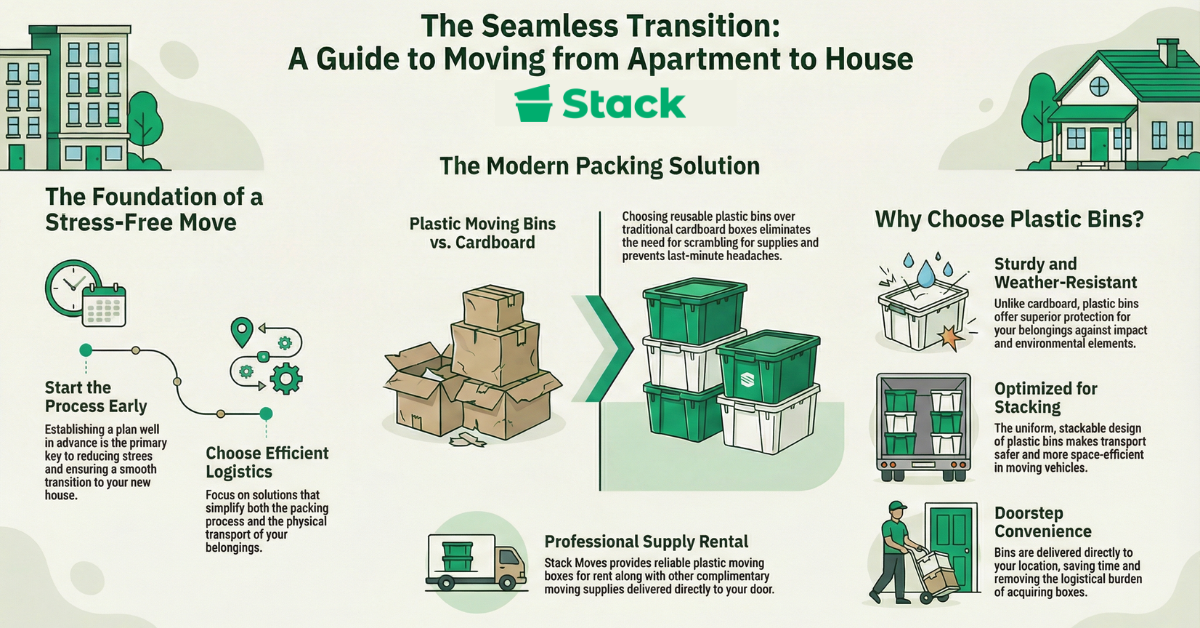
A Complete Guide for Moving from an Apartment to a House

Relocating from an apartment to a house is a big step that is both exciting and a little nerve-wracking. However, moving out of an apartment building and into a larger living space comes with great responsibility, not only in terms of higher costs but also in the sheer amount of planning required for the move. To get through a move like this smoothly, you’ll need a solid moving checklist, and we will be sharing one in this blog to help you stay organized.

Looking for the perfect rental solution? Stack Moves is here to simplify your moving process. With delivery and pickup, plus complimentary packing materials, our plastic moving containers provide a convenient way to keep your belongings organized and safe.Contact us today!

In this post, we will guide you on how to move from your apartment to a house. We also share tips on how to enjoy a stress-free move using the right tools and strategies.

Key Differences When Moving from Apartment to House

How to Organize Moving from an Apartment to a House

Moving from an apartment to a house changes more than just your address; it changes how you live day to day. The most noticeable difference is houses have more space. Many former apartment owners or renters find that the shift to a larger space also means needing more furniture, whether it’s a bigger sofa or a new coffee table to fit the layout.

However, that extra space comes with higher expenses, including larger utility bills, property taxes, homeowners insurance, and ongoing upkeep costs. Unlike apartment living, where maintenance issues are handled by management, a house makes you fully responsible for repairs, landscaping, and preventive maintenance.

You also gain more privacy and freedom to customize your space, but there’s no landlord to call when something breaks. In short, a house offers flexibility and long-term potential along with a bigger financial and maintenance commitment.

Step-by-Step Guide to Moving From an Apartment to a House

Use this moving from an apartment to a house checklist to plan ahead, avoid common mistakes, and make your transition stress-free. From budgeting to adjusting to extra space, we’ll walk you through each step so you’re fully prepared for your move.

1. Set Your Budget

Moving from an apartment to a house often comes with higher moving costs and new homeowner expenses. In addition to hiring movers or renting a moving truck, budget for utility deposits, homeowners insurance, property taxes, and potential maintenance costs. You may also need funds for new furnishings or home improvement projects. Creating a detailed moving budget helps you avoid surprise expenses and stay financially prepared during the transition.

2. Create a Moving Timeline

A clear moving timeline keeps your relocation organized and stress-free. Outline key dates for packing, utility transfers, address changes, and moving day logistics. Booking professional movers early is especially important during peak moving season. Spreading tasks out over several weeks prevents last-minute rushing and helps ensure nothing falls through the cracks.

3. Measure Your New Space

Before moving into your new house, measure doorways, hallways, staircases, and room dimensions. Larger homes often mean bigger furniture, but not everything automatically fits. Confirming measurements ahead of time prevents moving day frustration and protects your belongings from damage. It also helps you plan furniture placement and avoid unnecessary returns or replacements.

5. Transfer and Set Up Utilities

Schedule utility transfers before move-in to ensure electricity, water, gas, internet, and trash services are active. Cancel services at your apartment to avoid overlapping charges. Some providers require deposits or activation fees, so confirm everything in advance. Arriving at a fully functioning home makes moving day significantly smoother.

6. Prepare the New House Before Move-In

Take care of tasks like getting new keys, deep cleaning, and applying a fresh coat of paint while the house is still empty. This is also the ideal time to schedule pest control if needed. Handling these responsibilities early prevents disruptions once your furniture arrives.

7. Budget for Ongoing Home Expenses

Unlike apartment living, you’re responsible for ongoing maintenance and repairs. Set aside funds for HVAC servicing, plumbing fixes, lawn care, and seasonal upkeep. Many homeowners budget 1–3% of the home’s value annually for maintenance. Planning for long-term expenses protects you financially.

8. Declutter Before You Pack

A house may offer more storage space, but that doesn’t mean you should bring everything with you. Decluttering before packing reduces moving costs and makes unpacking faster. Donate, sell, or discard items you no longer use. Fewer boxes mean less labor, lower transportation costs, and a more organized start in your new home.

9. Take Inventory of Your Belongings

Creating a moving inventory list helps you stay organized and track valuable items. Document furniture, electronics, and high-value belongings before the move. This is especially helpful for moving insurance claims or in case items are lost or damaged. An inventory also simplifies the unpacking process and ensures everything arrives safely.

10. Gather Packing Supplies

Using quality packing supplies protects your belongings during transport. Stock up on sturdy moving boxes, packing tape, bubble wrap, packing paper, and permanent markers. Specialty boxes for fragile items like dishes or electronics can reduce damage risk. Having the right supplies ready ahead of time prevents delays and last-minute store runs.

11. Pack Room-by-Room

Packing room by room keeps the moving process organized and efficient. Clearly label each box with its contents and destination room in your new house. This method simplifies unloading and speeds up the unpacking process. It also reduces confusion and prevents items from getting misplaced during the move.

12. Prepare a Moving Essentials Box

A moving essentials box contains the items you’ll need immediately after arriving. Include toiletries, medications, phone chargers, important documents, snacks, basic tools, and a change of clothes. Since unpacking can take time, having daily necessities easily accessible reduces stress. This small step makes your first night in your new home far more comfortable.

13. Confirm Moving Arrangements

A few days before moving day, confirm all logistics with your moving company or truck rental provider. Double-check arrival times, payment details, parking access, and any special instructions. If you’re moving into a gated community or HOA neighborhood, ensure you understand entry procedures. Confirming details ahead of time helps prevent delays and miscommunication.

14. Do a Final Walkthrough

Before leaving your apartment, complete a thorough final walkthrough. Check closets, cabinets, storage areas, and outdoor spaces to make sure nothing is left behind. Take photos if needed for lease documentation or security deposit purposes. A careful walkthrough gives you peace of mind and ensures a clean break before starting fresh in your new house.

15. Update Your Address Everywhere

Submit a change-of-address request with USPS to reflect your new address and update your information with banks, insurance providers, subscriptions, and government agencies. Keeping records current ensures you don’t miss important mail or billing statements. Address updates are easy to forget but essential during relocation.

16. Plan for Outdoor and Storage Spaces

Once you arrive, organize your garage, basement, attic, or outdoor areas early. Decide how you’ll store tools, seasonal décor, and lawn equipment to prevent clutter buildup. Houses require more storage planning than apartments. Establishing systems from the start keeps your new home organized long-term.

How to Prepare Your New House for Moving Day

How to Plan a Move to a New House

Unlike apartments that are typically move-in ready and maintained by property management, houses require a bit more preparation to make them fully functional and livable. We’ve listed a few key tasks you should never overlook before moving into a house.

Complete Any Necessary Repairs

Handle small repairs before move-in, like patching holes, fixing leaks, tightening loose fixtures, or replacing broken hardware. It’s much easier to fix things while the house is empty than after furniture is in place. Knocking these out early also helps you avoid bigger (and more expensive) problems down the line.

Clean the House

Deep clean the entire home before your belongings arrive. Focus on floors, baseboards, cabinets, appliances, bathrooms, and closets. Cleaning an empty house is quicker and ensures you’re truly starting fresh.

Set Up and Confirm Utilities

Make sure electricity, water, gas, internet, and trash services are active before moving day. Arriving to a house without power or running water can turn an already busy day into a stressful one. Confirm activation dates with providers ahead of time to avoid delays.

Schedule Pest Control if Needed

If the home has been vacant or you’re unsure about prior pest treatments, consider scheduling a preventive pest control service. Treating the space before furniture and boxes are inside is far more effective. It also gives you peace of mind as you settle in.

After the Move: Settling into Your New Home

Settling in is about more than just unpacking; it’s about creating a space that makes you feel comfortable and secure. With some thoughtful steps like connecting with your new community, you’ll be feeling at home in no time. Here are a few things you can do to settle into your new space quickly.

Prioritize Unpacking and Organization

Begin unpacking essential items like toiletries, bedding, a change of clothes, and basic kitchen supplies. This will help you settle in comfortably from the first night. Additionally, you should first focus on setting up essential rooms, such as your kitchen and bedroom. After a hectic journey, it’s nice to prepare a meal without relying on takeout and eventually have a comfortable place to rest. After finishing these areas, you can move on to spaces like the living room.

Get to Know the Neighborhood

No one can exist in isolation; as humans, we are social beings who thrive best when we belong to a community. This is why it’s important for you to build a local network for yourself once you move into a new neighborhood. And the easiest way to do this is to introduce yourself to your neighbors. From here, you can take it a step further by attending local events and using community platforms to stay informed on all the recent happenings. Another thing you should tackle quickly is learning where all the local amenities are located. A quick drive or walk around the area can help you familiarize yourself with nearby grocery stores, pharmacies, and recreational centers.

Update Important Documents

As we mentioned earlier, one of the necessary parts of moving is informing important institutions, such as your bank, about your move. It’s necessary to file a change of address with these establishments because failing to do so could result in missed bills, lost mail, or delayed account updates.

Secure Your Home

Securing your home boosts the safety of your family and yourself. Always change the locks as a precaution in case the previous owners or landlord still have a set of spare keys. If you can, go the extra mile to install security cameras and alarm systems in your home for extra protection.

Packing Tips Specifically for Moving from Apartment to House

How to Pack Like a Pro When Moving to a New House?

When moving from an apartment to a house, you may be bringing more furniture or upgrading to larger pieces. Disassemble bulky items like bed frames, dining tables, and sectionals to save space in the moving truck and reduce the risk of damage. Store bolts and screws in labeled bags so reassembly in your new home is quick and stress-free.

Pack items by future room placement, not just by current use. Since houses often have additional rooms, label boxes clearly for spaces like guest rooms, garages, or home offices. This will make unloading faster and help movers place items directly where they belong.

Don’t forget outdoor and storage items. Tools, seasonal décor, and small equipment should be packed securely and separately from indoor household goods. Keeping these items organized will make setting up storage areas in your new house much easier.

Take photos of how electronics and cables are connected before unplugging them. This will save time when setting up entertainment systems or office equipment in your larger space. For bulky soft items like comforters or pillows, vacuum-sealed bags can help maximize space in the moving truck.

If possible, consider renting durable plastic moving bins instead of traditional cardboard boxes. They’re sturdier, stack more securely, and often come with delivery and pickup services. This can simplify logistics and reduce waste during your move.

Want to Simplify Your Apartment-to-House Move?

Stack Moves reusable moving box rental service

With the right plan in place, the process of moving from an apartment to a house can actually be far less stressful than you might expect. The key is starting early and choosing solutions that make packing and transport easier.

A good place to start is with your packing supplies. Consider using plastic moving bins instead of cardboard boxes. They’re sturdy, stackable, weather-resistant, and delivered right to your door, which means less scrambling for supplies and fewer last-minute headaches. Stack Moves provides reliable plastic moving boxes for rent along with other complimentary moving supplies. Book your plastic moving boxes today and make your apartment-to-house transition as smooth as it should be.

Frequently Asked Questions

To make your move even smoother, we’ve compiled answers to frequently asked questions about preparing for your apartment-to-house transition.

What Are the Biggest Challenges When Moving From an Apartment to a House?

The biggest challenges usually involve adjusting to the higher living expenses and having full responsibility for home maintenance. Moving out of apartment complexes means transitioning to a property where you handle utilities, repairs, yard maintenance, and seasonal upkeep yourself.

How Far in Advance Should I Start Packing for an Apartment-To-House Move?

It’s best to start packing at least 3–4 weeks before your moving date. Begin with non-essential items and clearly separate important things you’ll need right away in your new home. If you’re coordinating the end of your lease at your old apartment and closing on a house at the same time, early packing becomes even more important. Try as much as you can to space out the process to reduce stress.

Can I Reuse Moving Boxes From My Apartment Move for My New House?

Yes, you can. Feel free to reuse your old moving boxes as long as they’re still in good condition. Reusing boxes can save money, but fragile items may require new, reinforced ones for better protection. Just make sure to inspect them carefully for weakened edges or water damage, especially if they were stored in apartment storage areas.

What Should I Check Before Moving Into a New House?

Before moving in, confirm utilities are active and inspect heating systems, electrical systems, and HVAC units. Complete a home inspection if it hasn’t already been done, and test smoke and carbon monoxide detectors. Bring basic cleaning supplies to deep clean the space before unloading furniture. It’s also wise to change the locks and secure your property before fully settling in.

What New Responsibilities Should I Expect as a First-Time Homeowner?

Owning a home means taking full responsibility for maintenance and outdoor care. In addition to interior repairs, you’ll need to manage yard maintenance and landscaping and possibly invest in gardening tools to keep your property in good condition.

How Much Does Moving Cost From Los Angeles to Seattle?

The cost of moving from Los Angeles to Seattle typically ranges from $2,500 to $6,000 or more, depending on the amount of stuff you plan to move and the moving services you choose. When preparing for a long-distance move like this one, it helps to save money wherever possible, and little decisions like renting moving bins instead of buying them can reduce your overall moving costs.

Stack Moves offers moving bins for rent, a budget-friendly alternative to cardboard boxes. To further keep your spending in check, try out our moving box calculator, which will ensure you order just the right amount of boxes for your move. Contact us to book an appointment today!

In this blog, we will cover the cost of moving from Los Angeles to Seattle, as well as some factors that can influence this estimate. We will also share a few practical tips to help you save money when planning for long-distance moves such as this one.

Average Cost Breakdown for Moving from Los Angeles to Seattle

Cost of Moving from Los Angeles to Seattle

A move from Los Angeles to Seattle involves several cost factors, and understanding them can help you budget more effectively. Below, we break down typical moving expenses by the type of service you choose and the size of your home so you can get a clearer picture of what to expect.

Cost by Move Type

One of the biggest factors that influences the cost of your move is the type of moving service you choose. Naturally, full-service movers tend to be the most expensive option, while DIY moves cost the least. The right choice depends on your budget, timeline, and how much help you want during the move.

Full Service Movers

Hiring a full-service moving company will cost you between $2,500 and $6,000. This usually covers packing, loading, transportation, and offloading services. It may or may not cover moving boxes since not all moving companies provide moving bins as part of their service.

To avoid any unwanted surprises, it’s best to ask about what services a moving company provides when asking for their quote. We also advise you to reach out to both Seattle moving companies and Los Angeles moving services during your research to ensure you get exceptional service at minimal cost.

DIY / Truck Rental

To save some money, you can opt for a more DIY option, such as renting a truck. A U-Haul truck for this distance would typically cost around $1000-$2000, excluding gas and other additional fees. Alternatively, if you have a car of your own, you can consider making the trip yourself. While this is cheaper at first, you still have to consider the wear and tear on your car, as well as the amount of time you’d spend driving.

Cost by Home Size

The size of your home has the biggest influence on your moving expenses. In general, larger homes cost more to move because they usually contain more belongings and require more labor and packing materials. That said, there are some instances where this isn’t always the case. Someone in a studio apartment can end up spending more than a family in a two-bedroom home if they simply own more stuff. To get a more accurate estimate, consider using our moving box calculator to help gauge how many boxes and supplies you’ll actually need.

One-Bedroom Apartment

For a one-room apartment, you’d spend an average of $2,000-$5,800. This price covers the cost of movers and your moving boxes for the move. Some factors that could affect the moving cost for a one-bedroom apartment include the time of year you choose to move and whether or not you require additional services like packing and unpacking.

Two-Bedroom Apartment

A two-bedroom move across states, like from LA to Seattle, typically ranges around $2,400–$8,100+ with full-service movers. The final price can be higher or lower depending on factors like how much you’re moving, whether you add packing or unpacking services, the time of year, and any bulky or specialty items that require extra handling.

Three-Bedroom Apartment

Larger moves, such as moving from a family home with 3-4 bedrooms, can cost $6,000 to $10,000 or more since they require additional resources and more labor hours. In these larger moves, it isn’t only the increased volume of items that you should add to their difficulty. Larger homes also tend to include various large or delicate possessions that may require special handling and extra care.
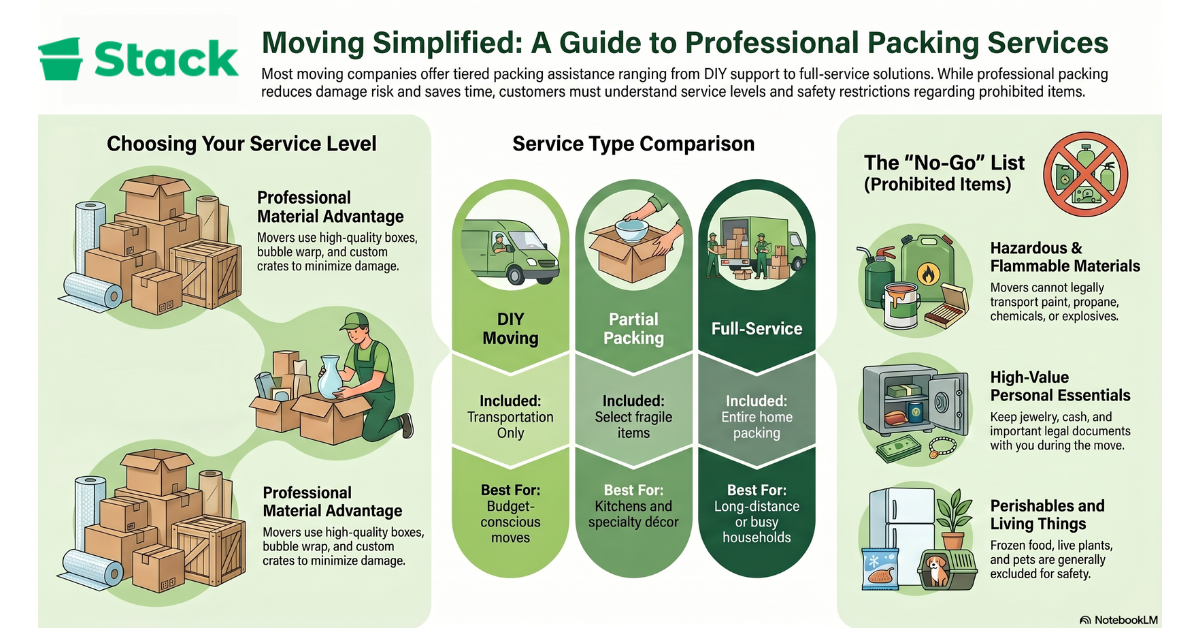
Factors Influencing Moving Costs from Los Angeles to Seattle

For a One-Bedroom Apartment vs a Family Home (3-4 Bedrooms)

One of the biggest influences on the cost of your move is the distance and location of your move. For example, there are approximately 1,140 miles between California and Washington, and as you can imagine, it would cost a pretty penny to transport items between these two locations.

In addition to whatever you’d spend on gas, you also have to account for toll fees, meals, and other expenses. Furthermore, during long-distance moves like this, you may have to acquire certain permits, which drive up your moving costs even more.

Another factor that significantly affects your moving expenses is the weight and volume of your belongings. Packing more items means more weight, and this translates to higher transportation and labor costs. This is why it’s smart to declutter your items before you start packing for a move.

When you choose to move also affects the cost of your move. Peak moving seasons like the summer and weekends are usually more expensive than off-seasons like during the winter. The best time to move from Los Angeles to Seattle is during the spring or fall.

Additional services like packing, unpacking, and storage solutions can further drive up costs. Before opting for these services, be sure to think about whether you really need them or not. By handling certain tasks yourself, you can save some money and spend it elsewhere.

Other Costs to Factor in When Moving to Another City

Factors that can influence the cost of your move go beyond the ones discussed above. A more comprehensive list of expenses when moving out includes charges for specialty services like:

  • Renting Storage Units: There are various reasons why you may need to rent storage units during the course of your move. The most obvious reason is that your new home isn’t ready for you to move in yet. Another reason might be that you aren’t ready to unpack certain items yet. Whatever the case, the added rental fees can quickly escalate your overall moving expenses. In Seattle, the average cost of a 10’x10′ non-climate-controlled unit is around $187 per month. The same unit goes for around $284 in Los Angeles.
  • Cleaning Services: Professional cleaning services can be pricey, especially if you plan to do a deep clean. Standard cleaning services can cost around $100–$200 for a single session, with larger homes costing upwards of $300. Most cleaning companies also offer specialized cleaning services known as move-in/move-out services, specifically designed to ensure the home is deep cleaned before a new resident moves in. On average, these types of cleanings can cost around $250–$500.
  • Packing Supplies: Packing supplies such as boxes can be very expensive when bought, which is why we always recommend the cost-effective alternative of renting them instead. It also helps to switch items like bubble wrap and packing peanuts with small towels and old newspapers. Additionally, knowing how many boxes are needed for your move can help you avoid overspending on storage you don’t need. Ditch the mental stress of figuring this out yourself and use our moving box calculator for an accurate estimate.
  • Changes in Fuel Prices: These fluctuations can influence your transportation costs, which are a significant contributor to your overall moving costs, especially over long-distance trips.

How to Save Money on Your Move from Los Angeles to Seattle

Factors That Influence Moving Costs

Whether you’re moving locally or long-distance, being strategic about how you approach the process can make a big difference in your overall expenses. By saving money on the move itself, you can direct these funds to other, more important things. Some effective ways to save money when relocating are

Compare Quotes from Multiple Moving Companies: To be sure you’re getting the best deal, try to get a quote from 3–5 companies. While prices can vary significantly between companies, many of them offer discounts that can help you lower the overall cost of your move. By comparing rates from multiple companies, you can make an informed decision while finding the best solution to your moving needs.

DIY Packing: One of the most effective ways to save money when moving is to pack your items yourself. Doing this reduces the labor costs typically associated with moving services when you hire movers.

Rent Moving Boxes: Renting moving boxes helps you reduce not only costs but waste as well. Rented boxes are durable, reusable, and come in an optimal size that meets various packing needs. Not to mention, they’re less stressful to deal with since they eliminate the hassle of buying, assembling, and storing or discarding your boxes after the move.

Cost-Effective Packing Strategies: Some packing supplies can be substituted with items already available at home. For example, bubble wrap and packing peanuts can be replaced with small towels, blankets, and clothes. Using these items to pack your fragile objects can have the same cushioning effect as using standard packing supplies.

Opt for Mid-Week or Off-Season Moves: Many people don’t realize that timing can make a difference in the cost of their move. Moving during the middle of the week or during an off-season like winter typically translates to lower costs since moving companies are in less demand.

Declutter and Donate: The less you have to pack, the less you need to spend. Before packing, take some time out to declutter since movers charge based on the weight of your items as well as the distance of the move. Items no longer needed can either be sold, donated, or recycled where possible to reduce waste.

Why People Move From Los Angeles to Seattle

Other Costs to Factor in When Moving to Another City

One main reason to move from the West Coast City of Los Angeles to Seattle is the city’s natural beauty. Its lush greenery, mountain ranges, hiking trails, lakes, and rivers make it the perfect spot for outdoor activities such as kayaking. Unlike Los Angeles, Seattle combines city life with easy access to nature, creating a more balanced and serene living environment.

Another reason to move to the Emerald City is because of its thriving job market, particularly in the health, tech, and aerospace industries. Companies like Amazon, Microsoft, and Boeing call Seattle home, offering a wealth of career opportunities for professionals. Additionally, the city’s standout food scene is known for its fresh seafood and diverse cuisine, making it a heaven for foodies.

Although the cost of living in Seattle is relatively high, it is generally more affordable than Los Angeles in terms of housing. This could be great news for people who want to enjoy a high-quality life without the high prices they’d normally encounter in California. Seattle is home to some of the best neighborhoods, such as Capitol Hill, Queen Anne, and Ballard.

The cultural diversity of the city is another one of its standout features. Seattle is a hub for coffee lovers, art enthusiasts, and music fans. You can be sure to encounter world-class exhibitions at the Seattle Art Museum, as well as live performances at iconic venues like The Crocodile.

Finally, Seattle offers a slower, more relaxed pace compared to the hustle of Los Angeles. While most people flock to the West Coast city for its exciting nightlife, some people prefer a more laid-back setting. The city’s focus on sustainability, as well as its stronger sense of community, fosters a welcoming environment for new settlers.

Local vs. Long-Distance Movers: Which Is Right for Your Move?

Ways to Save Money When Moving

Local movers focus on moves within the same city or metropolitan area. Because of their expert knowledge of local routes and regulations, it often feels like they provide more personalized services. For example, Seattle movers would be great at navigating the city’s narrow streets, whereas LA movers are more adept at handling high-traffic areas.

Long-distance movers take the cake when it comes to interstate moves, plus they are great at handling the challenges that come with transporting goods over hundreds of miles. They usually offer extra services like packing, storage, and unpacking to accommodate the needs of longer moves.

The final decision of whether you hire local or long-distance movers should be based on the distance of your move and the level of service you need. For short-distance moves, typically within the same city, local movers would be a cost-effective option. However, for longer distances, you’re better off hiring interstate movers who know how to handle the logistics of such moves.

Need to Rent Moving Boxes for a Los Angeles to Seattle Move?

Stack Moves reusable moving box rental service

The cost of a long-distance move like this is affected by a number of factors, from the size of your home to the timing of your move. Using cost-saving strategies like renting your moving boxes instead of purchasing them or booking movers during the off-season can significantly reduce your overall moving expense.

At Stack Moves, we’re on a mission to make your move as seamless as possible with our rental services, available nationwide, including Seattle and Los Angeles. Our durable and reusable moving bins are designed to withstand the rigors of long-distance moves, keeping your belongings safe until they arrive at their new home. Not sure where to start? Contact us for a free consultation.

Frequently Asked Questions

Planning a long-distance move can raise a lot of questions. Here are answers to some of the most common concerns about moving from Los Angeles to Seattle.

How Much Does a Long-Distance Move From Los Angeles to Seattle Usually Cost?

Most full-service moves along this 1,134-mile route fall roughly between about $2,500 and $8,000+, depending on home size and services selected.

What Factors Influence the Total Cost of My Move?

Movers typically base costs on your home size and the volume of your belongings, as well as the distance of your move. Additional factors include services like packing or storage and the time of your move.

Will Renting a Truck or Container Be Cheaper Than Hiring Full-Service Movers?

Yes, it will. DIY options like rental trucks or moving containers tend to cost less (often under half the price of full service), but you are responsible for packing, loading, driving, and unloading.

How Does the Size of My Home Affect My Moving Cost?

Smaller homes like studios or one-bedrooms usually fall at the lower end of price ranges, while multi-bedroom homes cost more because they require more labor, truck space, and time.

Does the Time of Year I Move Impact Cost?

It absolutely does. Peak moving months in summer tend to have higher rates and less availability, so planning in off-peak months or midweek can help reduce costs.

Home Depot vs. Lowe’s Moving Boxes

When you’re buying moving boxes, Home Depot and Lowe’s are usually the first two options that come to mind. Although both stores offer a wide range of moving boxes and packing supplies, it can be tough trying to choose one over the other. This comparison shows why Home Depot is the better choice for heavy-duty bulk moves, while Lowe’s is the winner for small-scale convenience and all-in-one kits.

If you’re looking for a cost-effective and eco-friendly way to gather moving boxes, Stack Moves can help you save both time and money. By renting plastic moving boxes you get durable, uniform containers delivered to your door and picked up after your move—no waste, no sourcing hassle. Want to learn more about how renting can help you save money? Contact us today!

In this post, we will discuss the pros and cons of shopping for moving boxes from Home Depot and Lowe’s to help you decide on the best solution for your move.

Comparison of Home Depot vs. Lowe’s Moving Boxes

Key Features of Home Depot Boxes

Our comparison of Home Depot vs. Lowe’s moving boxes looks at the factors that matter most when choosing the right boxes for your move, including sizes, durability, eco-friendliness, and available options to see how each retailer stacks up. By the end, you’ll have a clearer idea of which store offers the better fit for your moving needs.

Key Features of Home Depot Boxes

Home Depot moving boxes are known for their wide selection, solid build, and eco-friendly materials. Below we break down how they stack up in size availability, durability, sustainability, and what you get with your purchase.

Box Sizes and Specialty Options

Home Depot boxes are available in various sizes, ranging from small to extra-large. In addition to standard boxes, they also provide specialty boxes, like dishpack and wardrobe boxes. Their standard, medium-sized boxes measure 21 inches in length, 15 inches in width, and 16 inches in depth.

Durability and Strength

Beyond being affordable, Home Depot’s boxes are built to withstand tough moves. Home Depot boxes are made of corrugated cardboard and are generally strong enough for typical household moves. Likewise, their heavier-duty options perform well under weight and stacking pressure. With an edge crush test (ECT) ranging from 32 to 48, these boxes are suitable for packing both heavy and fragile items.

Eco-friendliness

For the environmentally conscious mover, Home Depot’s boxes are a sustainable choice. Most of their boxes are made from 100% recycled content and remain fully recyclable even after multiple uses. By choosing these over non-recycled alternatives, you’re reducing the carbon footprint of your move and ensuring that your packing materials don’t end up in a landfill once the last room is unpacked.

Additional Supplies

While Home Depot sells other packing supplies such as tape and bubble wrap, these items are not included with box purchases and must be bought separately.

Key Features of Lowe’s Moving Boxes

Key Features of Lowe’s Moving Boxes

Lowe’s moving boxes compete closely with Home Depot’s offerings, emphasizing a variety of sizes and recyclable materials, with some distinct perks in their bundled kits.

Box Sizes and Speciality Options

Like Home Depot, Lowe’s also offers a wide range of boxes, including specialty boxes like television moving boxes. A medium-sized box from Lowe’s measures 18 inches in width, 16 inches in height, and 18 inches in depth, making it slightly shorter but wider than the Home Depot equivalent. To support larger projects, Lowe’s also offers tiered bulk pricing, allowing you to scale your supply list while keeping the per-unit cost low.

Durability and Strength

While Lowe’s boxes are dependable for typical household items, they are primarily designed for standard-duty use. Most of their inventory carries an ECT score of 32, which is the industry baseline for safe stacking. It is also worth noting that handle cutouts vary by model; if you are moving heavy items, you’ll want to filter for their specific “Easy Lift” options to ensure a secure grip.

Eco-friendliness

Lowe’s moving boxes are made from recycled cardboard and often carry certifications like SFI (Sustainable Forestry Initiative), supporting responsible sourcing and recycling. This ensures that the fibers used in your boxes come from forests managed with strict environmental and social standards.

Additional Supplies

The biggest differentiator for Lowe’s is their all-in-one moving kits. Unlike the à la carte model, these bundles often package boxes with essentials like tape, bubble wrap, and protective pouches. This approach eliminates the need for multiple trips to the store and ensures you have a cohesive set of supplies from day one. While the specific contents can vary by location, these kits are the most efficient option for those who want to skip the logistics of supply planning and get straight to packing.

Pricing and Availability of Moving Boxes at Home Depot and Lowe’s

Lowe’s standard boxes are priced at $1.75 for small boxes, $2.25 for medium boxes, $2.75 for large boxes, and $3.75 for extra-large boxes.

Size Price H W D
Small $1.75 12 16 12
Medium $2.25 18 16 18
Large $2.75 18 24 18
Extra Large $3.75 21.5 22 22

Home Depot’s standard boxes cost $1.98 for small boxes and $2.48 for large boxes. Heavy-duty boxes can cost as much as $6.98, depending on the size.

Size Price H W D
Small $1.38 17 11 11
Medium $1.98 21 15 16
Large $2.48 27 16 15
Extra Large $3.48 24 21 20

Home Depot vs. Lowe’s Moving Boxes—Pros and Cons

This breakdown will give you a clearer picture of what each store offers and help you decide which is the right choice for you.

Home Depot

Home Depot offers moving boxes in varying sizes and strengths to suit diverse packing needs. More reasons why they’re a great choice to purchase moving boxes from include:

Pros:

  • Easy to purchase
  • Affordable prices
  • High ECT score for added durability
  • Eco-friendly
  • Handles on boxes
  • Comprehensive return policy

Cons

  • Bundles don’t come with additional supplies

Lowe’s

When you shop at Lowe’s, you can be sure you’re getting high-quality boxes at competitive prices, but what else sets them apart?

Pros:

  • Boxes are made from ethically sourced materials
  • Kits come with extra supplies
  • Extensive return policy

Cons:

  • Slightly higher prices compared to Home Depot
  • Limited ECT score
  • Availability and pricing can vary by location

Home Depot vs Lowe’s Moving Boxes: How They Compare

In terms of strength, both stores’ boxes meet the standard edge crush test (ECT) score of 32, suitable for most packing needs. However, Home Depot offers boxes with higher scores, reaching up to 48 for added strength. Additionally, both stores provide specialty boxes, such as wardrobe boxes, television boxes, and more.

Looking at customer satisfaction and feedback, Home Depot has a slightly higher rating of 4.6 stars with an 83% recommendation rate compared to Lowe’s 4.4 stars and 84% recommendation rate. Customers also enjoy the same positive experience when it comes to their return policies. If you have any extra unused boxes, Home Depot allows you to return your boxes within 90 days as long as you have a receipt. Likewise, Lowe’s general policy allows customers to return most items within 90 days as well.

Both stores offer bundle options that allow you to take advantage of bulk discounts; however, notable differences exist between the two. For instance, Home Depot’s bundles don’t include additional packing supplies. On the other hand, Lowe’s kits include helpful supplies such as bubble wrap and foam pouches. However, the availability and pricing of Lowe’s kits depend on your location, making Home Depot’s offer more predictable.

Home Depot vs. Lowe’s Moving Boxes—Which is Best for You?

To help you decide which moving boxes are best for your needs, we compared both boxes based on affordability, durability, and eco-friendliness. You have to consider all these factors because it’s important for your boxes to be sturdy yet affordable.

In terms of pricing, Home Depot offers slightly lower prices for individual boxes than Lowe’s. Plus, their prices are more consistent across locations, making them a more budget-friendly choice.

Home Depot also takes the lead for durability since their boxes come at higher ECT ratings of up to 48 compared to Lowe’s standard 32. Both stores sell boxes made from recycled materials, making either one a solid choice for eco-conscious buyers.

Additional Moving Supplies and Services Offered by Home Depot and Lowe’s

Pros and Cons of Each Option

Both Home Depot and Lowe’s offer more than just moving boxes, making them convenient one-stop shops for basic moving supplies.

Common Supplies at Both Stores:

  • Packing tape and dispensers
  • Bubble wrap and foam sheets
  • Packing paper and newsprint
  • Stretch wrap and shrink wrap
  • Mattress and furniture covers
  • Labels and markers

Home Depot Extras:

  • Partnerships with truck rental companies
  • Dollies and hand trucks
  • Moving kits (boxes sold together, no extra packing materials included)

Lowe’s Extras:

  • Moving kits that bundle boxes with tape, bubble wrap, and foam pouches
  • Furniture sliders and protective pads
  • Select local truck rental partnerships

Other Cheap Moving Box Solutions

While Home Depot and Lowe’s are the most convenient, you can find cheaper moving boxes beyond big-box stores. Walmart often undercuts the major home improvement stores by a few cents per unit on standard sizes. For those who can plan ahead, Amazon and U-Line offer significant savings when you buy in bundles of 20 or 25, though you’ll need to account for shipping costs or Prime eligibility. U-Haul is another high-value option, offering a “buy-back” guarantee where they refund you the full price for any unused boxes you return. Finally, dollar stores are excellent for small, sturdy boxes, though their inventory is usually inconsistent and better suited for packing heavy items like books or canned goods.

Where Can You Get Free Moving Boxes?

For the absolute lowest moving budget, you can source high-quality boxes for free by tapping into local community groups and retail waste cycles. Facebook Marketplace and the Nextdoor app are the best places to start, as people who have just finished unpacking are usually desperate to get rid of their empty boxes to reclaim their garage space. You can also visit local liquor stores or bookstores, which routinely give away reinforced, heavy-duty boxes that are specifically designed to hold weight without buckling. Finally, check with large retailers or grocery stores during their restocking hours; they often have an abundance of clean, sturdy cardboard destined for the baler that they are happy to let you haul away for free.

Why Renting Plastic Bins Is the Best Option

Compared with buying boxes, renting plastic bins is the most stress-free and cost-effective way to gather moving boxes. Unlike traditional cardboard boxes, which become weak when exposed to moisture and tend to collapse under heavy weight, plastic bins are very durable. In addition to their sturdiness, they are also a more sustainable way of moving since the boxes can be used multiple times. Renting plastic bins is also more convenient since most rental services provide the option of having your bins delivered to your doorstep and picked up after your move.

Tips for Choosing the Right Moving Boxes

Where Can You Get Free Moving Boxes

With the right moving boxes, packing is easier, and your belongings remain protected throughout the move. Use these tips to find the right box for your move:

  1. Estimate how many boxes you might need based on the size of your home and belongings. Online tools, such as a moving box calculator, can help you do this easily and save you the stress of needing more boxes mid-packing.
  2. Stacking boxes is a handy technique that helps you maximize space in your moving truck. Stick to boxes of similar shapes and sizes to make stacking them easier and safer. Another good practice when picking box sizes for moving is to match the box sizes to the items being packed.
  3. Measure your large or oddly shaped items to confirm they can fit into standard moving boxes. This way, you can ensure they are properly packed and kept safe.
  4. Choose your box sizes according to the size of your truck. Remember that smaller boxes are easier to fit into tight spaces and can be stacked to save space.

Need Reusable Moving Boxes to Rent?

Alternatives to Free Moving Boxes

Home Depot and Lowe’s offer a wide range of moving boxes at affordable prices. Home Depot is a budget-friendly choice that allows you to choose boxes with better durability for tougher moves. Lowe’s offers packing kits with bonus supplies, which can be convenient and make packing simpler.

Ultimately, both options are great, and whichever one you choose will get the job done. However, it’s worth mentioning that you can still get the best moving boxes without buying them. Whether you’re on a budget or looking for an eco-friendly moving solution, renting moving boxes remains a cost-effective and sustainable way to pack. Contact us today to rent our sturdy plastic bins.

Frequently Asked Questions

To help you finalize your supply list, here are the answers to the most common questions about sourcing boxes from Home Depot and Lowe’s.

Are Home Depot Boxes Good?

Yes, Home Depot moving boxes are a solid choice for most moves. They’re sturdy, easy to find in-store or online, and made from recycled materials, with heavier-duty options available if you’re packing fragile or bulky items.

Which Offers Better Quality Moving Boxes, Home Depot or Lowe’s?

Both stores offer reliable boxes that work well for standard household moves. If strength is your top concern, Home Depot has more heavy-duty options, while Lowe’s is perfectly suitable for everyday packing needs.

Can I Buy Moving Boxes in Bulk at Home Depot or Lowe’s?

Yes, both retailers offer bulk options and moving kits that make it easier to buy everything at once. Lowe’s kits sometimes include extra supplies, though availability can vary by location.

Are There Eco-Friendly Moving Box Options Available at These Stores?

Absolutely. Both Home Depot and Lowe’s sell moving boxes made from recycled and recyclable materials, making them a good option for eco-conscious movers.

Top 10 Corporate Relocation Companies

Corporate moves are often complex, making them difficult for standard relocation companies to handle without delays or disruptions. To prevent any unnecessary downtime or compliance issues, we advise businesses to work with providers that specialize in business relocations. But with more than a thousand companies to choose from, making a choice can be difficult .That’s why we reviewed the top 10 corporate relocation companies that stand out for their experience, service quality, and ability to manage office and employee moves efficiently to help you make an informed choice.

Instead of overspending on packing materials, consider renting durable office moving crates from Stack Moves. Trusted by professional movers, our reusable bins not only reduce waste but also cost a fraction of what you’d spend buying new boxes. With free delivery across over twenty U.S. locations, you can contact us to book your boxes today and simplify your entire moving process.

In this blog post, we will review the top 10 corporate relocation companies and guide you on what to look for when hiring one.

Comprehensive Overview of the Best Corporate Relocation Companies

What to Look for in a Corporate Relocation Company

What is it about these companies that makes them qualified to handle your relocation needs? Top relocation management companies are reliable, experienced, and equipped to handle global and local moves. These companies made the list not just for offering the best relocation services available but also for their ability to minimize disruptions and guarantee a smooth transition for businesses and employees alike.

  1. Suddath – A century-old, Jacksonville-based Atlas Van Lines agent handling office moves, corporate and international employee relocation, and workplace setup across 180 countries.
  2. Cartus Corporation – great for multinational companies that need scalable services.
  3. Graebel – ideal for large enterprises managing complex moves.
  4. SIRVA Worldwide Relocation & Moving – a strong fit for multinational enterprises that require end-to-end relocation services.
  5. Aires – best relocation company for teams who need a full-service relocation partner.
  6. Altair Global – a strong option for companies that prioritize data-driven solutions.
  7. Weichert Workforce Mobility – a trusted solution for businesses looking for customized, tech-integrated mobility solutions.
  8. Atlas Van Lines – perfect for teams dealing with bulky moves or specialized moves.
  9. XonexFull-service relocation management and global mobility solutions spanning 130+ countries.
  10. NRI RelocationRecognized repeatedly in industry surveys (e.g., HRO Today Baker’s Dozen) as a top corporate relocation and global mobility partner.

Corporate Relocation Companies at a Glance

Company Founded / HQ Global reach Best for Signature services
Suddath 1919 · Jacksonville, FL Moves across 180 countries Office moves plus workforce relocation Commercial moving; workplace furniture and tech setup
Aires 1981 · Pittsburgh, PA area Worldwide Full-service relocation programs MobilityX app; global mobility management
Graebel 1950 · Denver, CO area (HQ) Worldwide Large enterprises with complex moves globalCONNECT platform; Shyft virtual surveys
Cartus Danbury, CT · 70+ years in mobility Worldwide Scalable multinational programs Domestic and destination services; program design
Altair Global 1989 · Plano, TX Worldwide Data-driven workforce mobility Relocation, transition, and global financial services
Atlas Van Lines 1948 · Evansville, IN North America plus international Bulky, fragile, or high-value moves Van-line transport; corporate and government moves
SIRVA Worldwide Chicago area (Oakbrook Terrace, IL) Operations in 40+ countries End-to-end multinational relocation Departure and destination services; visa and immigration
Xonex New Castle, DE 130+ countries Frequent international moves Origin and destination relocation; program management
NRI Relocation U.S.-based mobility provider Domestic and global Flexible, compliant relocation programs Group moves; policy design; expense management
Weichert Workforce Mobility Morris Plains, NJ Domestic and global Customized, tech-integrated mobility Policy design; group-move planning; relocation management

1.Suddath 

Suddath has more than a century behind it and also has the scale to match. Founded in 1919 in Jacksonville, Florida, this Atlas Van Lines agent moves companies across 180 countries. For businesses relocating an office or an entire workforce, Suddath’s end-to-end range, from the move itself to furnishing and wiring the new space, makes it a valuable partner.

Key Services:

  • Office and commercial moving
  • Corporate employee relocation
  • International relocation and logistics
  • Workplace services (furniture and technology)

2. Aires

Aires is known for its customer-centric approach and long-standing reputation. It mostly works with organizations that have diverse employee relocation needs and offers customized solutions that ensure a smooth transition. Its proven experience handling complex moves has made it a reliable choice for businesses of all sizes. If you’re looking for a company with a strong global reach, Aires is a great choice.

A key feature of Aires is its MobilityX app, which streamlines the moving process for everyone involved. With this app, employees can track tasks and deadlines and communicate with customers in real time. One disadvantage customers have complained of is having to book an appointment with their relocation consultant before they can speak with them, even for brief calls.

Key Services:

  • Relocation and global mobility management
  • Program strategy and consulting
  • Group moves and special projects
  • International relocation services
  • Mobility consulting

3. Graebel

Graebel works with large and medium-sized businesses to provide them with personalized relocation services. They focus more on adapting to your company’s unique requirements while making your move as seamless as possible. Companies looking for customized solutions can count on Graebel to use their flexible and data-driven approach to produce the best results.

Graebel stands out for its globalCONNECT platform, which allows clients to customize their dashboards to track and manage relocations conveniently. The app uses predictive analytics to identify trends that can help companies respond to potential challenges before they happen. Additionally, its Shyft virtual surveys streamline the planning process by eliminating the need for in-person walkthroughs.

Key Services:

  • Relocation services
  • Departure services
  • Destination services
  • Settling-in services
  • Mobility strategy consulting
  • Program design and implementation

4. Cartus Corporation

Need a well-established and knowledgeable relocation partner? Count on Cartus’s expert-led approach. For more than 70 years, Cartus has been a leader in the corporate relocation industry, helping businesses move their employees with ease. Their undeniable experience in global mobility has positioned them as a company favorite for cost-effective solutions.

Key Services:

  • Domestic solutions
  • program design and optimization
  • Departure services
  • Destination services
  • Relocating employee solutions

5. Altair Global

If you’re looking for a company that combines personalized service with data, Altair Global is the company for you. Their specialization in workforce mobility has helped many employees transition to their new spaces, whether locally or internationally. They primarily work with large organizations that require tailored solutions.

Key Services:

  • Global relocation services
  • Destination services
  • Departure services
  • Transition services
  • Global financial services

6. Atlas Van Lines

If your move involves heavy, fragile, or large items, put your faith in Atlas Van Lines’s expertise, and they’ll get the job done efficiently. Like Cartus, Atlas Van Lines is another well-known company in the corporate moving industry. They cater to businesses that need specialized transportation services. In addition to its large fleet, Atlas Van Lines has built a strong reputation for handling oversized and high-value items. Companies with unique moving needs should consider working with them.

Key Service:

  • Corporate relocations
  • Military moves
  • Government moves
  • Residential moves
  • Packing and unpacking
  • Long distance moves

7. SIRVA Worldwide Relocation & Moving

SIRVA is another contender for companies with global footprints with operations in more than 40 countries. They serve companies with a strong international presence by providing end-to-end corporate relocation services. Their global reach allows them to handle relocations in almost every country.

Key Services:

  • Departure services
  • Destination services
  • Visa and immigration
  • Employee counseling

8. Xonex 

Xonex has more than an international presence; it also has a talent for streamlining processes. Its full-scale mobility solutions are available in over 130 countries. For companies that frequently move internationally, Xonex’s global logistics experiences make it a valuable partner.

Key Services:

  • Origin relocation
  • Destination relocation
  • International relocation
  • Relocation program management

9. NRI Relocation

NRI Relocation is known for combining structured relocation management with strong employee support. The company specializes in managing complex domestic and global relocations while maintaining consistency, compliance, and cost control. Its consultative approach makes it well-suited for organizations that want flexibility without losing visibility over their relocation programs.

Key Services:

  • Group moves
  • Global mobility
  • Policy design
  • Policy administration
  • Relocation expense management
  • Corporate relocation

10. Weichert Workforce Mobility

When you think of a relocation partner who is flexible and customer-centric with strong tech integration, we hope Weichert comes to mind. They work with companies that require tailored approaches to employee relocation, whether domestic or global.

Key Services:

  • Policy design and development
  • Group move planning/strategy
  • Relocation management

Key Services Offered by Leading Corporate Relocation Companies

Top 10 Corporate Relocation Companies

Top companies handle everything from employee relocation to compliance, taking the burden off your team. Here, we break down the main services top corporate relocation companies provide so you have a clear idea of what gets handled for you.

  1. Relocation Policy Design & Program Management: Without a relocation company, employers would have to design relocation rules from scratch, decide who qualifies for what, manage exceptions, and police abuse. A corporate relocation company builds and manages this policy for you and enforces it.
  2. End-to-End Move Management (Domestic & International): Instead of HR or the employee coordinating movers, timelines, shipments, and delivery issues, the relocation company oversees the entire move. They act as a single point of contact that vets movers, coordinates logistics, and audits inventories.
  3. Global Mobility & Assignment Management: For long-term or international assignments, employers would need to track compensation changes, housing allowances, assignment lengths, and repatriation details. This service tracks the entire lifecycle of an international transfer, including housing allowances, cost-of-living adjustments, and return dates.
  4. Immigration, Visa & Tax Coordination: Immigration rules, work permits, and cross-border tax laws are complex and constantly changing. Corporate relocation companies already know the requirements since they work with immigration and tax specialists. They’ll be the ones to guide employees through the process, meaning you don’t have to learn immigration laws or risk non-compliance from handling the process incorrectly.
  5. Expense Management & Compliance Reporting: Instead of HR tracking relocation spend manually, relocation companies automate reimbursements and audit spend against your policy. At the end of the day you receive consolidated, audit-ready reports that show exactly where your relocation budget is going without the administrative overhead.
  6. Employee Relocation Counseling & Support: Employees are assigned a dedicated counselor who handles all their move-related questions and anxieties. This removes the support burden from HR and ensures the employee stays focused on their new role rather than the logistics of their personal life.
  7. Technology, Analytics & Reporting: Without a relocation provider, employers would struggle to track timelines, costs, and compliance across multiple relocations. Corporate relocation companies provide dashboards and reports that show exactly where each relocation stands, what it’s costing, and whether policies are being followed.
  8. Home Sale & Home Purchase Programs: Selling and buying a home during a work relocation is time-consuming and risky. Relocation companies run structured home sale programs that remove the employee from the process and protect the employer from market exposure. They coordinate appraisals, agents, offers, and closings so the employee can relocate without waiting months for a sale.

How to Choose the Right Corporate Relocation Company for Your Business

Corporate relocation services specialize in moving businesses from one location to another. Their goal is to make the entire relocation process hassle-free so that you can transition with minimal disruptions to your operations.

Before trusting anyone with handling your corporate move, consider these important factors first:

Service range and flexibility
Your moving company should provide more than just transportation. Essential offerings like professional packing, secure storage, and specialized IT relocation services should all be on the table to ensure your technical infrastructure is handled safely. A quality provider remains flexible enough to cater to your unique business requirements rather than offering a one-size-fits-all solution.

Experience in corporate relocations
Before working with any company, check whether they have experience handling corporate relocations. An experienced team understands how to plan a successful business relocation by anticipating logistical bottlenecks and implementing solutions before they disrupt your operations.

Global reach and local expertise
If your move involves multiple locations, it’s best to work with an organization that has experience with international moves. Of course, local knowledge is still important because with it, they can navigate local regulations to ensure you enjoy a smooth move.

Customer support and satisfaction
Think of relocation services as your partners—partners who should be great at supporting and keeping you updated every step of the way. The company should be able to coordinate the move, give you real-time updates, and answer all concerns regarding the move.

Cost-effectiveness
Corporate moves tend to be very expensive due to the size and nature of the move. When evaluating office moving costs, prioritize companies that offer transparent pricing models over the lowest initial bid. This doesn’t mean you should go for the cheapest option because “cheap” does not automatically mean “best.” Instead, focus on the value that you would be getting.

Client testimonials and reputation
Reviews, case studies, and testimonials can give a better sense of whether the company is reliable or not. A positive track record is a good reason to trust a company.

Benefits of Using Professional Corporate Relocation Services

Save Money - Rent Plastic Moving Boxes for Corporate Moves

Bringing onboard professionals is usually the smartest investment you can make. Not only does it save your team from a logistical nightmare, but it also ensures your business stays up and running without a major dip in productivity. Here are some more reasons why letting experts handle the transition makes it better for your bottom line.

Reduced Administrative Burden for HR Teams

Corporate relocation companies take over tasks HR would otherwise manage internally, such as coordinating movers, tracking expenses, handling exceptions, and answering employee questions. By managing these processes centrally, they free HR teams to focus on core business priorities instead of day-to-day relocation logistics.

Lower Risk of Compliance and Legal Issues

From immigration rules to tax reporting and housing regulations, relocation companies already understand the requirements and work with specialized partners to stay compliant. This reduces the risk of costly errors that can occur when employers try to navigate complex regulations on their own.

Better Cost Control and Budget Predictability

Relocation companies design policies, audit expenses, and use pre-negotiated vendor rates to control costs. Because of this, employers gain visibility into relocation spending and avoid surprise expenses that often arise when relocations are managed ad hoc.

Faster, More Efficient Employee Relocations

By coordinating home sale programs, temporary housing, and move logistics, relocation companies reduce delays that can keep employees stuck between locations. Faster relocations mean employees can become productive sooner in their new roles.

Improved Employee Experience and Retention

Dedicated relocation counselors guide employees through each step of the move, answering questions and resolving issues before they escalate. This support reduces stress and increases the likelihood that relocated employees remain satisfied and committed to the company.

Consistency Across All Employee Moves

Relocation policies and standardized processes ensure employees are treated fairly and consistently, regardless of location or role. This prevents benefit discrepancies and internal disputes that can arise when relocations are handled case by case.

How to Organize a Smooth Corporate Relocation Process

Stack Moves reusable moving box rental service


  • The goal is to keep everyone on the same page and make sure no detail gets lost. Follow these steps to keep your move organized and your sanity intact.

    • Create a Relocation Plan & Timeline: The first thing to get out of the way is to come up with a solid plan. Break your move down into steps with clear deadlines so you won’t miss out on anything. Assign responsibilities so everyone knows what their role is. A well-structured office moving checklist will help you stay on track.
    • Assemble a Moving Committee: Put together a small team to assist you with the move. Choose reliable employees you can trust to oversee different aspects of the move and maybe a point person for employee concerns.
    • Assess Office Needs & Layout: Take a good look at your new office space before you execute the move. Could it use more desks or better lighting? Plan your office layout in advance so that everything is already in place on moving day.
    • Inventory & Categorize Items: Avoid carrying anything that you don’t need. Make a detailed inventory list of everything you own, and decide on what to keep, donate, and discard

    Want to Enjoy a Stress-Free and Cost-Effective Corporate Move?

    From full-service providers like Aires to international relocation companies like Cartus, we’ve seen how each has its unique value propositions. Whether you’re looking for specialized logistics providers or experts in employee relocation, there’s a company on our list that meets your needs. While corporate relocations are inherently expensive, you can significantly reduce your bottom-line costs by opting for rental crates over single-use cardboard. You can rent moving boxes in Los Angeles and many more U.S. locations from Stack Moves. Contact us today to learn how we can support your next corporate move.

Frequently Asked Question

We know that moving a company can feel a bit overwhelming, and you probably have a long list of what-ifs spinning in your head. To help clear things up, we’ve rounded up the questions we hear most often from business owners and answered them so you can get a better handle on how the entire relocation process works.

What Services Do Top Corporate Relocation Companies Offer?

Top corporate relocation companies manage the entire relocation process on behalf of businesses. This typically includes relocation planning, move coordination, office and employee relocations, vendor management, logistics oversight, timeline tracking, and post-move support, so companies don’t have to coordinate multiple providers themselves.

How Much Does Corporate Relocation Typically Cost?

Corporate relocation costs vary based on move size, distance, services required, and complexity. Small office or employee relocations may cost a few thousand dollars, while large or multi-location corporate moves can range significantly higher. A professional relocation company helps control costs through planning, negotiated vendor rates, and avoiding costly delays or mistakes.

How Do I Prepare My Office for a Corporate Move?

Preparation usually involves inventorying equipment, decluttering unnecessary items, backing up data, labeling departments clearly, and setting a move timeline. A corporate relocation company will guide you through these steps and coordinate the process so your team isn’t left figuring it out on their own.

Can Corporate Movers Handle It Equipment Safely?

Yes, they can. Professional corporate movers are trained to handle IT equipment such as servers, computers, and networking hardware. They use proper packing materials, labeling systems, and handling procedures to reduce risk and ensure equipment arrives ready for setup.

Moving Out Checklist (2026)

Whether it’s your first move or your tenth, a good moving-out checklist is your key to an organized relocation and the best defense against total logistical chaos. Without proper planning, you may find yourself packing your favorite pair of socks in a trash bag because you’ve run out of boxes mid-move. To help you avoid situations like this, we laid out a simple, phase-by-phase moving plan that tells you what to do and when to do it.

We’ve seen every moving mishap imaginable, so we know what it takes to make a move smooth and hassle-free. Led by a team of eco-friendly moving experts, Stack Moves helps people enjoy stress-free moves by delivering sturdy plastic moving bins to their door—and picking them up after. Contact us today to make your move 10x easier.

This guide provides a step-by-step moving-out checklist to keep you organized throughout the entire moving process. You’ll also get practical tips on the overlooked details that even seasoned movers sometimes forget.

Complete Moving Out Checklist with Timeline

Person reviewing a list for moving out with packing supplies on table

We used our hands-on experience to build this 30-step checklist that focuses on what actually happens during a move. This roadmap will walk you through every essential task to make sure nothing gets left behind.

8+ Weeks Before Moving

Think of this window as your planning or decision phase. Everything else you do will either get easier or harder depending on what you do now. It’s the best time to lock in your moving date, set a realistic budget, and start cutting clutter so you’re not paying to move things you don’t need. Aim to leave this phase with a clear picture of how you’re moving, what you’re moving, and how much it’s allowed to cost.

1) Decide on your moving date and create a rough timeline: Your moving date is the anchor for every other deadline, from utility shut-offs to truck rentals. We recommend picking a midweek date if possible, as weekends and month-ends are peak times when rates spike and availability reduces. Once that date is locked in, work backward to set your weekly goals so the final days don’t turn into a disorganized mess.

2) Set a realistic budget: Moving costs are notoriously easy to underestimate once you factor in packing supplies, transport, and professional labor. Most people forget to factor in other small but necessary moving expenses, like moving insurance, childcare, and pet transportation. To set up your moving budget, start by deciding on the maximum amount you are willing to spend and then add an extra 10% on top of that total to cover unexpected expenses like parking permits.

3) Declutter your belongings: Reducing your inventory at this stage directly lowers your shipping weight and can significantly lower your moving costs. Don’t forget that one of the major cost-contributing factors of any move is how much you are shipping. So there’s no point paying to transport items you plan to throw away or will never end up using.

4) Create a moving inventory list: The inventory list should include all the items you plan to move, ideally grouped by room or category. You can note details like the quantity of each item, its condition, and fragile or valuable items. With an inventory list you can estimate how much space you’ll need and plan your packing more efficiently. Plus, it makes it much easier to handle insurance if something gets damaged or lost during the move.

5) Decide how you’re moving (DIY vs. professional movers): Decide early whether you want to handle the heavy lifting yourself or outsource the stress to professionals. While hiring professional movers generally costs more than planning a DIY move, keep in mind that they bring the experience and equipment needed to handle moves safely and quickly. If you can afford it, it is usually worth the investment to hire a crew. But if you’re moving out of a smaller apartment and have a few reliable friends, a DIY move can save you a lot of money. Just be sure to have some snacks and drinks ready to offer as a thank you.

6) Start comparing moving companies or truck rentals: Never settle for the first quote you receive. We advise getting at least three written estimates from different movers to have an idea of what a fair price actually looks like in your area. When you are comparing those quotes, look past the big number at the bottom and scan for hidden extras like stair fees and long-carry charges. Don’t be afraid to speak up and negotiate either. You can often land a better deal by asking for discounts or by bundling your services, like packing and transport.

7) Research packing supplies and moving box options: Decide on your supply strategy now so you have your materials in hand before the first packing session begins. Standard cardboard boxes are the traditional choice, but they often require extra packing tape and reinforcement to stay sturdy. We’ve found that renting plastic moving bins is a more efficient alternative, as they come pre-assembled and offer much better protection for fragile items.

4–6 Weeks Before Moving

Family organizing belongings while following a list for moving out

Now it’s time to commit. At this stage, you’re taking action on all the plans you made earlier and making sure the logistics don’t fall apart later.

8) Book movers or reserve a rental truck: Waiting any longer than a month is a gamble, especially during peak moving seasons like summer. Locking in your deposit now ensures you don’t have to settle for last-choice providers, as most reputable crews fill up their schedules weeks in advance. Make sure to get your booking confirmation in writing, specifically noting the arrival window and any agreed-upon labor rates.

9) Gather moving supplies: You generally have three ways to go about this. Using free boxes can save you money, but it’s incredibly time-consuming, and there is no guarantee the boxes will be sturdy enough to survive the trip. To get around this, some people opt for buying cheap moving boxes from big-name retailers like Home Depot or Lowe’s. However, you still need to figure out how to dispose of the heap of boxes left after the move. Renting plastic bins is the most convenient way to bypass both of those headaches. They arrive at your door ready to go, and because they are picked up as soon as you are done, you don’t have to deal with the stress of recycling or storing old boxes.

10) Begin packing non-essential items: Knock out the low-hanging fruit by packing away non-essential items like seasonal clothing, guest room linens, and holiday decorations you won’t need for the next month. Clearing out these non-essential zones early reduces the sheer volume of work waiting for you in those final, high-stress days. It also gives you a realistic sense of how much stuff you actually have, allowing you to adjust your box count or truck size if necessary.

11) Notify landlord or property manager if required: Some areas, like Seattle, require a 20-day notice period, and others may ask for up to 60-90 days. But most leases require a 30-day written notice. To avoid the risk of losing your security deposit or paying an extra month of rent, check the specific terms of your contract. Send your notice via email or certified mail so you have a paper trail of your intent to vacate. This is also the best time to request a preliminary walkthrough to identify any minor home repairs needed to ensure you get your full deposit back.

12) Start planning utilities transfer or disconnection: The last thing you want is to arrive at your new home and realize the water or heat hasn’t been turned on. Call your providers now to schedule a transfer of service for your move-in date, and set your current accounts to shut off the day after you move out.

2 Weeks Before Moving

2 weeks is the ideal time to confirm all bookings, update your address, and pack most of your home so you’re not rushing at the last minute. Think of it as your no-surprises window. Your watchword should be, “If it’s not something you use daily, it should already be in a box.”

13) Confirm moving date, time, and services with the movers: Don’t rely solely on an email to confirm a booking. Call your moving company at least a day or two in advance to re-verify the arrival time and ensure they have the correct packing instructions. This phase is also the best time to mention any new hurdles, like a broken elevator or a fresh coat of paint that could change the crew’s approach or the final bill.

14) Submit address change requests: Start with the USPS official change-of-address portal, but don’t stop there. Make sure every institution you interact with has your new address, not just the post office. That means your bank, insurance company, and even employer’s HR department should be aware of your move to ensure tax and health documents aren’t sent to a vacant home. Don’t forget to clear out your “auto-fill” addresses on shopping sites like Amazon or DoorDash to avoid packages being delivered to your old porch.

15) Schedule move-out cleaning or plan a DIY clean: If you’re aiming for a full security deposit refund, your broom-clean effort might not cut it. Decide now if you’re hiring a professional crew for a deep clean or if you’ll be scrubbing oven interiors yourself. If you’re DIY-ing it, build a cleaning kit with heavy-duty degreasers and a vacuum that stays out of the moving truck until the very last second.

16) Pack the majority of household items: By now, your home should look like a staging warehouse rather than a living space. Focus on packing everything except your daily essentials, like one set of towels, basic cookware, and a week’s worth of clothes. This high-volume packing phase is where most damage happens, so resist the urge to rush; use plenty of padding like bubble wrap or packing paper for your “everyday” dishes just as you did for the fine china.

17) Clearly label boxes by room and priority: In our experience, the most effective way to label boxes for moving is using the “top-down” approach. Mark the destination room, the general contents, and a priority tag. For example, “Priority 1” is for the boxes you’ll need to open within the first hour of arrival. Use a thick permanent marker on the sides of the boxes, not just the tops, so you can read the labels even when they are stacked to the ceiling in the truck.

1 Week Before Moving

Your goal here should be to get the heavy lifting done so that moving day is for loading only, not last-minute packing.

18) Pack an essentials box or overnight bag: Treat the first 24 hours in your new home like a camping trip. Pack a dedicated suitcase with three days of clothes, basic toiletries, chargers, and any other thing you’ll need to get by comfortably before you’re fully unpacked. This ensures that even if the moving truck is delayed or you’re too exhausted to unpack, you aren’t digging through fifty sealed boxes just to find your pajamas.

19) Set aside important documents and valuables: Never trust the moving truck with your life’s paperwork. Important documents like birth certificates, school certificates, and even jewelry should be kept in a portable bag that stays in your personal vehicle at all times. If a logistics mishap occurs, having your core identification and high-value items within easy reach can prevent a standard move from turning into a crisis.

20) Finish packing remaining items: Use your leftover packing paper to secure small electronics and loose cords, ensuring every single item is inside a taped-up box before the morning of the move. Professional movers are paid to lift and transport, not to wait while you toss loose items into open bags at the last minute.

21) Disassemble furniture if required: If you aren’t paying for a full-service white-glove move, the clock is ticking on your bed frames and dining tables. Take apart any oversized items now, placing all screws, bolts, and Allen wrenches into labeled plastic bags taped directly to the corresponding furniture piece. This “pre-work” saves hours of labor on moving day and prevents the crew from charging you extra for technical assembly.

Moving Day

Movers loading boxes while homeowner checks list for moving out

Your biggest concern should be making sure nothing gets left behind and that fragile or valuable items are handled properly. Try not to disappear so you can guide your movers and answer any questions they may have as the move progresses.

22) Perform a final walkthrough of the home: Check every hidden spot. It’s easy to overlook items tucked away in the very back of deep kitchen cabinets or overhead garage racks. Go through areas that are easily overlooked, like the high shelves in the laundry room, the back of the dishwasher, and the floor of the coat closet. Open every single door and drawer one last time to confirm nothing has been missed during the morning rush. One final sweep ensures you aren’t leaving behind a crucial charger or a set of spare keys that will be a nightmare to retrieve once the locks are changed.

23) Supervise loading and confirm box labeling: You might be one of the many people who aren’t sure what to do while movers are moving your stuff. The simple answer? Be available. Stay present to guide the movers on which items are fragile and ensure the “Priority 1” boxes are loaded last so they are the first off the truck at the new house. But also try to stay out of their way so they can do the job you paid them for. You can also offer them refreshments and just try to ensure they have all they need to get their job done efficiently.

24) Take photos of empty rooms for records: Once the last box is out, use your phone to document the condition of every room, focusing on floors, walls, and any appliances staying behind. These photos serve as your time-stamped evidence in case a landlord tries to claim damages that occurred after you handed over the keys. It’s a five-minute task that provides massive legal protection for your security deposit.

25) Lock doors and windows before leaving: Before you pull out of the driveway for the last time, do a final lap of the exterior and interior to secure the property. Ensure all windows are latched, the thermostat is set to an energy-saving level, and every exterior door is properly locked. Confirming the home is secure is the final step in officially transferring responsibility back to the owner or the next resident.

After You’ve Moved Out

The move isn’t officially over until the boxes are gone and your security deposit is back in your bank account. Use this time to inspect your new home for any damages, start unpacking, and figure out what to do with your moving boxes.

26) Unpack essentials first: The temptation is to start with the big furniture, but your first priority should be the survival items in your overnight bag. Set up the beds, unpack the toiletries, and get the kitchen basics ready so you can eat and sleep comfortably after a grueling day. A functional bathroom and a made bed are the two biggest factors in reducing post-move exhaustion during the first 24 hours.

27) Confirm utilities are active at the new home: Run a quick test of the taps, lights, and HVAC system in your new home immediately upon arrival to ensure the transfer was successful. If the hot water isn’t running or the internet technician hasn’t shown up, you want to address it with the provider while it’s still business hours.
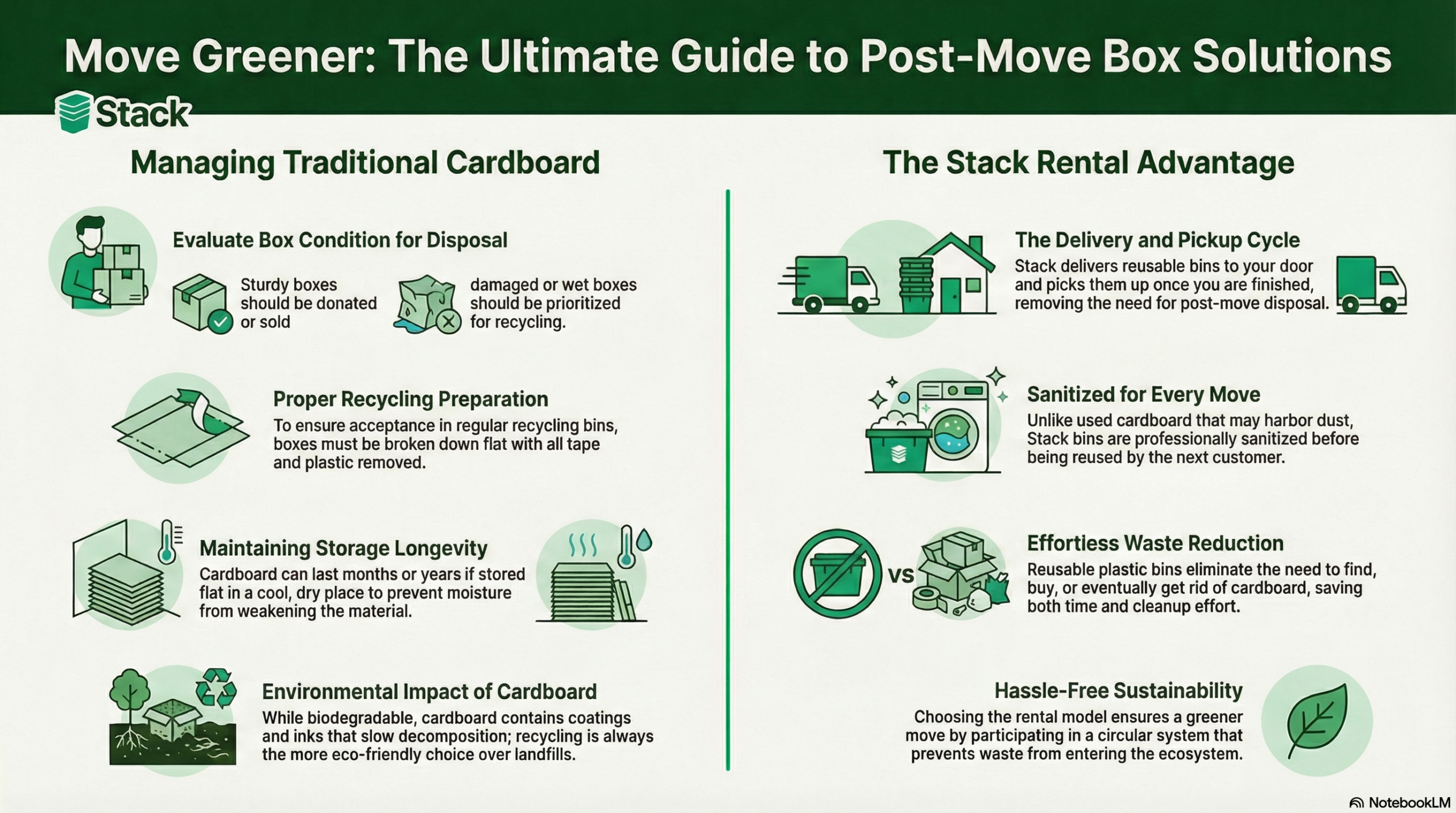
28) Return keys, access cards, or garage remotes: Failing to return every piece of access hardware can lead to hefty replacement fees deducted from your security deposit. Bundle all keys, gate fobs, and garage openers into a labeled envelope and hand them directly to the property manager or leave them in the agreed-upon lockbox. Take a quick photo of the returned items as proof of delivery to avoid any “missing key” disputes later.

29) Confirm utility shutoffs at the old residence: Log into your utility portals or call your old providers to confirm that your stop-service orders were processed for the day after your move. You want to be absolutely certain that the account is closed and that you aren’t being billed for the new tenant’s electricity or water usage. This final check prevents zombie bills from popping up in your mailbox months down the line.

30) Follow up on security deposit return: Most states have a legal window (usually 14–30 days) in which a landlord must return your deposit or provide an itemized list of deductions. Set a calendar reminder to check in with the property manager if you haven’t received your funds or a statement within three weeks. Having your “move-out photos” ready at this stage gives you leverage if any unfair charges appear on the final settlement.

Cardboard Boxes vs. Plastic Moving Boxes: Which is Better?

Knowing how to pack is a great start, but if your supplies are flimsy, your belongings will be in ruins by the time you reach your new home. In our opinion, high-quality materials are the only thing standing between your dishes and a cracked mess, so choosing the right gear is the most important decision you’ll make. Most people instinctively reach for cardboard because it is the traditional choice, but more movers are shifting to plastic moving boxes. But are plastic boxes really better than cardboard boxes?

In most cases, plastic boxes are often the better option because their rigid walls are crushproof. They are also completely waterproof, so you don’t have to worry about a sudden rainstorm turning your boxes into a soggy disaster on the sidewalk. And since they are reusable, you won’t have to deal with deciding what to do with the mountain of boxes you’re left with after moving.

Despite these benefits, there are still some instances where cardboard boxes are the better option. For example, when packing very awkwardly shaped items like floor lamps, a traditional box might be necessary. Our advice is to use a mix of plastic boxes for the bulk of your move and then keep a few cardboard boxes on hand for the oddballs.

Stack Moves reusable bins supporting a smart list for moving out

5 Expert Moving Tips That Can Save You Money, Time, and Stress

We’re sharing a few of the most overlooked details that usually cause the most frustration on moving day. These expert tips are designed to help you sidestep those common headaches and keep your entire move running as smoothly as possible.

1. Measure Furniture and Entryways in Advance

Before moving day, confirm that large furniture will actually fit through doorways, hallways, and stairwells at your new place. Don’t assume your sectional or king-sized headboard will glide through your new front door. Measure your largest pieces and the narrowest hallways or stairwells at the new place before the truck arrives. Catching these tight fits early gives you the chance to disassemble furniture or find a new home for items that won’t fit, saving you from a mid-move meltdown on the sidewalk.

2. Back Up Important Files and Keep Documents With You

Moving is physically rough on electronics, and boxes can occasionally go missing. Back up your computer to the cloud or an external drive, and keep a dedicated bag for your most sensitive items. Things like your driver’s license, passport, lease, and medical records should stay in your sight at all times rather than being buried in a box on the back of a truck.

3. Use Up Pantry and Freezer Items Before Moving

The less food you have to move, the better. Half-used bottles and frozen goods are heavy, prone to leaking, and a pain to keep cold during a long day. Start “eating down” your kitchen two weeks out by planning meals around what you already have, which reduces your load and saves you money on groceries during a busy month.

4. Protect Floors, Walls, and Doorways on Moving Day

Even the most careful movers can scuff a wall or scratch a hardwood floor when maneuvering heavy crates. Use floor runners or blankets in high-traffic paths and consider cardboard corner protectors for tight door frames. A few minutes of prep can be the difference between getting your full security deposit back and paying for expensive repairs.
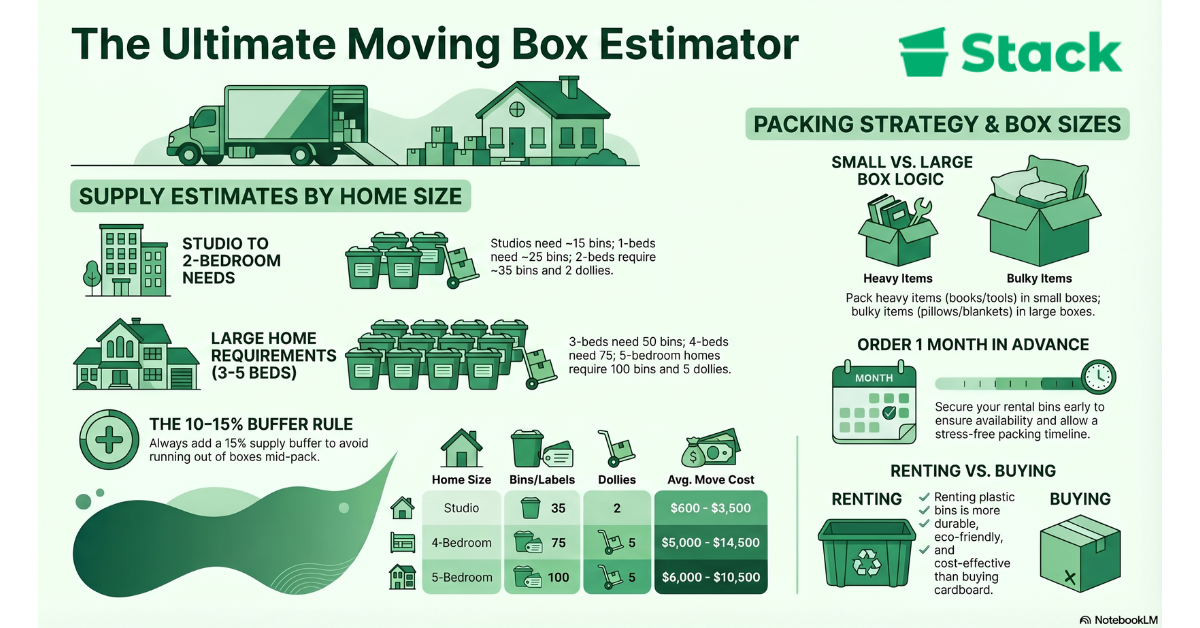
5. Inspect Items for Damage as They’re Delivered

The moment your belongings arrive is the best time to check their condition. Keep an eye on anything marked “fragile,” and do a quick scan for new dents or scratches as items come off the truck. Noting these issues immediately makes the claims process much smoother than trying to prove a moving company was responsible days or weeks after they’ve left.

Want to Make This the Easiest Move You’ve Ever Done?

While a solid checklist is the best way to keep moving mishaps at bay, even the perfect plan can fall apart if your supplies aren’t up to the task. Moving boxes are the most critical part of any move because they don’t just transport your belongings but also protect them throughout the moving process. Although cardboard boxes remain the traditional choice for plenty of people, they often struggle with heavy loads and can easily collapse when stacked in a moving truck.
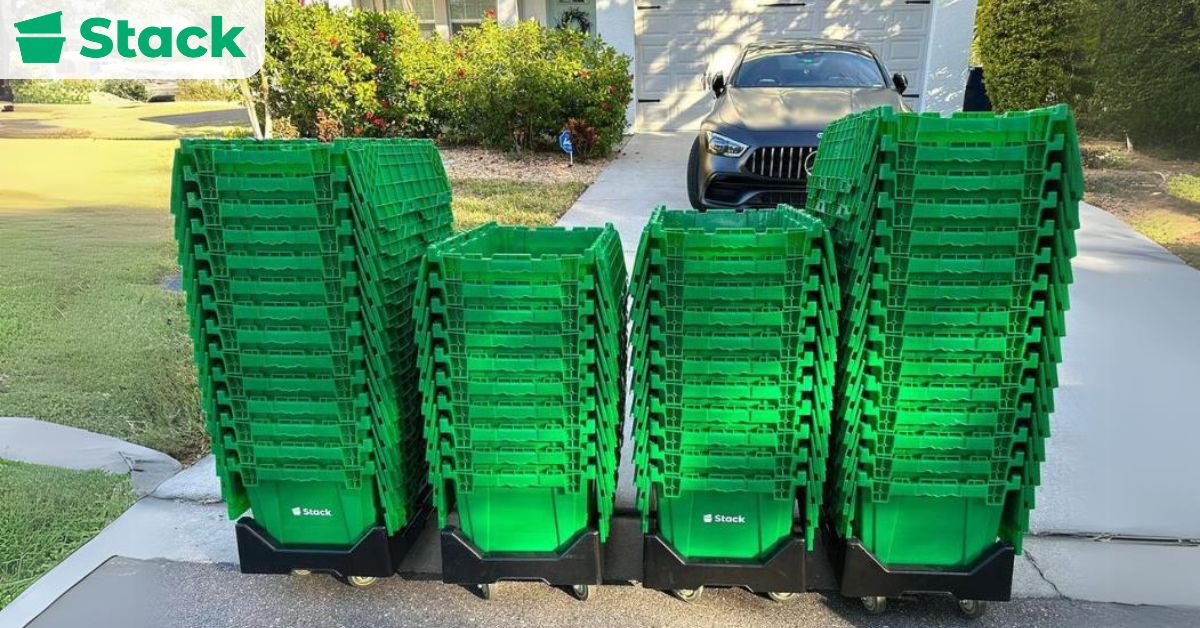

Plastic moving boxes, like the ones from Stack Moves, are more sturdy. They also save you the time and frustration of taping together dozens of flimsy cardboard containers. By combining our battle-tested 30-step checklist with professional-grade bins, you can finally take the guesswork and the heavy lifting out of your moving day. Get your durable rental bins delivered and picked up from your new address.

FAQ

We know that even with a solid 30-step plan, you’ve probably still got a few “what if” questions floating around. To help clear things up, we’ve rounded up the most common things people ask us at Stack Moves about moving out.

What Should Be Included in a Moving-Out Checklist?

A solid checklist should cover every phase of your journey, starting with administrative tasks like utility transfers and mail forwarding. It needs to include a packing schedule to keep you on track and a final cleaning list to ensure you get your security deposit back. Having these elements organized in one place prevents the small, essential details from slipping through the cracks during the moving day chaos.

How Early Should I Start Packing for My Move?

You should ideally start the process about eight weeks out by decluttering and packing away non-essential items like seasonal decor or books. By starting two months early, you can tackle one small area at a time rather than facing a week of frantic, all-night packing sessions. This timeline gives you the breathing room to stay organized and ensures that by moving week, you only have your daily essentials left to box up.

Where Can I Get Cheap or Free Moving Boxes?

Sourcing free boxes from local grocery stores, community groups, or online marketplaces is a great way to shave off some of your initial moving costs. You can also find standardized, inexpensive options at big-box retailers if you need specific sizes that are easier to stack. However, while these methods save money upfront, they often cost you more in time spent hunting them down and tape spent trying to keep them together.

What Expenses Should I Expect When Moving Out?

Every move will require you to spend on the basics like truck rentals or professional movers, along with the cost of packing supplies and insurance. You should also prepare for hidden fees such as utility connection deposits, parking permits, and professional cleaning services for your old place. Survey results from Forbes showed that 80% of people underestimated their moving costs and needed additional money to fund their move. Setting aside as little as a 10% buffer of your total budget will help cover these sneaky costs and any last-minute emergencies that pop up.

Do Moving Companies Provide Packing Supplies?

Yes, most companies provide supplies, but it often depends on the specific type of service package you have booked. Full-service movers typically include boxes, tape, and blankets as part of their fee, while budget-friendly “labor-only” moves may require you to provide everything yourself. It is always best to confirm what is included in your quote so you aren’t stuck buying expensive, last-minute materials on moving morning.

What Should I Do With the Rental Boxes After Unpacking Them?

Since you would have scheduled a pickup at the time of your booking, you don’t have to do anything other than stack the empty crates neatly. Once you’ve emptied your last bin, just let us know they are ready, and we will come grab them from your new front door. This saves you the headache of breaking down cardboard or finding a way to haul a mountain of trash to the local recycling center.

Rent Boxes!