Skip to main content

Moving Tips

How Much to Tip Moving Companies

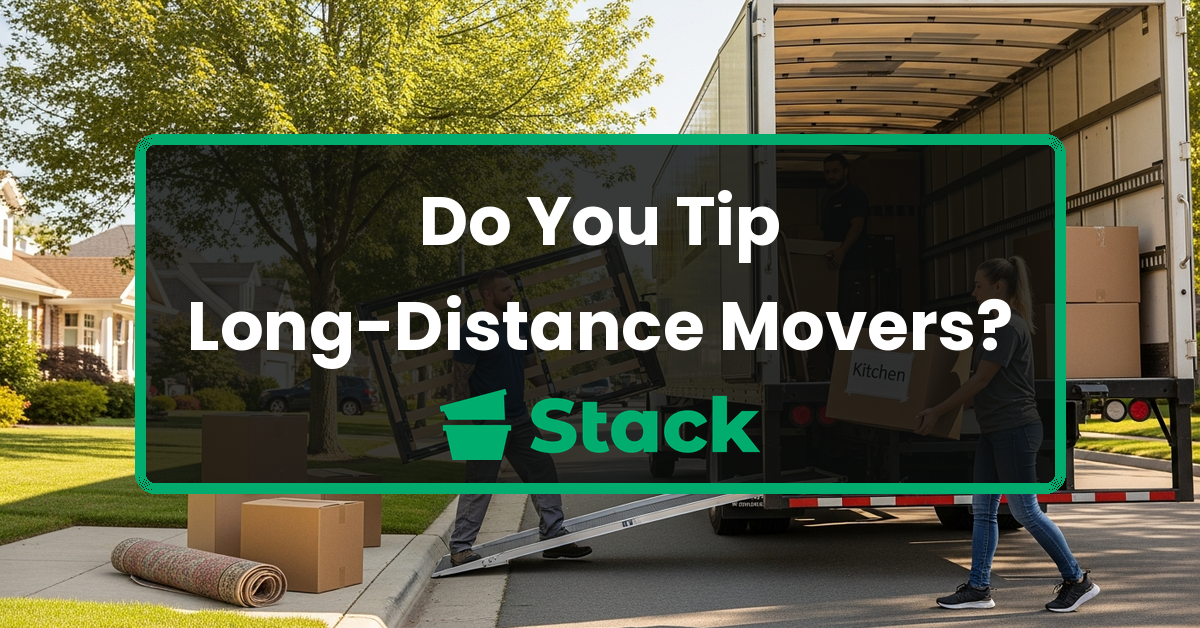
Wondering how much to tip a moving company? Tipping professional movers isn’t required, but it’s a common way to say thank you for the hard physical labor of loading, carrying, and moving your belongings. There’s no hard and fast rule for how much to tip movers, so consider the crew size, hours worked, difficulty of the move, and quality of service when deciding on a dollar amount.

At Stack Moves, we make moving a little easier by delivering reusable plastic moving bins, dollies, and labels right to your door, so you can focus on getting your belongings where they need to go. Our bins arrive pre-assembled, and once you’re finished packing and moving, we pick up the empty bins so you don’t have to deal with a pile of boxes afterward. Whether you’re planning a local move or a long-distance move, we’re here to help make the process simpler. Contact us so we can make your move easier.

This guide breaks down how much to tip movers, including when to tip more, and the factors that can affect what you give each crew member. It’s for anyone planning a local move, long-distance move, or cross-country move who wants a simple way to decide on a fair tip without overthinking it.

How Much Should You Tip Movers?
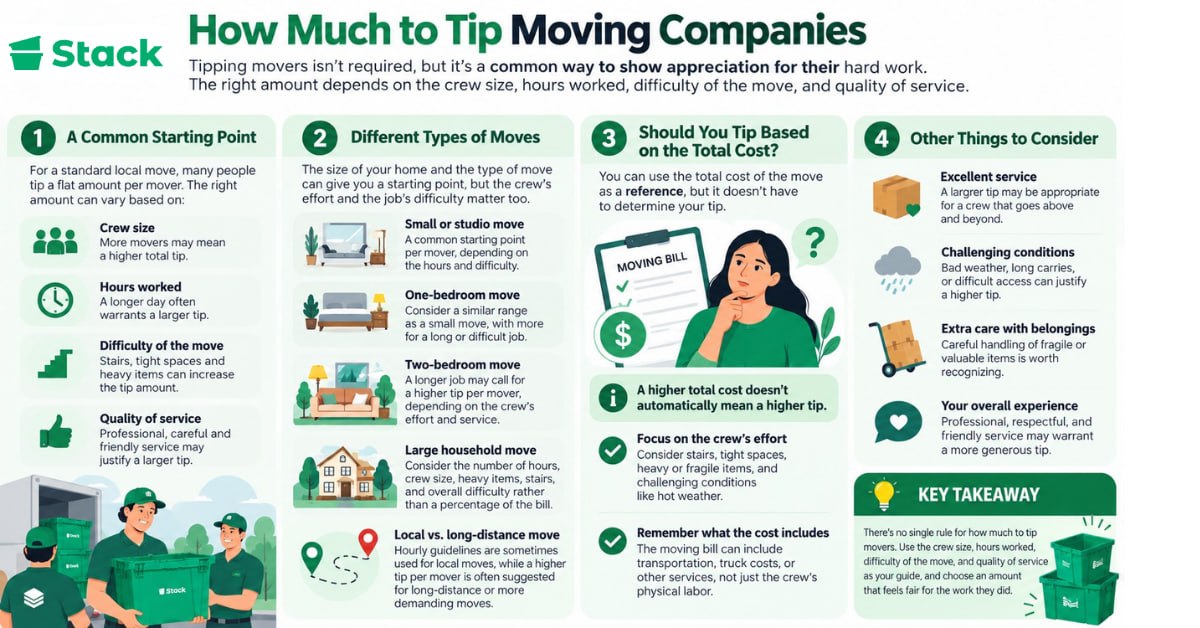
Infographic on how much to tip moving companies, covering a common starting point based on crew size, hours worked, difficulty and service, tipping by type of move from a studio to a large household or long-distance move, why a higher total moving cost does not automatically mean a higher tip, and other things to consider such as excellent service and challenging conditions

If you’re trying to figure out how much to tip movers, a common starting point is around $20 to $50 per mover for a standard local move, with more for a long day, difficult job, or excellent service. The right amount can vary based on the size of the move, hours worked, number of crew members, and how much heavy lifting or extra effort the job requires.

What Is a Typical Tip for Movers?

For a standard local move, many people use a flat dollar amount per mover rather than calculating the tip as a percentage of the total moving bill. Common guidelines range from about $20 to $50 per mover, while a full-day job may call for around $40 to $100 per mover; hourly approaches can also fall around $4 to $15 per mover per hour.

There’s no single tipping rule that every moving company or customer follows. A flat amount can make more sense for larger moves because the total cost may be high simply because there are more belongings, more hours, or a longer distance involved, even when the crew’s actual effort doesn’t increase in the same proportion.

Should You Tip Based on the Total Moving Cost?

You can use the total cost of the move as a reference, but it doesn’t have to determine your tip. A $10,000 move, for example, doesn’t automatically mean you need to hand the crew a percentage of that amount, especially when the price reflects distance, truck costs, or other moving services rather than just the crew’s labor.

Instead, think about what the movers actually did during the job. If the crew worked through stairs, tight spaces, heavy furniture, fragile items, or hot weather, those factors may justify a larger tip, particularly when the service was professional, and your belongings were handled with care. Your total moving cost can also include different services and circumstances beyond the crew’s physical labor. For interstate moves, the FMCSA explains that written estimates can include transportation, accessorial, and advance charges, which is another reason not to automatically base your tip on a percentage of the final bill.

How Much Should You Tip for Different Types of Moves?

The size of your home and the type of move can give you a starting point, but the crew’s effort and the difficulty of the job matter just as much. Here’s a simple way to think about tipping for different moves:

Type of move

Practical tipping approach

Small or studio move

Around $20–$50 per mover is a common starting point, depending on the hours and difficulty.

One-bedroom move

Consider $20–$50 per mover, with more for a long or difficult job.

Two-bedroom move

A longer job may put you closer to $40–$100 per mover, depending on the crew’s effort and service.

Large household move

Consider the number of hours, crew size, heavy items, stairs, and overall difficulty rather than simply using a percentage of the total bill.

Local move

Hourly guidelines such as $4–$15 per mover per hour are sometimes used, while a flat amount per mover can be simpler.

Long-distance move

$50–$100 per mover is a commonly suggested range, particularly for a demanding move, and you may need to account for both the pickup and delivery crews.

For long-distance moves and cross-country moves, it’s also worth remembering that the people loading the truck may not be the same crew unloading it at your destination. If you receive good service from both teams, you can plan separate tips for each crew rather than trying to split one amount between everyone.

How to Calculate a Tip for Your Movers Step by Step

There isn’t one tip amount that works for every move, and you don’t need to follow a strict formula to get it right. A simple way to decide how much to tip movers is to look at the crew size, time, difficulty of the job, and quality of service before choosing a fair amount per mover.

Step 1: Count the Number of Movers

Start by counting the people who actually worked on your move. You can decide whether you want to give each crew member a separate tip or calculate one total amount for the entire crew.

Step 2: Consider How Long the Move Took

Think about whether the movers worked for a few hours, most of the day, or across two days. A long day usually means more time and physical effort, which may be a reason to move toward the higher end of your tipping range.

Step 3: Consider the Difficulty of the Move

Look at what the crew had to deal with during the job. Stairs, heavy furniture, tight spaces, narrow hallways, difficult parking, multiple stops, fragile or specialty items, and hot or bad weather can all make a move more demanding.

Step 4: Assess the Quality of Service

Consider how the movers handled the job from start to finish. Were they punctual, professional, careful with your belongings, efficient, and helpful? Good communication and extra effort can also make a higher tip feel appropriate.

Step 5: Choose a Tip Per Mover

Once you’ve considered these factors, choose a dollar amount per mover instead of automatically applying a percentage to the total moving cost. This keeps the calculation simple and gives you room to adjust the tip based on the actual service you received.

Step 6: Multiply by the Crew Size

Multiply the amount you chose per mover by the number of people on the crew. For example, if you decide on $40 per mover and three movers work on your job, your total tip would be $120, with $40 going to each person.

Step 7: Give the Tip After the Move

It’s usually easiest to wait until the job is finished before deciding on the final tip. Once you’ve seen the full level of service, you can give each crew member their cash tip individually or provide one group tip and let the crew decide how to split it.

What Factors Should Determine How Much You Tip Movers?
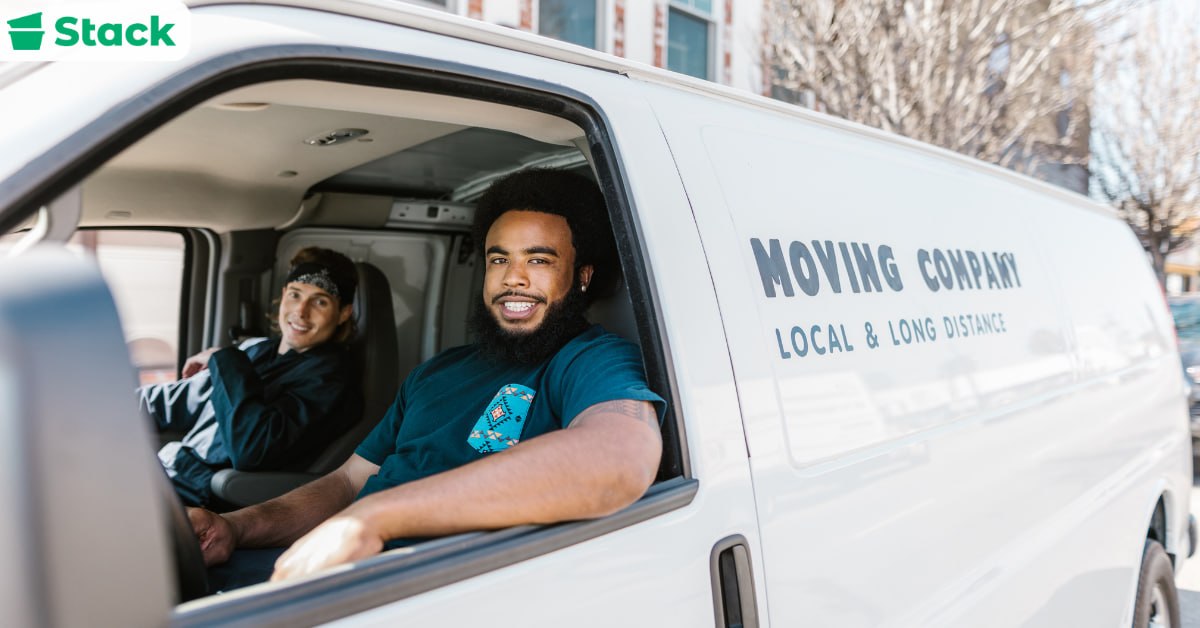
Two smiling movers sitting in the cab of a white moving van marked Moving Company, Local and Long Distance

The amount you tip should reflect what the crew dealt with during the move, not just the size of your moving bill. A few extra factors can help you decide whether your tip should stay around the usual range or go a bit higher.

How Difficult Was the Move?

Some moves simply require more physical work than others, and that’s worth considering when deciding on your tip. Multiple flights of stairs, walk-up buildings, heavy furniture, narrow hallways, long carries, difficult parking, multiple stops, and specialty items can all add extra time and effort.

If the crew handled those challenges without making the process harder for you, a larger tip can be a good way to recognize the extra work involved. The same goes for moves where movers have to carefully handle bulky or fragile items that require more attention than everyday boxes.

How Long Did the Move Take?

Time is another simple way to gauge the effort involved. A short move that takes a few hours is different from a half-day or full-day job, while a long-distance move that takes two days or more can require considerably more time and physical work.

That doesn’t mean you have to calculate your tip strictly by the hour. Instead, use the length of the job as one factor alongside the difficulty of the move and the service you received.

How Was the Service?

The quality of service matters just as much as the physical demands of the job. Think about whether the movers arrived on time, communicated clearly, treated your belongings with care, worked efficiently, and remained professional throughout the move.

If the crew went beyond what you expected, such as helping with an awkward piece of furniture or taking extra care with fragile items, you may want to tip toward the higher end of your range. On the other hand, poor communication, careless handling, or repeated delays may affect how much you ultimately choose to give.

How Much Should You Tip Movers for Different Types of Moves?
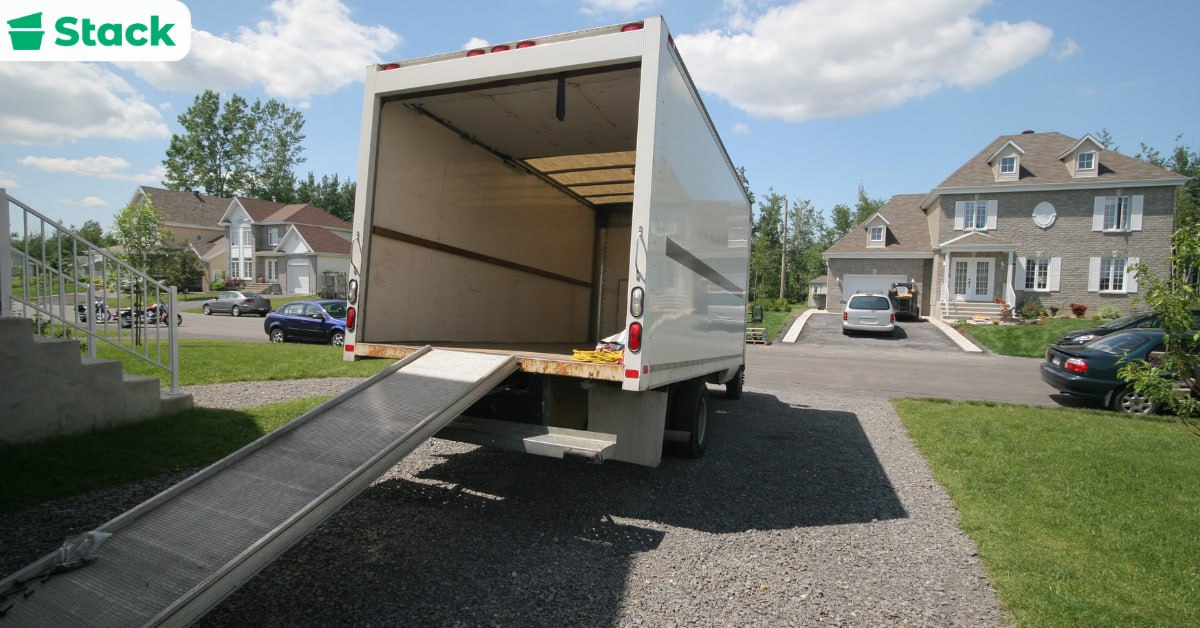
Open moving truck with its loading ramp lowered on a gravel driveway in front of a suburban house

The right tip can look different depending on whether you’re moving a few pieces of furniture across town or an entire household across the country. Use the type of move as a starting point, then adjust for the crew size, time, physical effort, and quality of service you received.

How Much to Tip Movers for a Local Move

For a local move, a common starting point is $20 to $50 per mover, with the amount adjusted depending on how long and difficult the job is. A smaller move that takes a few hours may stay toward the lower end, while a larger household move with stairs, heavy furniture, or a long day of work may call for more.

Your crew size matters, too. If four movers spend a full day loading and carrying your belongings, for example, you’ll need to budget for four individual tips rather than treating the crew as one person.

How Much to Tip Movers for a Long-Distance Move

Long-distance moves often involve longer working periods, more planning, and heavier demands on the crew, so $50 to $100 per mover is a commonly suggested range. For a particularly demanding long-distance or cross-country move, you can adjust the amount based on the effort involved rather than automatically using a percentage of the total moving cost.

Also, check whether the same crew is handling the entire job. If one team loads your belongings and another team unloads them at the destination, you can give separate tips to each crew based on the service they provide.

How Much to Tip Movers for a Small Move

A studio apartment, single-room move, or furniture-only move may require less time and labor than a full household move. In these cases, $20 to $50 per mover can be a reasonable starting point, with the final amount depending on how many hours the job takes and whether the crew has to deal with stairs, tight spaces, heavy items, or other challenges.

Even a small move can involve hard physical labor, so don’t judge the tip by the number of boxes alone. Moving a few large pieces of furniture through a walk-up building can take considerably more effort than moving several lightweight boxes from an easily accessible home.

How Much to Tip Movers for a Large Move

A large move usually means more furniture and boxes, a larger crew, and more hours of loading and carrying. You can start with the usual per-mover amount and increase it when the job involves significant heavy lifting, multiple flights of stairs, difficult access, fragile items, or a particularly long day.

For example, if five movers work throughout a full day and you feel $60 per person reflects the effort and service, that would make your total tip $300. The point is not to find a perfect formula, but to choose an amount that fairly reflects what the crew actually put into the job.

Should You Tip Each Mover or Give One Tip to the Crew?

Person taking twenty-dollar bills from a wallet and handing them over as a cash tip

A quick comparison will make this easier because there’s more than one way to tip a moving crew. What matters most is making sure the people who did the work actually receive the amount you intended for them.

Tipping Method

Best For

What to Consider

Individual tip

Straightforward crews

Give each mover their own amount so everyone receives their tip directly.

Group tip

Small, consistent crews

Give one total amount to the crew, but make sure it is divided fairly among the team.

Digital tip

Companies that accept electronic payments

Check with the moving company beforehand to confirm whether digital tipping is available and how it is distributed.

Cash tip

Most situations

Cash is a simple option, so prepare enough money ahead of moving day if you plan to tip this way.

When Should You Give Movers Their Tip?

The easiest time to give movers their tip is after the move is complete, when you’ve had a chance to see how the entire job went. Check your belongings, consider how the crew handled the heavy lifting and other challenges, and then assess the overall service before deciding on the final amount.

If you’re happy with the work, you can hand each crew member their cash tip directly or give the group one amount to divide. For a long-distance move where different crews handle pickup and delivery, wait until each crew finishes its part of the job before tipping them.

What Should You Give Movers Besides a Tip?

A cash tip is one way to show your appreciation, but a few thoughtful extras can make a long moving day more comfortable for the crew. More importantly, preparing your home and belongings before the movers arrive can help the entire job run more smoothly.

Should You Provide Food and Drinks?

Keeping cold water and other refreshments available is a simple way to look after movers during a physically demanding job, especially in hot weather or during a long day. Snacks can also be appreciated, and if the move runs through lunch or dinner, you may choose to offer a meal, but food and drinks are thoughtful extras, not a required replacement for a cash tip.

If you do offer food, it’s worth asking about dietary restrictions before ordering a meal. Something as simple as water, sports drinks, snacks, or lunch can be a nice gesture, but you don’t need to feel responsible for providing a full restaurant meal.

How Can You Make Moving Day Easier for Your Movers?

One of the best things you can do for your moving crew is have your belongings packed and ready before they arrive. Label boxes clearly, keep pathways and doorways clear, arrange parking and building access ahead of time, and have the right moving supplies ready so the crew can get straight to work. The Federal Motor Carrier Safety Administration (FMCSA) also recommends preparing ahead of moving day, including being present to answer questions, giving the movers directions, and checking your belongings before the truck leaves.

Stack Moves can help with that preparation by providing reusable plastic moving bins, labels, and dollies that make it easier to organize your belongings before moving day. The bins arrive pre-assembled, and once you’re finished with them, Stack picks them up, giving you one less thing to deal with after the move. Explore Stack Moves reusable moving bins.

Do You Tip Movers If Something Goes Wrong?

Not every moving job goes perfectly, and you don’t have to decide on a tip before you know how the entire experience went. If something goes wrong, separate the question of tipping from any issue involving damage, delays, or poor service.

What If the Movers Damage Something?

If movers damage your furniture or other belongings, tipping and making a damage claim are separate issues. Take photos of the damage, keep any relevant paperwork, and contact the moving company through its claims or customer-service process to find out what steps to follow. For interstate moves, the FMCSA recommends noting damaged or missing items on the inventory before signing your delivery documents and understanding your mover’s liability coverage.

You can still decide whether to tip based on the service you received, but you don’t need to use a tip as a way to settle a damage dispute. If the crew handled your belongings carefully, but an item was accidentally damaged, you may view that differently from a situation where the crew was consistently careless.

What If the Movers Were Late or Unprofessional?

A tip is meant to show appreciation, so you’re not obligated to give one simply because a moving company completed the job. If the movers were significantly late, careless with your belongings, difficult to communicate with, or otherwise unprofessional, consider the overall service before deciding whether and how much to tip.

On the other hand, if there was a genuine delay outside the crew’s control, but they kept you informed and still provided excellent service, you may want to take that into account rather than judging the entire job by one problem. The goal is to tip based on the experience you actually received, not because you feel pressured to do so.

When Should You Tip More or Less?

There’s no need to overthink tipping, but the details of your move can help you decide whether to stay around your usual amount or adjust it. Think about how hard the crew worked, how they handled the challenges, and whether the service matched what you expected.

When a Higher Tip May Make Sense

A higher tip can make sense when the movers put in extra effort or delivered excellent service. Difficult access, multiple flights of stairs, heavy or specialty items, challenging weather, and other unexpected obstacles can make a job much more demanding.

You may also want to tip more when the crew goes beyond the agreed moving services, such as taking extra care with fragile items, finding a way to handle difficult furniture, or helping solve an unexpected problem. If they were punctual, professional, careful with your belongings, and efficient throughout a long day, those are also good reasons to consider the higher end of your range.

When You May Tip Less or Not at All

You’re not required to give a tip when the service falls seriously short of what you expected. Careless handling of your belongings, serious unprofessional behavior, poor communication, or major unresolved service problems may all be reasons to reduce the amount or decide not to tip.

A single small problem doesn’t necessarily have to define the entire experience, though. If the crew worked hard and provided good service overall, consider the full job before making your final decision.

How Much Should You Tip Your Movers?

Tipping your movers is optional, so there’s no single amount you have to give. When deciding how much to tip, look at the effort involved, how difficult the move was, and the quality of service you received, rather than simply basing it on your total moving bill. A crew that handles heavy lifting, stairs, tight spaces, or a long day with care and professionalism may deserve a little more.

You can also make moving day easier by having your belongings packed, labeled, and organized before the crew arrives. Stack Moves provides reusable moving bins, labels, and dollies to help keep your packing process organized without relying on piles of disposable boxes. Ready to make packing easier? Book your reusable moving bins with Stack Moves today.

Frequently Asked Questions

If you’re still unsure about tipping, these quick answers cover some of the questions that commonly come up before moving day.

How Much Should You Tip Movers?

A common starting point is $20 to $50 per mover for a standard local move, while a full-day or especially difficult job may warrant $40 to $100 per mover. Use the crew’s effort, the length and difficulty of the job, and the quality of service to decide where your tip should fall.

Is 5% or 10% a Good Tip for Movers?

A 5% or 10% tip can be used as a reference, but it isn’t a mandatory industry rule. For expensive moves, a flat amount per mover may make more sense because the total moving cost can reflect distance, truck costs, and other expenses that don’t necessarily mean the crew did proportionally more work.

How Much Should You Tip Movers for a Local Move?

For a local move, $20 to $50 per mover is a common starting range. You can adjust that amount based on the number of hours, stairs, heavy furniture, difficult access, and overall service.

How Much Should You Tip Movers for a Long-Distance Move?

For long-distance moves, $50 to $100 per mover is a commonly suggested range. If different crews handle loading and unloading, consider tipping each crew separately based on the work they completed.

Do You Tip Each Mover Separately?

You can, and giving each crew member their own tip is a straightforward way to make sure everyone receives their share. You can also give one group tip, but make sure the crew knows how much it is and that it will be divided fairly.

Do You Tip Movers Before or After the Move?

It’s generally best to wait until the move is complete. That gives you a chance to assess the overall service, check your belongings, and decide on the final tip based on how the crew handled the job.

Should You Tip Movers Who Damage Something?

Tipping and damage claims are separate issues. Document any damage and contact the moving company through its customer-service or claims process, then decide whether to tip based on the overall service you received.

Do You Tip Movers With Cash or Card?

Cash is a simple and commonly preferred option, particularly when you want to give each mover their tip directly. If you prefer to tip by card or electronically, check with the moving company beforehand to make sure that option is available and find out how the money is distributed.

Are You Supposed to Feed Movers?

You don’t have to provide a meal, but water, refreshments, and snacks can be thoughtful extras during a long or physically demanding move. If the job runs through lunch or dinner, you can offer food if you want, but providing food does not replace a monetary tip.

What If I Can’t Afford to Tip My Movers?

Don’t feel pressured to spend money you don’t have just because tipping is customary. If you can’t afford a cash tip, you can still show your appreciation with cold water, snacks, a meal, or simply a sincere thank-you for the crew’s hard work.

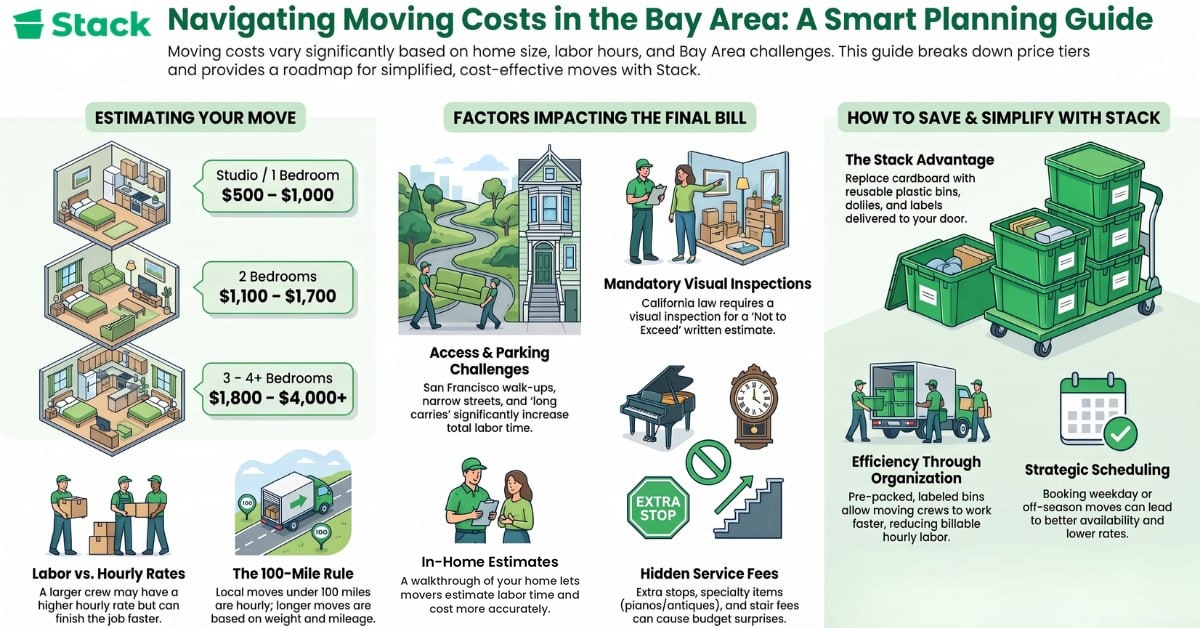
How Much Do Movers Cost in Bay Area

Moving costs in the Bay Area can range from a few hundred dollars to several thousand, depending on the size of your move and the services you need. If you’re planning a move and trying to set a realistic budget, factors like crew size, labor time, distance, the amount of stuff you have, access to your home, and extra services can all affect the final cost. San Francisco movers may charge differently from those in San Jose or another Bay Area city, so it helps to look beyond a basic hourly rate when planning your budget.

If you’re planning a Bay Area move and want to make packing and moving day easier, Stack Moves can help. Stack delivers reusable plastic moving bins, dollies, and labels right to your door, then picks up the empty bins when you’re done, so you don’t have to buy, assemble, or get rid of piles of cardboard boxes. Ready to simplify your move? Book your bins with Stack Moves or contact us today to get started.

This blog breaks down how much movers cost in the Bay Area and the main factors that can affect your final moving bill. You’ll also find practical tips for comparing moving companies, estimating your expenses, avoiding unexpected fees, and keeping your moving costs under control.

How Much Do Movers Cost in the Bay Area?

Infographic on Bay Area moving costs: price ranges from $500 to $1,000 for a studio or one-bedroom up to $1,800 to $4,000+ for three to four bedrooms, factors that raise the final bill such as access, parking and hidden fees, in-home estimates that help movers gauge labor time and cost, and ways to save with reusable Stack bins

If you’re planning a local Bay Area move, you can expect to spend anywhere from around $500 for a smaller studio move to $3,000 or more for a larger home, depending on the details of the move. Your final cost can change based on the crew size, hours of labor, distance, amount of furniture and boxes, access at both locations, and any extra services you need.

For a rough starting point, a studio apartment may cost around $500–$700, while a one-bedroom move can fall around $600–$1,000. A two-bedroom move may cost roughly $1,100–$1,700, while three- and four-bedroom moves can range from about $1,800 to $4,000 or more. These are only general planning ranges, since the same size apartment can cost very differently depending on how much you own, how easy it is to access the building, and how long the movers need to complete the job.

How Do Hourly Rates Affect Your Moving Cost?

For many local Bay Area moves, movers charge by the hour, so both the hourly rate and the number of movers you need can affect your total. A two-person crew may have a lower hourly rate than a three- or four-person crew, but a larger crew can sometimes finish the job faster, meaning you need to look at the overall labor time rather than the hourly rate alone.

California has different pricing rules depending on the distance of the move. For moves within California that are 100 miles or less, movers can generally charge by the hour, while moves over 100 miles are generally charged based on weight and mileage. The California Bureau of Household Goods and Services provides more information on moving charges, estimates, and consumer protections.

This is why an hourly rate doesn’t tell you the final cost by itself. A $200-per-hour crew working for four hours is very different from the same crew working for eight hours, and stairs, long carries, parking issues, furniture disassembly, packing, or specialty items can all add time or additional charges to your bill.

When comparing moving companies, look at the full estimate, crew size, minimum hours, included services, and potential extra fees instead of focusing only on the lowest hourly rate. Getting a clear written estimate before moving day can also help you avoid surprises when the final bill arrives.

What Factors Affect the Cost of Movers in the Bay Area?

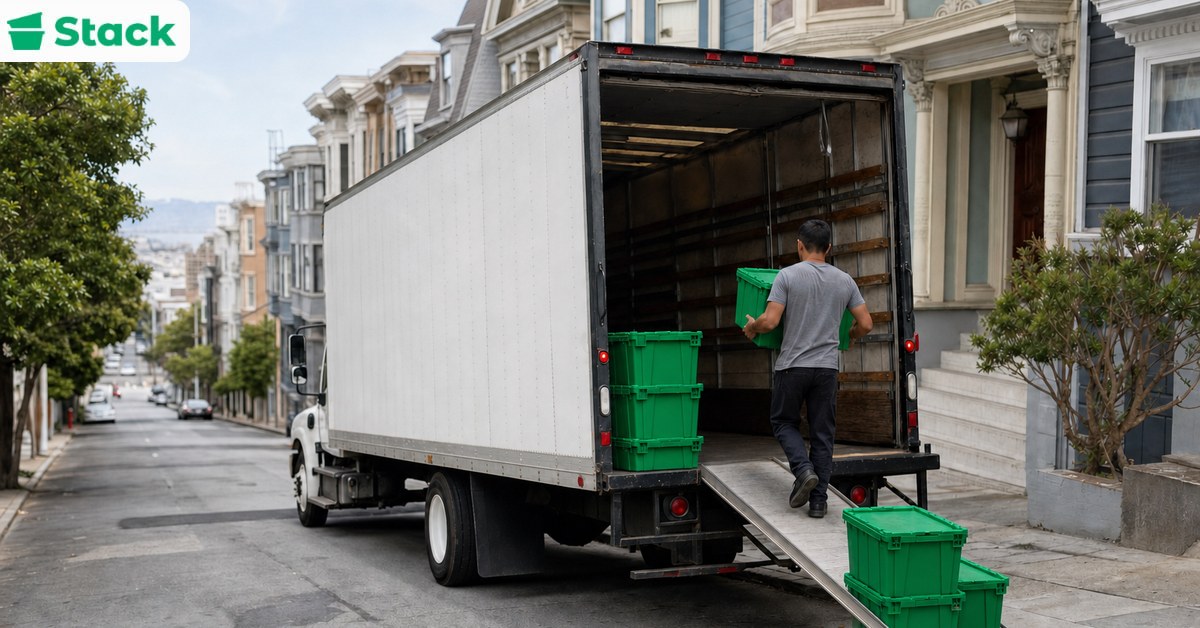
Mover carrying a green reusable Stack moving bin up the ramp of a white moving truck parked on a hilly San Francisco street lined with Victorian houses

The size of your move is only one part of the equation when it comes to moving costs in the Bay Area. Things like how far you’re going, how many movers you need, how easy it is to access your home, and whether you need packing or other additional services can all affect what movers charge.

How Much You Have to Move

The more belongings you have, the more time movers usually need to load, transport, and unload everything. A studio apartment with a few pieces of furniture will naturally take less labor than a two-bedroom move with dozens of boxes, large furniture, and heavy items that require extra lifting.

Decluttering before moving day can help keep labor time and your moving budget under control. Getting rid of furniture, boxes, and other things you no longer need means there is less to load, carry, and unload, which can be especially helpful when movers charge on an hourly basis.

How Far You’re Moving

Distance also plays a major role in your local San Francisco moving costs. San Francisco local moves may be priced differently from moving between San Francisco and San Jose or another city in the surrounding Bay Area, while a long-distance move can involve different pricing altogether.

For moves within California that are 100 miles or less, movers can generally charge by the hour, while moves over 100 miles are generally charged based on weight and mileage. California’s Bureau of Household Goods and Services also recommends providing movers with accurate details about both pickup and delivery locations so they can prepare a more accurate estimate.

How Many Movers You Need

A two-person crew is often enough for a smaller apartment or straightforward local move, while a three-person crew or larger team may be needed for bigger homes, heavier furniture, or moves with more complicated access. Adding more movers can increase the hourly rate, but it may also reduce the total labor time because more people can work on loading and unloading at the same time.

The goal isn’t necessarily to hire the smallest crew possible. You want enough professional movers to handle the job efficiently without paying for more labor than your move actually requires.

How Difficult Is Access to Your Home?

Bay Area homes can come with their own moving challenges, from San Francisco walk-up buildings and multiple flights of stairs to narrow streets, steep hills, limited parking, and strict building rules. A long carry from the moving truck to the front door can also add time, particularly when the truck cannot get close to the property.

California’s moving regulations specifically account for situations involving flights of stairs and long carries, so it’s important to tell movers about these access challenges before they prepare your estimate. The state’s guidance defines a long carry in relation to how far the mover’s equipment can be positioned from the entrance, while flight charges can apply in certain circumstances.

Parking can be another issue in busy parts of San Francisco, especially when building access is limited or the moving truck cannot park close to the entrance. Giving the moving company these details ahead of time can help prevent unexpected fees and give you a more realistic idea of your total moving costs.

What Additional Services Do You Need?

The basic moving service may not cover everything you need. Packing and unpacking, packing materials, furniture disassembly, specialty items, and special handling can all increase the total cost of hiring movers.

Fragile belongings, antiques, large or unusually heavy pieces, and items such as pianos may require additional equipment, time, or specialized handling. California’s Bureau of Household Goods and Services advises customers to tell movers about special services and conditions that could affect pickup or delivery when requesting an estimate.

If you’re trying to save money, consider which parts of the move you can handle yourself. Packing your everyday belongings ahead of time, decluttering before moving day, and having everything ready for the movers can reduce the amount of paid labor time while still leaving the heavy lifting and transportation to professional movers.

How to Estimate Your Moving Costs Step by Step

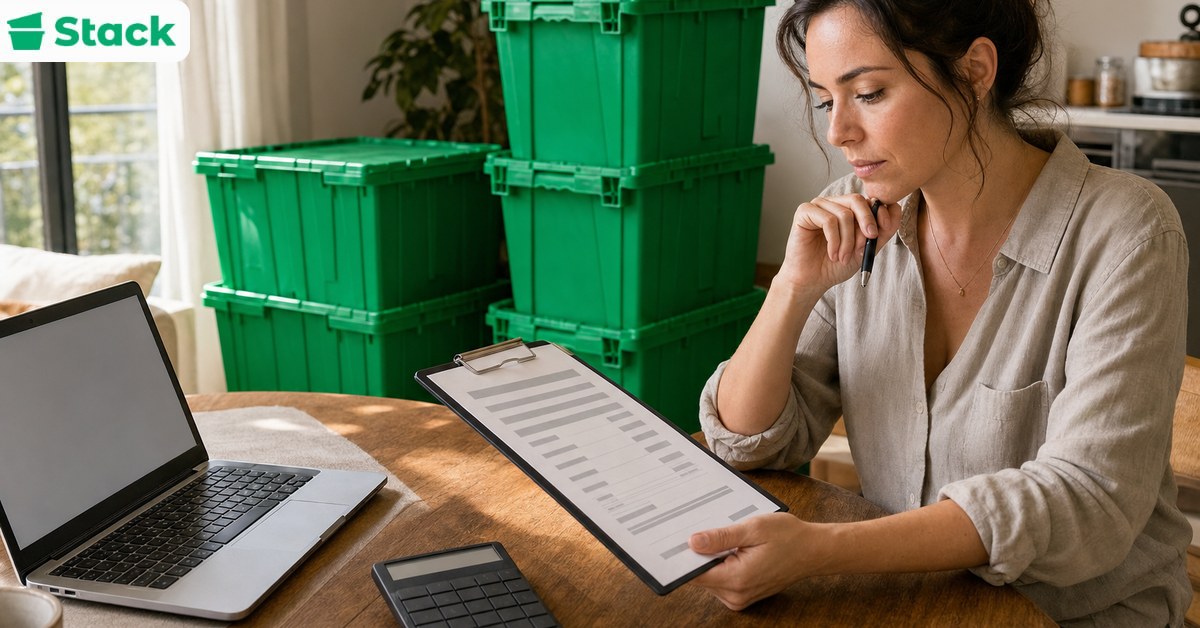
Woman at a kitchen table reviewing a moving estimate on a clipboard beside a laptop and calculator, with green reusable Stack moving bins stacked behind her

Instead of relying on one average moving cost, you can get a much more useful estimate by looking at the specific details of your move. Work through these six steps to account for your belongings, labor, distance, access, and any additional services before setting your moving budget.

Step 1: Determine the Size of Your Move

Start by figuring out whether you’re moving from a studio, one-bedroom apartment, two-bedroom home, or a larger property. Take stock of your furniture, boxes, appliances, and other household belongings because the more you have to move, the more time and labor you may need.

If you have furniture or belongings you no longer use, this is also a good time to declutter. Fewer items mean less to pack, carry, load, and unload, which can help reduce labor time and your overall moving costs.

Step 2: Estimate the Labor You’ll Need

Think about how much work your move will actually involve, including loading the moving truck, transportation, unloading, stairs, and any difficult access. A two-person crew may be enough for a smaller local move, while a three-person crew or larger team may make more sense for a bigger home or a move with heavy furniture.

Remember that a lower hourly rate does not always mean a lower final bill. A larger crew may cost more per hour but finish the job faster, so compare the estimated total labor time as well as the hourly rate.

Step 3: Add Any Extra Services

Next, account for anything beyond basic loading and unloading. This could include packing services, packing materials, furniture disassembly, additional stops, or special handling for specialty items such as pianos, antiques, or fragile belongings.

If you’re trying to save money, decide which tasks you can comfortably handle yourself before moving day. Packing your own boxes, for example, can reduce the amount of time professional movers spend on the job.

Step 4: Account for Access and Parking

Look at both your current home and your new one and think about how easily movers can get in and out. Multiple flights of stairs, walk-up buildings, narrow streets, long carries, limited parking, building rules, and other access challenges can all add time to a move.

For a San Francisco move, this step can be particularly important because parking and building access can make a straightforward move take longer than expected. Give movers these details upfront so they can include them when preparing your estimate rather than discovering the problem on moving day.

Step 5: Get Written Estimates From Multiple Movers

Once you’ve worked out the details, ask several moving companies for written estimates and compare more than just the headline price. Look at the crew size, hourly rates, estimated labor time, included services, minimum charges, and any additional fees that could affect your final bill. The Federal Trade Commission recommends getting written price estimates from several movers and making sure the estimates account for your belongings before comparing them.

The FTC has also reported that moving companies can be a target for scams and advises consumers to check a mover’s registration, reputation, and pricing information before hiring. Taking a few extra minutes to compare your estimates can help you avoid choosing a company based on an unrealistically low initial price.

Step 6: Compare the Estimate With Your Moving Budget

Once you have your estimated labor, transportation, and additional costs, compare the total with your moving budget. If the price is higher than you expected, look at which parts of the move you can handle yourself, such as packing, decluttering, or preparing furniture before the movers arrive.

This gives you a more realistic picture of what you’ll actually spend instead of relying on a general average. It also makes it easier to decide where professional movers add the most value and where you can cut costs without making moving day harder than it needs to be.

What Extra Fees Should You Watch for When Hiring Bay Area Movers?

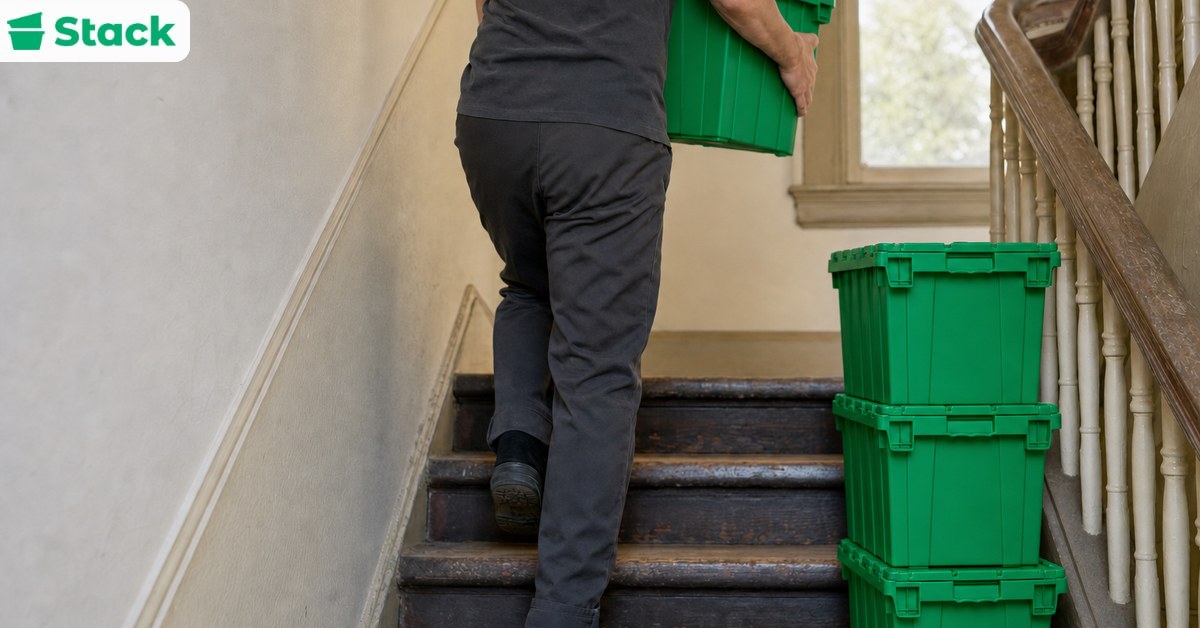
Mover carrying a green reusable Stack moving bin up the wooden stairs of a walk-up apartment building, with more green Stack bins stacked beside the steps

The hourly rate may be the number that catches your eye when comparing moving companies, but it isn’t always the number you’ll end up paying. Extra charges for stairs, difficult access, packing, additional labor, or changes to your moving plan can quickly increase the final bill, so it’s worth knowing what to ask about before moving day.

Stair Fees

If you’re moving into or out of a walk-up building, multiple flights of stairs can add to the labor involved. Ask whether stair fees are included in your estimate, especially if you’re moving furniture up several floors without an elevator.

Long-Carry Fees

A long carry can happen when the moving truck cannot park close enough to your home and movers have to carry your belongings a greater distance. This can be particularly relevant in San Francisco, where narrow streets, limited parking, and building access can make it difficult to position a moving truck close to the entrance.

Parking or Access-Related Costs

Parking restrictions, limited loading areas, steep hills, narrow streets, or strict building rules can all make a move take longer. If your building requires a parking permit, has a specific loading window, or limits elevator use, tell the movers before they prepare your estimate so these access challenges are accounted for.

Packing Materials

If you hire movers for packing services, ask whether boxes, tape, wrapping materials, and other packing materials are included in the quoted price. Otherwise, these additional costs can appear on the final bill on top of the moving labor.

Additional Labor

Extra labor may be needed when your move takes longer than expected or involves heavy furniture, difficult access, disassembly, or other work that wasn’t included in the original scope. This is one reason it’s important to give movers an accurate picture of what they’re moving rather than relying on a quick estimate based only on the number of bedrooms.

Specialty-Item Handling

Pianos, antiques, large appliances, fragile belongings, and other specialty items may require special equipment, extra workers, or additional handling. Ask about these items when getting your quote so you know whether special handling is already included or will cost extra.

Extra Stops

Adding another pickup or delivery location can increase the distance and labor time involved in your move. If you need movers to collect belongings from a storage unit, another home, or a second location, make sure every stop is included in the estimate.

Minimum-Hour Requirements

Some moving companies may have a minimum number of billable hours, even when your move itself is relatively small. For example, California’s moving guidance notes that hourly moves may have minimum charges, so check the agreement to see whether a minimum applies to your move.

Changes to the Original Scope of the Move

Your final cost can also change if you add belongings or request services that weren’t included when the mover prepared the estimate. For moves within California, the Bureau of Household Goods and Services requires a “Not to Exceed” price, and if you request additional or different services, those changes can be documented through a written Change Order.

Before hiring a mover, make sure your written estimate clearly shows the services included, expected charges, and any minimums or potential additional fees. California also requires a visual inspection for estimates on moves within the state, so be cautious about relying on a price given only over the phone or online.

How Can You Save Money on a Bay Area Move?

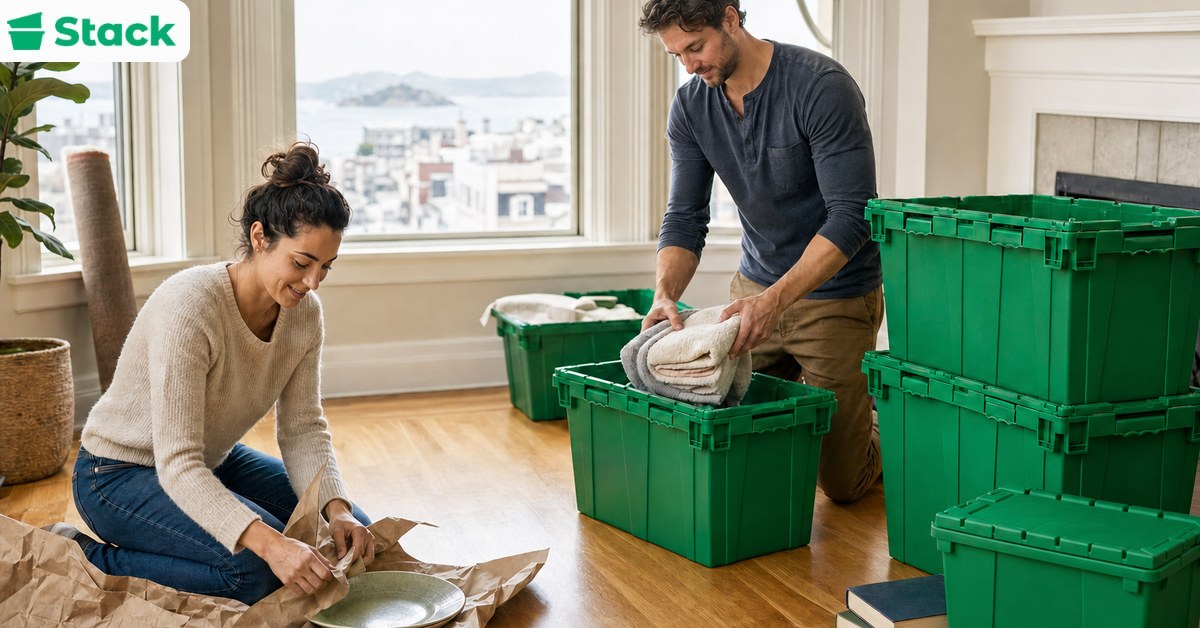
Couple packing their San Francisco apartment into green reusable Stack moving bins, one wrapping a plate in packing paper while the other places folded towels into a bin by the bay window

Moving can get expensive quickly, but a little planning can help keep your moving costs under control. From reducing what you take with you to making sure movers aren’t waiting around on moving day, these simple steps can help you get more value from the money you’re spending.

Declutter Before Moving

The less you have to move, the less time and labor you’ll need. Go through furniture, clothing, kitchen items, and other belongings before moving day and sell, donate, or get rid of anything you no longer need.

Pack Your Own Belongings

Packing services can add to the total cost of hiring movers, so consider packing your own belongings if you have the time. Having your boxes packed, labeled, and ready to go before the movers arrive can also help the crew get straight to loading instead of spending paid labor time on packing.

Use Reusable Moving Bins

You don’t have to buy a large number of cardboard moving boxes just to use them once. Reusable plastic moving bins can give you a sturdy option for packing while also saving you from buying, assembling, and eventually breaking down dozens of boxes.

This is where Stack Moves can make the packing side of a Bay Area move a little easier. Stack delivers reusable plastic moving bins, dollies, and labels to your door, so your packing supplies arrive ready to use, then picks up the empty bins after your move.

Compare Multiple Written Quotes

Don’t settle for the first moving company you find. Get multiple written quotes and compare the hourly rates, crew size, estimated labor time, included services, minimum charges, and potential additional fees so you can see what you’re actually paying for.

Ask About Weekday and Off-Season Availability

If your moving date is flexible, ask movers whether their rates or availability change during weekdays or less busy periods. Moving during a quieter time may give you more scheduling options, but always compare the actual quote rather than assuming a particular day will automatically be cheaper.

Confirm Additional Fees Before Booking

Ask about stair fees, long carries, parking or access charges, packing materials, specialty-item handling, extra stops, and minimum-hour requirements before you sign anything. Getting these details upfront can help you avoid an unpleasant surprise when the final bill arrives.

Have Everything Ready When Movers Arrive

Try to have your belongings packed, labeled, and ready to go before the crew gets there. The less time movers spend waiting, packing, or figuring out what needs to be moved, the more of your paid labor time can be spent actually getting the move done.

Plan Parking and Building Access Ahead of Time

Check parking restrictions, loading zones, elevator reservations, building rules, and access at both your old and new homes before moving day. Sorting these details out ahead of time can prevent delays and make it easier for the movers to get in, load up, and leave without unnecessary waiting.

Should You Hire Movers or Handle the Move Yourself?

Whether you hire professional movers or handle the move yourself usually comes down to your budget, available time, and how much physical work you’re comfortable taking on. Neither option works the same for everyone, so it helps to look at what you’ll be taking on before deciding how you want to move.

Factor

Hire Professional Movers

DIY Move

Labor

Movers handle the heavy lifting

You or friends and family handle it

Time

Less physical work and coordination for you

Usually requires more of your personal time

Equipment

Movers typically bring moving equipment

You may need to rent or buy equipment

Packing

Professional packing may be available as an additional service

You handle the packing yourself

Cost

Higher upfront service cost

Lower service cost, but other expenses can add up

Convenience

Less physical work and moving-day coordination

More control over the moving process

A DIY move doesn’t have to mean cardboard boxes, borrowed trucks, and a chaotic moving day. You can still make the process easier by using the right equipment, including reusable moving bins, dollies, and labels, which is where Stack Moves can come in handy. Stack delivers the bins and moving supplies to your door and picks up the empty bins after you’re finished, giving you a simpler way to handle the packing side of your move.

How Can You Choose a Reputable Moving Company in the Bay Area?

Choosing between Bay Area moving companies isn’t just about finding the lowest price. A reputable mover should be properly licensed, clear about its pricing, and willing to explain exactly what you’re paying for before moving day, so you can make an informed decision without worrying about unexpected costs.

Check That the Company Is Properly Licensed

Before hiring San Francisco movers or a company elsewhere in the Bay Area, check that they are licensed to operate in California. California law requires companies that move household goods within the state to be licensed, and you can verify a mover’s status through the California Bureau of Household Goods and Services.

Get Multiple Written Estimates

Don’t rely on one free quote when you’re comparing moving companies. The California Attorney General recommends getting at least three in-person estimates in writing so you can compare the average cost, services provided, and potential charges more accurately.

Confirm Exactly What the Price Includes

A low quote isn’t necessarily a lower-cost move if important services are left out. Ask whether the estimate includes loading and unloading, transportation, moving pads, stairs, long carries, packing materials, and any other services you may need.

Ask About Minimum Hours and Additional Fees

Find out whether the mover has a minimum-hour requirement and what could lead to an extra cost. Ask specifically about stairs, difficult access, parking, additional stops, specialty items, packing, and changes to the original scope of the move so you can spot potential hidden fees before booking.

Check Reviews and Customer Experiences

Reviews can give you useful insight into how a company handles communication, pricing, punctuality, and damaged belongings. Look beyond the testimonials on the mover’s own website and check independent customer feedback as well, since California’s BHGS also recommends researching a company’s reputation before hiring.

Make Sure the Pricing Is Clear

Transparent pricing should leave you with a clear idea of what you’re paying for and what could change the final bill. For moves within California, BHGS says movers must provide a written estimate after a visual inspection and a “Not to Exceed Price,” which is the maximum amount you can be charged unless you request additional services and agree to the changes.

Don’t Automatically Choose the Cheapest Quote

When one San Francisco mover charges much less than the others, take a closer look before booking. A quote that leaves out important services or fees may not actually result in lower costs, so compare the total price, services, licensing, customer experiences, and terms rather than choosing based on the headline number alone.

Taking these steps can help you find reputable movers with transparent pricing and avoid surprises on moving day. The goal isn’t simply to find the cheapest company; it’s to find a mover whose price, services, and terms make sense for your particular move.

How Much Should You Budget for Movers in the Bay Area?

How much you should budget for movers in the Bay Area depends on several factors, including the size of your move, distance, crew size, labor time, building access, parking, and any additional services you need. Your final cost may be different from the average cost you see online, so planning ahead, comparing reputable movers, and getting transparent quotes can help you avoid surprises and set a realistic moving budget.

Once you know what your move involves, you can make practical choices to keep costs under control and make moving day less stressful. Stack Moves makes the packing process easier with reusable plastic moving bins, dollies, and labels delivered straight to your door, then picks everything up when you’re done. Skip the hassle of buying, assembling, and getting rid of cardboard boxes. Book your moving bins with Stack Moves and make your next Bay Area move simpler from the start.

Frequently Asked Questions

Moving costs can vary quite a bit depending on the size of your move, location, access, and services you choose. Here are quick answers to some of the most common questions about hiring movers in the Bay Area.

How Much Do Movers Cost Per Hour in the Bay Area?

Bay Area movers often charge an hourly rate for local moves, with the total depending on the crew size and number of hours needed. Your final bill can also include additional fees for stairs, long carries, parking, packing, or specialty items.

How Much Does It Cost to Move a One-Bedroom Apartment in San Francisco?

A one-bedroom move in San Francisco can cost roughly $600 to $1,000, depending on the amount you have and how easy the locations are to access. Stairs, long carries, parking challenges, and additional services can push the cost higher.

How Much Does a Two-Bedroom Move Cost in the Bay Area?

A two-bedroom move may cost around $1,100 to $1,700 for a local move, depending on labor time and the services provided. The actual price can vary based on distance, crew size, access, and the amount of furniture and boxes.

Are Movers More Expensive in San Francisco Than Other Bay Area Cities?

San Francisco moving costs can be higher when movers face challenges such as steep hills, narrow streets, walk-up buildings, limited parking, and strict building rules. However, the price depends on the specific move, so San Jose, Menlo Park, or another Bay Area location may not always cost less.

What Can Make My Moving Bill Higher Than Expected?

Extra labor, stairs, long carries, parking issues, packing services, specialty items, and changes to the original moving plan can all increase your final bill. Ask movers about these potential additional fees before moving day so you know what is included in your quote.

Is It Cheaper to Move During the Week or Off Season?

Moving during weekdays or the off season may offer lower rates because demand is often lower than during peak moving periods. Ask your moving company about their rates for different dates before booking.

How Can I Reduce My Moving Costs?

Declutter before moving, pack your own belongings where possible, compare multiple quotes, and make sure parking and building access are arranged ahead of time. Using reusable moving bins can also help simplify packing without buying and disposing of large amounts of cardboard.

Should I Get Quotes From Multiple Moving Companies?

Yes, getting quotes from several moving companies makes it easier to compare pricing, services, and potential additional fees. California’s Attorney General recommends getting at least three in-person written estimates before choosing a mover.

How to Prepare Furniture for Long-Distance Moving

Moving furniture long-distance can feel like a lot, especially when you’re trying to figure out what to pack, what to take apart, and how to keep everything in good shape along the way. Preparing furniture for a move starts with cleaning and inspecting each piece, deciding what is worth taking, disassembling larger items, and protecting surfaces and fragile parts with the right packing materials. Taking a little time to prepare properly can help prevent scratches, dents, and breakage while making moving day much easier.

Stack Moves is built around making the packing side of a move simpler, with reusable plastic bins that are delivered to you, cleaned and sanitized between moves, and picked up when you’re finished. While Stack doesn’t provide moving labor, you can use your own movers or handle the move yourself, making the bins a practical option for keeping household belongings organized while your furniture is being transported separately. If you’re unsure whether Stack is right for your move, contact us and speak with our team about your packing needs.

This guide is for anyone getting ready to move their furniture across a long distance and wants to make sure their pieces arrive in good condition. Whether you’re handling the move yourself or working with professional movers, you’ll find practical tips to make the process a little easier and less stressful.

What Should You Consider Before Moving Your Furniture?

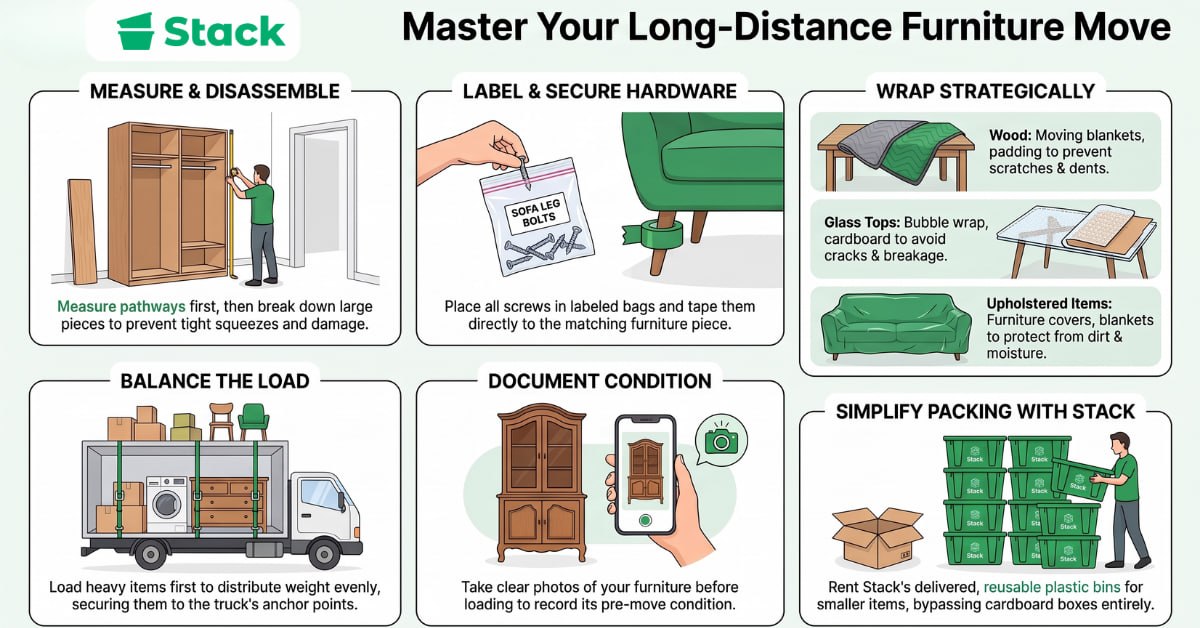
Infographic on preparing furniture for a long-distance move, covering measuring and disassembly, labelling hardware in bags, wrapping wood, glass tops and upholstery, balancing the truck load, documenting condition with photos, and renting reusable Stack bins

Before bringing out the bubble wrap, take a moment to decide whether every piece of furniture actually needs to make the trip. Moving furniture long distance can take time, space, and money, so it helps to think about how often you use each piece, whether it has sentimental or financial value, and what it would cost to replace it once you arrive.

Size and weight matter, too. A large, heavy dining table or bulky sectional may require more people, special handling, or extra space in the moving truck, which can add to the overall cost of your move. If a piece is difficult to transport and isn’t particularly useful or meaningful to you, it may make more sense to sell, donate, or give it away before moving day.

Decluttering can also make the rest of the move much easier. Fewer furniture pieces mean less packing, less heavy lifting, and more room for the belongings you actually want to keep, which can make a long-distance move feel a little more manageable.

How Should You Prepare Furniture Before Packing It?

Assorted wooden furniture including side tables, dining chairs, shelving units and a rattan chair lined up outdoors before a move

Before you start wrapping furniture, it’s worth doing a little preparation first. Here are a few things you should do to prepare your furniture before packing it.

Clean and Inspect Every Piece

Give your furniture a good clean before you start wrapping it up. Dust, dirt, and moisture can get trapped underneath protective materials during a long-distance move, so use the appropriate cleaner for wood, fabric, leather, or other surfaces and make sure everything is completely dry before packing.

While you’re cleaning, take a few minutes to look for loose joints, weak legs, damaged hardware, or anything else that could become a bigger problem during transport. Make any repairs you can before moving day, and take photos of existing scratches, dents, or other damage so you have a clear record of the furniture’s condition before it leaves your home. If you’re hiring a moving company, it’s also worth asking what coverage applies if your furniture is damaged during the move.

Measure Furniture and Doorways

A piece of furniture that fits comfortably in your living room may be a completely different story when it reaches a narrow hallway or doorway. Measure the height, width, and depth of your larger furniture, then check the doorways, hallways, staircases, and elevators along the route it will need to take.

If something is too large to move in one piece, you’ll know ahead of time that it needs to be disassembled. Planning the route before moving day can also help you avoid last-minute surprises, especially with heavy furniture or large items that need to make a few tight turns.

How to Prepare Furniture for a Long-Distance Move

Woman kneeling on a bedroom floor holding a disassembled wooden bed frame rail, with a drill, hammer and tape measure laid out on the carpet beside her

Once you’ve decided what furniture is coming with you and checked that everything is ready to move, it’s time to prepare each piece for the journey. These steps will help you take furniture apart where needed, protect the areas most likely to get damaged, protect fragile items and valuable items, and keep everything organized so loading, unloading, and putting it back together are much easier.

Step 1: Disassemble Large Furniture

Taking apart large furniture can make a big difference when you’re moving furniture long distance. Bed frames, dining tables, bookshelves, cabinets, and other pieces that are designed to come apart are usually easier to carry, protect, and fit into a moving truck when they’re broken down into manageable pieces.

Remove drawers where appropriate, and take off glass tops or other fragile components before moving them. As you disassemble each piece, take a few photos along the way and keep any assembly instructions nearby; those photos can be surprisingly helpful when it’s time to put everything back together.

Step 2: Organize and Label the Hardware

Small hardware has a funny way of disappearing when you need it most, so keep every screw, bolt, washer, and other loose piece together. Put the hardware for each furniture item in its own bag and label it clearly with the name of the piece it belongs to.

When practical, tape the bag to the furniture itself so it doesn’t get separated during the move. Keeping everything together now can save you a lot of frustration when you’re ready to reassemble your furniture at your new home.

Step 3: Protect Corners and Vulnerable Areas

Corners and exposed edges tend to take a beating during loading, unloading, and carrying furniture through doorways. Use cardboard guards or corner guards on these areas, and add extra padding around delicate corners, legs, glass edges, and finishes that could easily be scratched or dented.

Pay particular attention to pieces with delicate finishes or unusual shapes. A little extra protection around a vulnerable edge can make all the difference when furniture is being carried, stacked, or secured inside the moving truck.

Step 4: Wrap Furniture Properly

Moving blankets are useful for protecting larger furniture and wood surfaces from scratches and knocks during a long-distance move. For glass, mirrors, and particularly fragile edges, add bubble wrap or other protective padding before securing everything with plastic stretch wrap.

The stretch wrap should hold the blankets and padding in place rather than replace them. Also, avoid wrapping wood furniture directly in plastic for an extended period, as trapped moisture can damage the surface.

Step 5: Protect Mattresses and Upholstered Furniture

Mattresses, sofas, and other upholstered pieces need protection from more than bumps and scratches. Heavy-duty mattress bags and suitable furniture covers can help keep them away from dirt, dust, and moisture while they’re being moved and transported.

Before covering anything, make sure the fabric is completely dry. You don’t want moisture trapped underneath a protective cover for hours during a long-distance move.

Step 6: Label Each Furniture Piece

Once everything is wrapped and ready to go, label each furniture piece according to the room it belongs in at your new home. Color-coded labels can make this even easier, especially if you’re moving several rooms’ worth of furniture.

For disassembled pieces, mark them clearly so you know what belongs together, and consider making a simple floor plan of your new home. That way, whoever is helping unload can see where things need to go instead of asking you about every single piece while you’re already dealing with moving day.

How Should You Protect Different Types of Furniture?

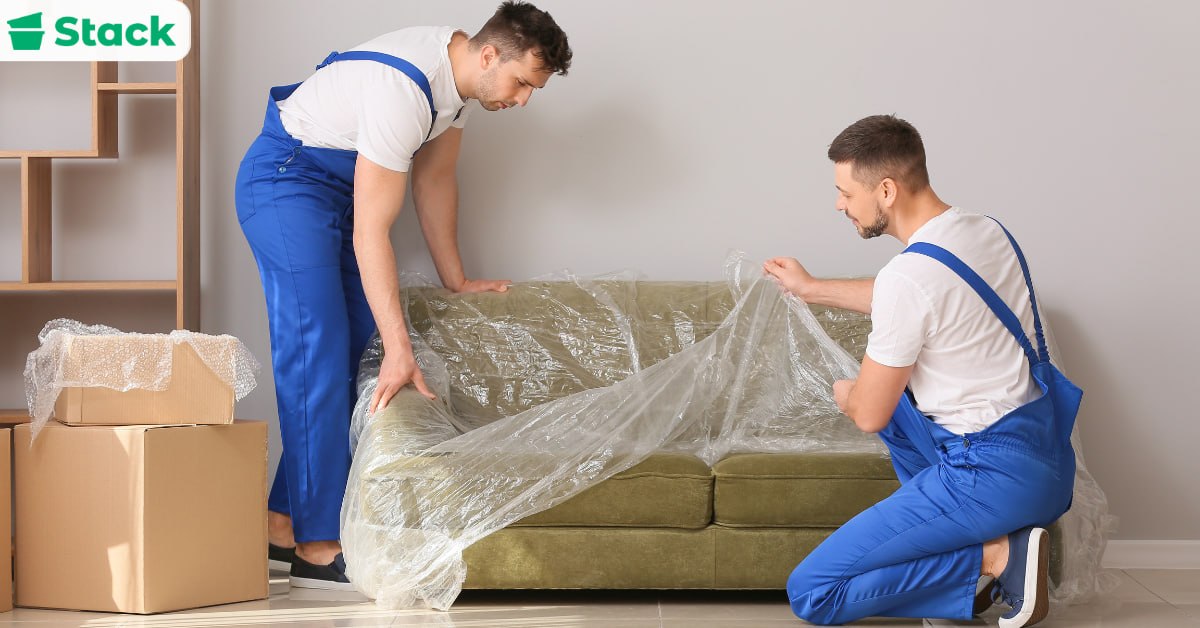
Two movers in blue uniforms wrapping a green sofa in plastic stretch film, with bubble-wrapped cardboard boxes stacked beside them

Not every piece of furniture needs to be wrapped in the same way. Wood can be vulnerable to scratches and moisture, while glass, upholstered pieces, and mattresses have their own concerns, so using the right protection for each item can help prevent damage during a long-distance move. Here’s a quick look at the most common furniture pieces, what you can use to protect them, and the problems you’ll want to watch for.

Furniture Type

Recommended Protection

Main Risk to Watch For

Wood furniture

Moving blankets, padding, corner guards

Scratches, dents, moisture

Glass tops

Bubble wrap, cardboard, moving blankets

Cracks and breakage

Dining tables

Moving blankets, corner protection, stretch wrap

Scratches and damaged edges

Coffee tables and side tables

Padding, blankets, corner guards

Dents and scratches

Bed frames

Disassembly, blankets, stretch wrap

Scratches and lost hardware

Upholstered furniture

Furniture covers, blankets

Dirt, moisture, tears

Mattresses

Heavy-duty mattress bags

Dust, stains, moisture

Mirrors

Bubble wrap, cardboard, blankets

Cracks and broken glass

How Should You Load Furniture Into a Moving Truck?

Getting your furniture ready is only half the job; how you load it into the moving truck matters just as much. A long-distance move means your furniture will be on the road for hours, so the goal is to keep everything balanced, stable, and protected from shifting or rubbing against other items.

Start with the heavier furniture and larger items, placing them in a way that distributes the weight evenly throughout the truck. Keep heavy pieces stable and use straps to secure them to the truck’s anchor points so they don’t move around during transport.

Once the larger pieces are in place, you can use suitable soft items to fill empty spaces and reduce movement. Keep glass tops, mirrors, and other fragile pieces upright with plenty of padding, and avoid placing heavy items where they could fall or press against delicate furniture.

If you’re working with professional movers, let them handle the loading if they have the right equipment and experience for heavy or awkward pieces. For a DIY move, take your time with the loading process rather than trying to squeeze everything in at once; a well-balanced truck is easier to manage and gives your furniture a better chance of arriving in the same condition it left.

What Moving Supplies and Equipment Do You Need?

By this point, you have a better idea of what needs protecting, so it’s much easier to figure out which supplies you’ll actually need. You don’t have to buy every moving product you see; focus on materials that protect your furniture from scratches, dents, dirt, moisture, and shifting, along with equipment that makes heavy pieces safer to handle.

Packing and Protection Materials

For most furniture, a combination of moving blankets, bubble wrap, plastic stretch wrap, cardboard sheets, and corner guards will cover the basics. You may also want furniture covers, heavy-duty tape, zip-top bags for hardware, labels and markers, and heavy-duty mattress bags for mattresses and upholstered pieces.

If you’re also packing smaller household belongings, Stack Moves offers reusable plastic moving bins with matching dollies and labels. The bins arrive ready to use, which means you can skip assembling and taping cardboard boxes and focus on getting your belongings packed and ready for the move.

Moving Equipment

Heavy furniture is much easier to move when you have the right equipment for the job. Furniture dollies, moving straps, hand trucks, and furniture sliders can make it easier to move large pieces without putting unnecessary strain on yourself or dragging furniture across the floor.

For unusually heavy, oversized, or awkward pieces, specialized equipment or professional help may be the safer option. The right equipment depends on the size and weight of the furniture, as well as the stairs, doorways, and other spaces you’ll need to navigate on moving day.

Should You Hire Professional Movers for Heavy Furniture?

Not every move requires professional movers, but heavy furniture is one area where getting help can be worth considering. If you’re dealing with a large sectional, solid wood furniture, a heavy dining table, narrow staircases, difficult access, or pieces that need special handling, professional movers may have the equipment and experience to handle them more safely.

Heavy lifting can also put more strain on your body than you might expect. Occupational Safety and Health Administration (OSHA) identifies the weight and bulkiness of loads, awkward postures, and difficult handholds as factors that can contribute to lifting injuries, and recommends getting help or using mechanical equipment when a load is too heavy or bulky to handle safely.

Of course, hiring a moving company adds labor costs, so a DIY move may make sense if you have manageable furniture, enough help, and the right equipment. But if saving money on labor means struggling with heavy furniture through a staircase or risking damage to valuable pieces, professional help may be worth the extra cost. If you do hire movers for a long-distance relocation, the FTC recommends getting written estimates and asking what coverage applies if your belongings are damaged; interstate moving companies should also be registered with the U.S. Department of Transportation.

What Are Common Mistakes to Avoid When Moving Furniture Long Distance?

Long-distance furniture moving has plenty of little details that are easy to overlook when you’re focused on getting everything packed and out the door. Avoiding a few common mistakes can make the move smoother and give your furniture a better chance of arriving in the same condition it left.

One common mistake is moving furniture without measuring it first. A piece may fit perfectly in a room but become a problem when you try to get it through a narrow doorway, hallway, staircase, or elevator. Take measurements before moving day and decide in advance which pieces need to be disassembled.

It’s also important to avoid wrapping furniture while it’s dirty or damp. Dirt trapped under blankets or plastic can scratch surfaces, while moisture can cause problems when it stays trapped during a long journey. Wood furniture, in particular, shouldn’t be wrapped directly in plastic for extended periods.

Before anything leaves your home, take clear photographs of existing scratches, dents, or other damage. This gives you a record of the furniture’s condition before the move, and the Federal Motor Carrier Safety Administration (FMCSA) also recommends taking photographs before loading and after unloading if damage occurs during an interstate move.

Other easy mistakes include losing screws and hardware during disassembly, leaving corners unprotected, forgetting removable drawers or glass tops, and failing to secure furniture inside the truck. Heavy pieces should also be loaded with weight distribution in mind rather than simply filling every available space.

If you’re preparing for a long-distance move, it’s worth taking a few extra minutes to document your furniture’s condition before it leaves your home. Take clear photos of existing scratches, dents, or other damage, and keep them with your moving records so you have a reference if something changes during the move. You can also use a moving checklist to keep track of important tasks before, during, and after moving day, including checking your furniture for damage once everything is unloaded.

Ready to Move Your Furniture Long Distance?

Smiling couple lying on the floor of their new home surrounded by stacked cardboard moving boxes, writing on a notepad

Preparing furniture for a long-distance move is mostly about giving each piece the attention it needs before it goes on the truck. Deciding what is worth taking, cleaning and inspecting your furniture, measuring tight spaces, disassembling large pieces, protecting vulnerable areas, and securing everything properly can help prevent damage and make moving day much less stressful.

Once your furniture is ready, Stack Moves can help with the rest of the packing process through reusable plastic moving bins, dollies, and labels delivered to your door. The bins arrive ready to use and are picked up after you’re finished, so you can spend less time dealing with cardboard boxes and more time settling into your new home. Contact Stack Moves to learn more about your move and how Stack can help.

Frequently Asked Questions

Still have a few questions about preparing furniture for a long-distance move? Here are some quick answers to help you feel more prepared before moving day.

How Should I Disassemble Furniture for Long-Distance Moving?

Take apart large pieces such as bed frames, dining tables, bookshelves, and cabinets when they are designed to be disassembled. This makes them easier to carry and load while reducing the chance of damage.

What Tools Do I Need to Disassemble Furniture for Long-Distance Moving?

A screwdriver, wrench, Allen key, and a few labeled zip-top bags will usually cover the basics. Check the furniture’s assembly instructions first if you still have them, as some pieces may require specific tools.

How Should I Label the Parts of Disassembled Furniture for Long-Distance Moving?

Keep the screws, bolts, washers, and other hardware for each piece in a separate labeled bag. You can also attach the bag to the furniture or keep it with the matching parts so everything is easy to find when you’re ready to reassemble it.

Should I Wrap Furniture Pieces In Protective Materials For Long-Distance Moving?

Yes. Moving blankets, bubble wrap, plastic wrap, cardboard, and other suitable padding can help protect furniture from scratches, dents, and knocks during loading and transport.

How Can I Protect Furniture With Delicate Finishes During Long-Distance Moving?

Start with a clean, dry surface and use soft padding or moving blankets to protect the finish from scratches and impact. Avoid putting plastic directly against wood for an extended period, as trapped moisture can damage the surface.

When to Start Packing for a Move

Moving can feel overwhelming, especially when you look around your home and realize just how much you have to pack. If you’re planning a move and wondering when to start, giving yourself 4–6 weeks before moving day is a good place to begin, giving you time to declutter, pack gradually, and avoid a last-minute scramble.

If you want to make packing easier, Stack Moves lets you skip the hassle of buying, assembling, and throwing away dozens of cardboard boxes by providing reusable plastic moving bins, sturdy dollies, and labels delivered straight to your door. You pack and move at your own pace, then Stack picks up the bins after you’ve unpacked, and cleans and sanitizes them for the next move. Ready to make your move simpler and less stressful? Contact Stack Moves today to get started.

In this guide, we’ll walk you through what to pack and when, from the first few weeks of planning to the essentials you’ll need on moving day, so you can move into your new home with less stress.

When Should You Start Packing for a Move?

For a typical household, it’s best to start packing 4–6 weeks before moving day, beginning with non-essential items you won’t need right away. If you have a large home, a lot of belongings, or a big decluttering process ahead of you, starting even earlier can give you more time, while a smaller move with fewer belongings may not need as much preparation. Packing gradually also gives you time to sort, organize, and label everything properly instead of rushing through the packing process during the final days before your move.

Moving is more common than you might think: the U.S. Census Bureau reports that 11.8% of people in the U.S. moved to a different residence in 2024. That’s one more reason to have a clear moving timeline and start planning early, especially if you have a lot to pack or are preparing for a long-distance move.

Your Moving Packing Timeline: What to Pack Each Week

Knowing when to start packing is one thing, but knowing what to pack and when makes the moving process much easier. A good approach is to start with things you rarely use, then gradually work your way towards everyday items as moving day gets closer.

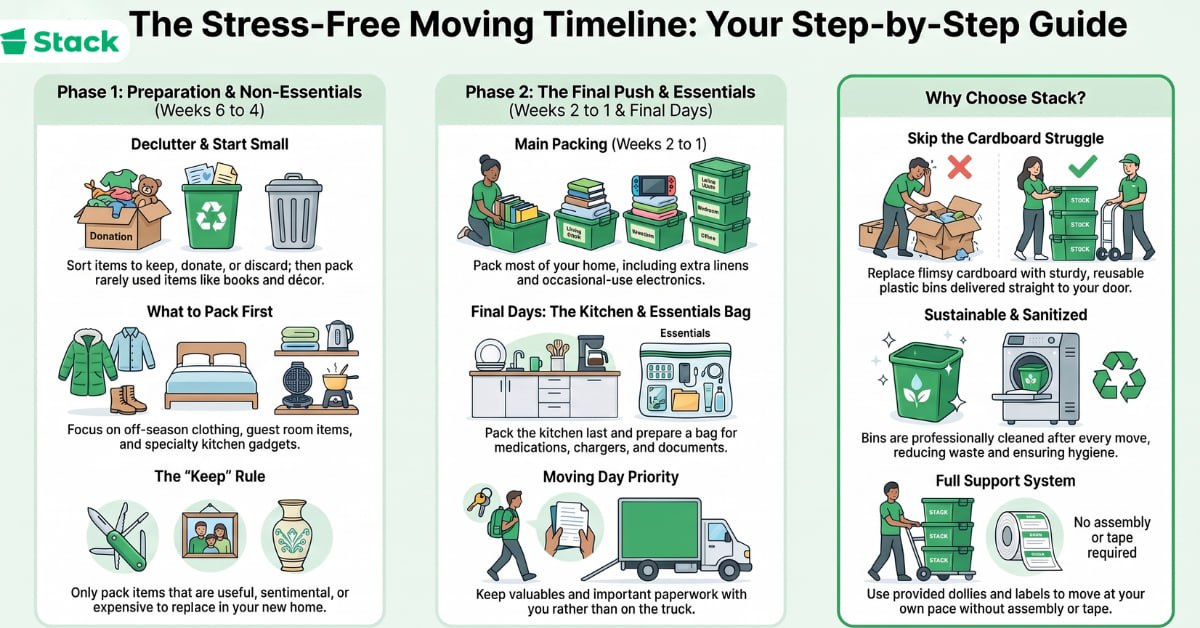
Moving packing timeline infographic showing what to pack each week, from six weeks before the move through moving day

6 Weeks Before Moving: Declutter and Make a Plan

Start by walking through each room and deciding what is actually coming with you. Sort your belongings into things to keep, donate, sell, or discard, paying special attention to seasonal items, holiday decorations, unused appliances, and anything you have not touched in months.

This is also a good time to create a simple moving timeline and start gathering your packing supplies. If you are moving during a busy period, booking your moving company or other moving services early can also give you more options for your preferred date.

4 Weeks Before Moving: Start Packing Non-Essentials

This is where early packing really helps. Start with off-season clothing, books, decorative items, wall art, holiday items, guest-room belongings, and kitchen gadgets or small appliances you can live without for a few weeks.

As you pack, label each box with its contents and the room it belongs in. You can also keep a simple inventory list so you can easily identify what has already been packed and find important items when you reach your new house.

2 Weeks Before Moving: Pack Most of Your Home

By now, most of the non-essential items should already be packed, so you can move on to the things you use occasionally. Pack extra linens and towels, most of your clothes, remaining decorative items, specialty cookware, and anything else you can manage without until moving day.

This is also a good time to use up food from your freezer and pantry instead of packing large amounts of perishables. If you need parking permits, elevator access, building approval, or other arrangements for moving day, take care of those now rather than leaving them until the last minute.

1 Week Before Moving: Finish the Main Packing

In the final week, the goal is to have most of your home packed so you are not dealing with a last-minute rush. Leave out only the clothes, toiletries, chargers, medications, important documents, cleaning supplies, and other essential items you still need for the final few days.

If you are using boxes, make sure you have the right number of boxes and box sizes for what is left. Small boxes are useful for heavier items such as books, while larger boxes can work well for lighter belongings like clothing and linens.

2–3 Days Before Moving: Pack the Kitchen

The kitchen is usually one of the last rooms to pack because you still need it for everyday meals. Aim to pack most of it two to three days before moving, leaving out only the basics you will need until then.

Use sturdy moving boxes or other secure containers for fragile items, and wrap glassware, fine china, and other delicate pieces with packing paper or bubble wrap. Label these containers clearly so they are easy to identify and can be handled carefully during the move.

1 Day Before Moving: Pack Your Essentials

By the day before your move, you should be down to your final packing. Prepare an essentials bag or box with toiletries, a change of clothes, chargers, medications, important documents, toilet paper, snacks, water, and anything else you will need as soon as you arrive.

Keep this separate from your other packed belongings so you can easily identify it when you get to your new space. Your coffee maker, basic kitchen items, and cleaning supplies may also be worth keeping accessible if you will need them before everything else is unpacked.

Moving Day: Keep These Items With You

On moving day, keep valuable items, important documents, medications, personal electronics, and anything with strong sentimental value with you rather than putting them on the moving truck. This gives you peace of mind and means you can access the things you need without searching through packed boxes during the unloading process.

Before leaving your old home, do one final walk-through of each room, including closets, cupboards, the garage, and the medicine cabinet. A quick check can help you catch those easily missed essentials before you lock the door for the last time.

How Long Does It Take to Pack for a Move?

There’s no single answer to how long it takes to pack for a move because every home has a different amount of stuff, and every person has a different schedule. Moving is also fairly common in the U.S.; the U.S. Census Bureau’s 2024 data shows that millions of people move homes each year, whether locally or farther away. U.S. Census Bureau Geographic Mobility Data. With that in mind, your own packing timeline will depend on a few practical factors, starting with the size of your home and how much you actually have to pack.

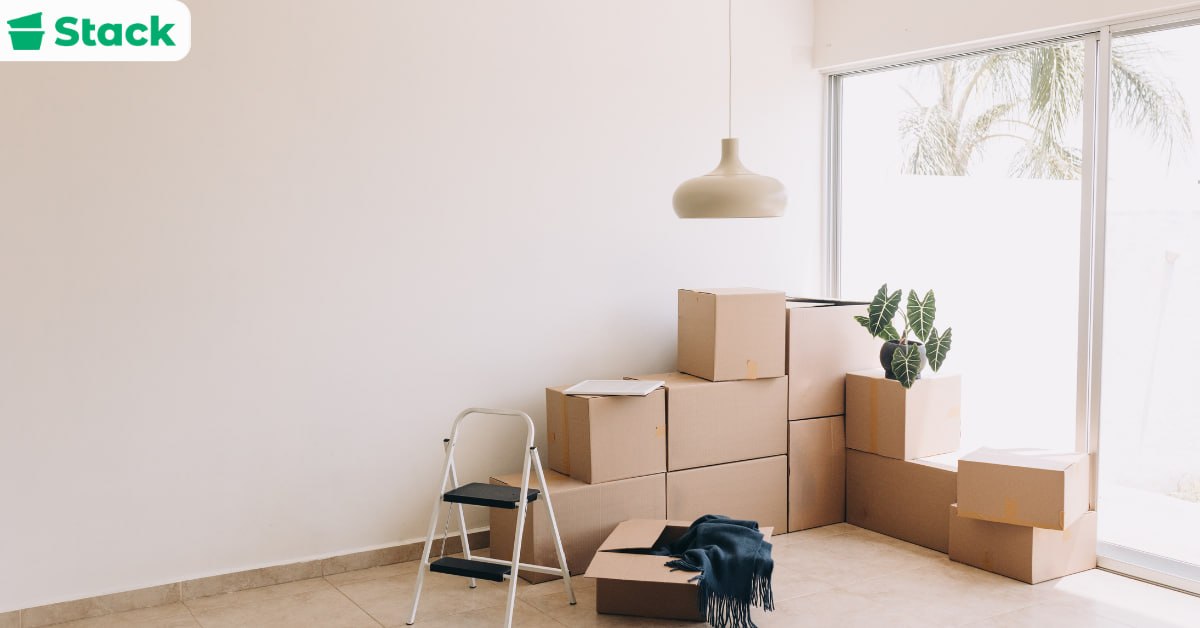
Cardboard moving boxes stacked in a bright, nearly empty living room beside a step ladder, packed and ready for moving day

How Big Is Your Home?

The size of your home is one of the easiest places to start. A studio or small apartment may take much less time to pack than a house with several bedrooms, a garage, dining room, and storage areas filled with belongings.

How Much Stuff Do You Have?

The number of belongings you own can matter just as much as the size of your home. If your cupboards, closets, and storage spaces are full, give yourself extra time to sort, pack, and label everything, especially if you need to decide what is worth taking to your new house.

Do You Need to Declutter First?

Decluttering can add some time at the beginning, but it can save you from packing and moving things you no longer want. If you’re planning to sell items at a garage sale, donate belongings, or sort through sentimental items, starting six to eight weeks ahead gives you more breathing room.

Will You Have Help?

Packing on your own can take considerably longer than having family, friends, or professional organizers help with the job. More hands can make it easier to work through one room at a time, although you’ll still want someone to keep track of what goes into each box and where it belongs.

Are You Moving Yourself or Hiring a Moving Company?

Your moving method can also affect how much preparation you need. With a DIY move, you may need to organize your boxes, moving truck, transportation, and unloading process yourself, while a moving company may handle some parts of the physical move for you.

What Should You Pack First and Last?

Once you have your moving timeline in place, the next question is usually, “What can I actually pack right now?” A simple rule is to start with things you rarely use and leave the items that are part of your everyday routine until the final stages of the move.

Pack First

Why Pack It Early?

Pack Last

Why Keep It Accessible?

Seasonal and out-of-season clothes

You likely won’t need them before moving day.

Everyday clothes

You’ll still need clothes for work, errands, and daily activities.

Books

You can store most books away without affecting your routine.

Toiletries

You’ll need them every day until you leave.

Holiday decorations

You usually use these only at certain times of the year.

Chargers and electronics

You’ll need your phone, laptop, and other devices right up to moving day.

Decorative items and wall art

Removing them early can reduce visual clutter and make packing easier.

Basic kitchen items

You’ll still need to prepare meals and drinks before the move.

Guest-room items

You can usually pack these without affecting your daily routine.

Coffee maker

If coffee is part of your morning routine, there’s no reason to pack it too early.

Rarely used appliances

Small appliances and kitchen gadgets you rarely use can go into boxes early.

Medications and medicine cabinet items

These are essential items you may need at any time.

Extra towels and linens

Keep only what you currently use and pack the rest.

Cleaning supplies

You may need them to clean your old or new space.

Specialty cookware

Fine china and cookware used for special occasions can be packed early.

Important documents

Keep passports, records, paperwork, and other valuable documents with you.

Sentimental and decorative items

Packing these early gives you more time to organize items with sentimental value carefully.

Essential items

Keep anything you use regularly accessible until the final packing stage.

Following this approach helps you gradually reduce what’s around you without making your home feel unusable weeks before the move. As you pack, label boxes clearly with their contents and destination room, so the unloading process is easier and you can quickly find what you need in your new space.

Should You Declutter Before Packing?

Yes, and ideally you should declutter before you start packing everything into the right boxes. There’s little point spending time wrapping, labeling, and moving something you already know you don’t want, so use the weeks before your move to work through your belongings and decide what is actually worth taking to your new space.

The U.S. Environmental Protection Agency estimates that Americans generated 11.7 million tons of furniture and furnishings waste in 2018, showing just how much unwanted household material can eventually end up in the waste stream. While this figure covers more than just moving-related waste, it’s a good reminder that sorting your belongings before a house move can help you avoid taking unnecessary items with you.

What to Keep

Start with the things you use regularly or genuinely want in your new house. Only the essentials, useful household items, sentimental belongings, important documents, and things that would be expensive or difficult to replace should generally make the keep pile.

What to Sell

If something is in good condition but no longer fits your lifestyle or new space, consider selling it before the move. Furniture, small appliances, kitchen gadgets, decorative items, and other valuable belongings can be listed online or included in a garage sale, giving you a chance to make some money while reducing what you need to pack.

What to Donate

Some items may not be worth selling but could still be useful to someone else. Clothing, books, kitchenware, extra linens, and household items in good condition can often be donated instead of taking up space in your moving boxes.

What to Discard

Be honest about items that are broken, damaged, expired, or simply no longer useful. Getting rid of these things before packing means fewer boxes, less visual clutter, and less to carry through the loading and unloading process.

Once you’ve finished sorting, you’ll have a much clearer idea of how much stuff you’re actually moving. If you’re using reusable plastic clear bins, this is also a good time to work out how many you’ll need, rather than renting or buying more packing containers than necessary.

What Packing Supplies Do You Actually Need?

You don’t need to fill your home with every packing product you can find before a move. The right supplies depend on what you own, how much you’re packing, and how carefully certain items need to be protected, so it helps to start with the basics and add what you need as you go.

Hands holding a sheet of bubble wrap, one of the packing supplies used to protect fragile items during a move

Essential Packing Supplies

For most moves, you’ll need containers, labels, packing materials, and a good marker to keep everything organized. Reusable moving bins can be a practical option if you want sturdy containers without buying piles of cardboard boxes, while labels make it easier to identify what’s inside and which room each container belongs in. Stack, for example, provides reusable plastic bins, dollies, and labels that are delivered to your door and collected after you’ve finished unpacking, which can make the packing process a little simpler.

Packing tape can still be useful for sealing certain cardboard boxes, especially if you’re using a mixture of boxes and bins. A permanent marker or color-coding system can also help you quickly identify where each box or bin should go when you reach your new space.

Supplies for Fragile Items

Fragile and delicate items need a little more protection than clothes or books, so this is where packing paper, bubble wrap, and other protective materials become useful. Wrap fine china, glassware, small appliances, decorative items, and other breakable belongings individually before placing them in sturdy boxes or bins, and avoid leaving empty spaces where items can move around during transport.

You don’t necessarily need a huge collection of packing supplies; the goal is to have the right materials for what you’re actually moving. Starting with the basics and adding protective materials for your fragile items can keep your packing process organized without leaving you with a garage full of unused supplies after the move.

How to Pack Efficiently Without Getting Overwhelmed

Packing an entire home can feel like a lot when you look at everything at once. The easiest way to make the packing process more manageable is to break it into smaller steps and focus on what you can get done each day.

Stacked cardboard moving boxes marked with red FRAGILE labels, showing how labeling every container keeps packing organized

Step 1: Pack One Room at a Time

Start with one room and finish as much of it as possible before moving to another. This keeps your boxes organized and helps you see your progress instead of having half-packed boxes scattered throughout the house.

Step 2: Label Every Container

As soon as you fill a box or bin, label it with what’s inside and the room it belongs in. You can also use a color-coding system to make it easier to identify where everything should go when you start unloading at your new house.

Step 3: Keep an Essentials Box

Set aside one box or bin for the things you’ll need immediately after the move. Include items such as toiletries, chargers, medications, important documents, toilet paper, a change of clothes, snacks, and a few basic kitchen items so you don’t have to search through multiple boxes on moving day.

Step 4: Set Daily Packing Goals

You don’t have to pack your entire home in one weekend. Give yourself a small goal each day, such as packing one room, filling a few moving boxes, or sorting through one cupboard, and use your moving timeline to keep yourself on track.

Step 5: Don’t Pack Things You Don’t Plan to Move

Before putting something into a box, ask yourself whether you actually want it in your new space. If the answer is no, put it aside to sell, donate, recycle, or discard instead of spending time and packing materials moving it.

What If You Only Have Two Weeks to Move?

Two weeks isn’t ideal, but you can still have a smooth move if you focus on what needs to be done first. Instead of trying to pack everything at once, split the work across the two weeks and concentrate on the items you can live without first.

Cardboard box handwritten with the words Moving day, packed and set aside in a living room ahead of the move

Week 1: Declutter and Pack Non-Essentials

Start by going through each room and getting rid of anything you don’t plan to take with you. Once you’ve reduced the clutter, pack non-essential items such as seasonal clothing, books, decorations, guest-room belongings, and rarely used kitchen gadgets.

Week 2: Pack Everything Except Daily Essentials

During the second week, work through the remaining rooms and pack everything you won’t need before moving day. Keep out only everyday clothes, toiletries, medications, chargers, important documents, basic kitchen items, and other essentials, then prepare a separate essentials box that you can easily access.

If you’re trying to save time, reusable plastic bins can also make the packing process easier. Instead of buying new boxes, assembling them, and dealing with tape, you can use sturdy bins that are ready to pack and easy to stack as you move from room to room. Stack Moves offers reusable moving bins, dollies, and labels, which can be delivered before your move and collected once you’re finished unpacking.

Ready to Start Packing for Your Move?

Starting to pack 4–6 weeks before moving day gives you enough time to declutter, pack non-essential and seasonal items first, and gradually work through the rest of your home. As moving day gets closer, focus on everyday belongings, pack the kitchen two to three days before the move, and keep an essentials bag with you for the final day. With a little early packing and a clear plan for each week, you can make the moving process more organized and enjoy a more stress-free move.

If you want to make the packing process easier, Stack Moves provides reusable plastic moving bins, dollies, and labels that are delivered to your door, so you can skip buying and assembling piles of cardboard boxes. You pack everything yourself at your own pace, and once you have unpacked, Stack picks up the bins and cleans and sanitizes them for the next move. Ready to have a successful move? Contact Stack Moves today to get started.

Frequently Asked Questions

Still wondering when to start packing for a move or what to tackle first? Here are some quick answers to common packing questions to help you plan your move in a less time-consuming way.

When should I start packing for a move?

Start packing 4–6 weeks before your moving date. Begin with non-essential and seasonal items, then work towards everyday belongings as moving day gets closer.

What are some signs that indicate it’s time to start packing?

A confirmed moving date and a clear moving plan are good signs that it’s time to start packing. If you know when and how you’re moving, you can begin packing without disrupting your daily routine.

Can I start packing too early for a move?

Yes, packing too early can be inconvenient if you pack things you still use regularly. Start with items you rarely need and gradually pack your everyday belongings closer to moving day.

What are some packing tips for an effective move?

Declutter before packing, work room by room, and clearly label every box with its contents and destination. Keep essential items separate so you can access them easily when you need them.

What should I prioritize when packing for a move?

Start with items you use infrequently, such as seasonal clothing, holiday decorations, books, and decorative items. Leave everyday essentials, toiletries, medications, and basic kitchen items until closer to moving day.

How Much Do Movers Cost for a 2-Bedroom Apartment?

Getting moving quotes can be confusing. One company says it’ll cost $900, another comes back at almost double, and suddenly you’re wondering what a 2-bedroom apartment should actually cost to move.

Planning a move is easier when you know what to expect, especially when it comes to costs. For the past three years, Stack has helped homeowners and businesses move more efficiently with durable, reusable moving bins delivered directly to their door. Made from recycled plastic, our bins provide a more convenient, sustainable alternative to traditional cardboard boxes and can help customers save up to 40% on moving supplies. Contact Stack today to reserve your moving bins and make your next move simpler, more organized, and more cost-effective.

In this guide, we’ll break down the average price, explain why quotes can vary so much, and share a few practical ways to keep your moving costs under control.

How Much Do Movers Cost for a 2-Bedroom Apartment?

Couple reviewing a moving quote beside green Stack reusable moving bins in a 2-bedroom apartment

If you’ve started collecting moving quotes, you’ve probably noticed something already. The prices can be all over the place. One company quotes a few hundred dollars more than the next, and suddenly you’re wondering what a move should actually cost.

For most local moves, hiring professional movers for a 2-bedroom apartment typically costs between $700 and $1,400. Planning a long-distance move instead? You’re generally looking at $4,100 to $8,500 or more, depending on how far you’re going, how much you’re moving, and any extra services you need.

Here’s a quick look at what those costs usually include.

Move Type Typical Cost How Pricing Works
Local move (under 50 miles) $700–$1,400 Usually charged by the hour
Average local move (U.S.) Around $1,250 Labor, truck, and travel time
Long-distance move $4,100–$8,500+ Based on weight and distance
Average 1,000-mile move Around $4,890 Transportation, weight, and mileage

Don’t assume a local move will automatically be cheap. A building without an elevator, a long walk from your apartment to the truck, or a home filled with heavy furniture can all push the price up because the move takes longer.

Long-distance pricing works differently. Instead of watching the clock, professional moving companies usually focus on the weight of your belongings, the distance you’re travelling, and any additional services you request. That’s why two people moving the same distance can end up paying very different amounts.

Why Does the Price of Moving Change So Much?

Movers carrying green Stack reusable moving bins through an apartment hallway

Here’s something we hear all the time.

“I got two quotes for the same apartment. Why is one so much more expensive?”

It’s a fair question, and the answer usually isn’t that one company is overcharging. More often than not, they’re looking at different parts of your move.

Whenever someone asks us why prices vary so much, we walk them through what we call the D.O.L.L.A.R. Rule. These are the six things that have the biggest impact on what you’ll end up paying.

D: Distance

Distance is usually the first thing people think about, and for good reason. The farther you’re moving, the more your move is likely to cost. Local movers often charge by the hour, while long-distance movers build their pricing around mileage, shipment weight, and travel costs.

O: Overall Size of Your Move

This catches a lot of people off guard. A 2-bedroom apartment doesn’t tell movers very much. What matters is how much you’re actually moving. A home with a few essentials will usually cost less to move than one packed with oversized furniture, dozens of boxes, and years of accumulated belongings.

L: Labor

Every move needs people to get the job done, but not every move needs the same number of movers. A simple ground-floor apartment might only need a small crew, while heavy furniture, narrow staircases, or tricky access points can mean extra hands and extra time. Both affect the final price.

L: Little Extras

This is where moving costs can quietly creep up. Packing services, appliance preparation, bulky items, long carries from your apartment to the truck, and specialty moves all come with additional work. Before you compare quotes, check what’s included so you’re making a fair comparison.

A: Around the Calendar

Your moving date can make a bigger difference than you might expect. Summer weekends are usually the busiest time of year, which often means higher demand and higher prices. If your schedule is flexible, moving during the week or in the middle of the month could help you save.

R: Risk

Nobody expects anything to go wrong, but it’s still worth understanding what happens if it does. Most professional movers include basic valuation coverage, and many offer additional protection for high-value items. Knowing your options before moving day can give you one less thing to worry about.

How Can You Spend Less on Your Move?

Woman decluttering clothes into green Stack reusable moving bins before packing

Here’s the thing. Most people don’t blow their moving budget because of one big mistake. It’s usually a handful of small decisions that add up before moving day even arrives.

The good news is that a little planning can go a long way. These are some of the easiest ways to keep your moving costs under control without making the move any harder than it needs to be.

Declutter Before You Pack

Moving companies don’t charge based on how attached you are to your belongings. They charge based on how much they have to move. Before you start packing, take a look around and be honest about what you still use. Fewer boxes usually mean less time, less labor, and a lower bill.

Don’t Stop at the First Quote

It’s tempting to book the first company that gives you a reasonable price, especially when you’re juggling everything else on your to-do list. But taking the time to compare a few quotes can pay off. Just make sure you’re comparing the same services, because the cheapest estimate isn’t always the best value.

Be Flexible With Your Moving Date

If your schedule allows it, avoid the busiest moving days. Summer weekends are in high demand, which often means higher prices and fewer time slots to choose from. A weekday or mid-month move could help you save without changing anything else about your plans.

Pack What You Can Yourself

You don’t have to do everything on your own, but packing everyday items before the movers arrive can reduce the amount of time they spend on the job. Clothes, books, decorations, and kitchen items are all good places to start. Just label your boxes clearly so unpacking is a little easier on the other side.

Rethink the Cardboard Box

Most people buy more cardboard boxes than they actually need. Reusable moving bins are sturdier, easier to stack, and don’t leave you with a pile of flattened boxes once you’ve unpacked. If they’re available in your area, they can be a practical alternative that’s easier on both your budget and the environment.

Is Hiring Professional Movers Worth It?

Professional movers loading a wrapped sofa and green Stack moving bins into a moving truck

If you’ve ever considered moving everything yourself, you’ve probably had the same thought most people do.

“How hard can it be?”

Then moving day arrives.

Suddenly you’re figuring out how to get a sofa around a tight corner, carrying boxes in the summer heat, and wondering why you own so much stuff in the first place.

You’re Paying for More Than a Moving Truck

Hiring professional movers isn’t just about saving yourself from heavy lifting. You’re also paying for people who know how to move bulky furniture, protect fragile belongings, and get everything loaded and unloaded as efficiently as possible.

As moving expert Michael Weaeedian puts it, “The goal isn’t just to move faster. It’s to make moving day feel manageable.” That’s exactly what experienced movers bring to the table. They don’t just move your belongings. They help take the pressure off one of the busiest days you’ll have all year.

A Good Moving Estimate Can Save You Money

One of the easiest ways to avoid unexpected costs is to understand exactly what you’re paying for before moving day. The Federal Motor Carrier Safety Administration (FMCSA) recommends getting a written estimate that clearly outlines transportation charges, additional services, and any fees that could apply if your move changes. Taking a few minutes to review the estimate now can save you from unpleasant surprises later.

Sometimes DIY Costs More Than You Expect

Renting a truck might seem like the cheaper option at first. Then you start adding fuel, mileage, moving equipment, packing supplies, and maybe even a day off work. By the time everything is added up, the gap between doing it yourself and hiring professional movers is often smaller than people expect. For many households, the extra convenience is well worth the difference.

Experience Matters More Than You Think

Anyone can carry a box. Moving a solid wood dresser through a narrow hallway without scratching the walls or damaging the furniture takes practice. That’s where experienced movers earn their keep.

They’ve handled awkward staircases, tight corners, oversized sectionals, and fragile items hundreds of times before. It’s the kind of experience that’s difficult to appreciate until you’re standing in your living room wondering how your sofa is ever going to fit through the front door.

How Many Moving Boxes Do You Need for a 2-Bedroom Apartment?

Stacked green Stack reusable moving bins in an empty 2-bedroom apartment living room

Packing always seems simple at first.

Then you open the kitchen cupboards, look inside the hallway closet, and suddenly you’re wondering where all this stuff came from.

For most 2-bedroom apartments, you’ll need somewhere between 40 and 70 moving boxes. The exact number depends on how long you’ve lived there, how much you own, and whether you’ve taken the time to declutter before moving day.

Here’s a general guide to help you estimate.

Home Size Estimated Number of Boxes
Minimal belongings 40–50 boxes
Average 2-bedroom apartment 50–60 boxes
Larger household or extra storage 60–70+ boxes

Not every box should be the same size. Heavy items like books, tools, and dishes are easier to carry in smaller boxes, while pillows, bedding, and other lightweight items are better suited to larger ones. Mixing the right box sizes makes packing safer and unloading much easier.

Still not sure how many boxes you’ll need? Try Stack’s Moving Box Calculator for calculating moving costs and for a more personalized estimate based on your home and the number of rooms you’re packing. It’s a simple way to save money, avoid buying too many boxes or running out halfway through the job.

If you’re looking for an alternative to cardboard, reusable moving bins are worth considering. They’re sturdy, stack neatly, and don’t leave you with piles of flattened boxes once you’ve unpacked. Sometimes the easiest way to make moving day simpler is to start with better packing supplies.

Need Help With Moving?

By now, you’ve probably realised there isn’t one fixed price for moving a 2-bedroom apartment. Every move is different, and that’s why two people with similar homes can end up with very different quotes. Once you understand what affects the cost, it’s much easier to compare estimates, spot unnecessary fees, and decide where it’s worth spending a little more.

The packing supplies you choose can make a difference too. Strong, reusable moving bins protect your belongings better than worn-out cardboard boxes, stack neatly in the truck, and make both packing and unpacking much easier. They’re a simple upgrade that can save time, reduce waste, and take a bit of the stress out of moving day.

If you’re getting ready for your next move, Stack Moves is here to help. Our reusable moving bin rentals are designed to make packing simpler, keep your belongings protected, and help you move with confidence. Get in touch with our team for a personalized quote and let’s make your next move a little easier.

Frequently Asked Questions

We've answered your most common questions about the cost of moving a 2-bedroom apartment to help you plan smarter and budget with confidence.

How much does it cost to move a 2-bedroom apartment?

The cost of moving a 2-bedroom apartment depends on factors like distance, the amount of furniture you have, the time of year, and any additional services you need. Local moves typically cost less than long-distance relocations, so it’s always worth getting a personalized quote before booking.

How long does it take to move a 2-bedroom apartment?

Most local moves take between four and eight hours. The exact timeline depends on how much you own, how easy your home is to access, and whether you’ve packed everything before the movers arrive.

Is it cheaper to move yourself or hire professional movers?

It depends. Renting a truck may have a lower upfront cost, but you’ll also need to factor in fuel, equipment, packing supplies, and your time. Once everything is added together, hiring professional movers is often more affordable than people expect.

How many moving boxes do I need for a 2-bedroom apartment?

Most households need between 40 and 70 moving boxes. If you’ve recently decluttered, you may need fewer, while larger households or homes with extra storage often require more.

Are reusable moving bins better than cardboard boxes?

For many moves, yes. Reusable moving bins are sturdier, stack more securely, and help protect your belongings from moisture and crushing. They also save you from buying, assembling, and recycling dozens of cardboard boxes after the move.

When should I book movers for a 2-bedroom apartment?

Booking four to eight weeks in advance is a good rule of thumb, especially if you’re moving during summer or at the end of the month when demand is usually higher. Planning ahead gives you more flexibility and a better chance of securing your preferred moving date.

What’s included in a professional moving quote?

Most moving quotes include transportation, loading, unloading, and basic labour. Depending on the company, you may also be able to add packing services, storage, specialty item handling, or reusable moving bin rentals, so it’s always worth reviewing your estimate carefully before booking.

Best Ways to Ship Moving Boxes

Shipping moving boxes is one way to save you all the hassle and cost that comes with renting a moving truck, but choosing the right shipping method is where things can get tricky. The best option depends on the number of boxes you’re shipping, how quickly they need to arrive, and how much you’re willing to spend. So if you’re sending only a few boxes across town or shipping to an entirely different state, having a shipping strategy can help you protect your things and keep the spending under control.

Shipping moving boxes shouldn’t mean choosing between protecting your belongings and staying within budget. For the past three years, Stack has helped homeowners, businesses, and moving professionals simplify their moves with durable, reusable moving bins delivered directly to their door. Made from recycled plastic, our bins provide a more convenient and sustainable alternative to traditional cardboard boxes while helping customers save up to 40% on moving supplies. Whether you’re shipping a few boxes or preparing for a long-distance move, contact Stack today to reserve your moving bins and make packing and transportation easier from start to finish.

This guide will cover the best ways to ship moving boxes, helping you find the most cost-effective and reliable option for your needs.

How to Ship Moving Boxes: Step-by-Step Process

How to Ship Moving Boxes: Step-by-Step Process

The shipping process starts long before you hand your boxes to the courier service. Whatever decisions you make when selecting a shipping service, packing your things, and preparing your shipment can have a major impact on the cost, delivery timeframe, and the condition of your items when they arrive. You will also need to follow a consistent process to make it easier to compare shipping companies, avoid unnecessary fees, and have a guaranteed delivery date. Instead of simply guessing your way through the process, breaking them down into manageable steps helps you make smarter decisions at every stage. This is why at Stack, we recommend using the M.O.V.E Framework to help simplify the process of shipping moving boxes safely, efficiently, and cost-effectively.

M- Match the Right Shipping Method

The best way to ship moving boxes depends on what you’re sending, where it’s going, and how quickly it needs to arrive. A few boxes may be more affordable through the United States Postal Service, while larger shipments often make more sense with UPS, FedEx, a freight company, or moving containers. According to the United States Postal Service, it delivers to more than 160 million delivery addresses nationwide, making it one of the most accessible options for residential shipments across the country. Michael Weaeedian recommends comparing delivery speed, insurance options, and total shipping costs before choosing a carrier because the cheapest quote isn’t always the best value. For example, someone shipping a few boxes to a college dorm may choose USPS, while a family relocating across the country may benefit from freight or container shipping instead.

O- Organize and Pack Your Boxes

Proper packing protects your belongings and helps prevent damage during box shipping, especially when your boxes pass through multiple sorting facilities. Use sturdy, double-walled cardboard boxes whenever possible, avoid worn or damaged boxes, and choose the right size for the items you’re packing. Fragile or valuable items should be wrapped with quality packing materials, while heavy items should be packed in smaller boxes to make lifting safer and reduce the risk of box failure.

V- Verify Every Shipping Detail

Before sending your shipment, double-check every detail that could affect pricing or delivery. Many shipping companies calculate charges using both actual weight and dimensional weight, so measuring each shipping box accurately helps you avoid unexpected fees. If you’re shipping multiple boxes, compare quotes from different carriers, confirm any residential delivery surcharges, and consider purchasing insurance for valuable or fragile items. Label every box clearly with the destination address, contact information, and handling instructions, and keep a simple inventory so you know exactly what was shipped. Taking a few minutes to verify these details can prevent delays, misplaced boxes, and unnecessary expenses.

E- Ensure Safe Delivery

Your job isn’t finished once your boxes leave your home. Schedule a pickup or drop-off that fits your timeline, save your tracking numbers, and monitor each shipment until it reaches its final destination. When your boxes arrive, inspect them before unpacking and report any visible damage to the carrier as soon as possible, especially if you’ve purchased shipping insurance. If you’re coordinating a long-distance move, tracking every shipment also helps you stay organized and ensures essential items arrive when you need them. Following each step of the MOVE Framework helps make shipping moving boxes more predictable, giving you greater confidence from pickup through delivery.

Choosing the Most Cost-Effective and Reliable Way to Ship Moving Boxes

Choosing the Most Cost-Effective and Reliable Way to Ship Moving Boxes

Choosing the cheapest way to ship moving boxes isn’t always as simple as picking the lowest price. The best shipping service depends on the number of boxes you’re sending, their weight, how quickly they need to arrive, and the level of protection your belongings require. For example, shipping a few moving boxes to a college dorm requires a different approach than transporting an entire household across the country. Comparing carriers side by side makes it easier to balance shipping costs, delivery speed, and reliability before making a decision. The table below compares some of the most common options to help you choose the best way to ship moving boxes for your budget and timeline.

Shipping Method Best For Typical Cost Delivery Speed Things to Consider
USPS Retail Ground Small to medium shipments Starts at $7.35 per package Standard Budget-friendly for a few boxes and nationwide delivery.
UPS Ground Heavy or valuable items Varies Standard Excellent tracking and dependable service. Residential delivery surcharges may apply.
FedEx Ground Time-sensitive shipments Medium to High Fast Strong delivery network with expedited shipping options available.
LTL Freight Multiple heavy boxes Quote required Slower Requires palletizing and labeling but is often more economical for bulk shipments.
Moving Containers Household or business moves Varies Flexible

Price is important, but it shouldn’t be the only factor when comparing shipping companies. According to the United States Postal Service, USPS Retail Ground shipping starts at $7.35 per package, making it one of the more economical options for customers shipping a few boxes without expedited delivery. Stack Moves recommends requesting quotes from at least two or three carriers before booking because delivery speed, insurance, dimensional weight, and additional service fees can quickly change the overall cost. For larger moves involving heavy boxes or several rooms of household goods, freight shipping or moving containers may provide better overall value than paying individual parcel rates. Taking the time to compare your options helps you find a shipping solution that protects your belongings while keeping your move on budget.

Major Shipping Carriers (Best for Standard Shipments)

Major Shipping Carriers (Best for Standard Shipments)

Choosing the right shipping carrier for your move boils down to four things – speed, cost, reliability, and flexibility. Which company you go with ultimately depends on what you need the most. We listed three top shipping companies to help you decide which is best for you.

1. UPS

United Parcel Service, popularly known as UPS, is a go-to recommendation for anyone looking for a safe and secure way to ship their items. Their reach allows you to ship across town or internationally in record time at affordable rates. Their services range from standard ground shipping to faster air freight options.

2. FedEx

FedEx stands out where speed matters. They’re famous for coming through for businesses that have time-sensitive deliveries, offering some of the fastest shipping options in the industry. Their services include same-day and even overnight delivery. They’re another company with a strong global presence. However, their prices are slightly higher than UPS and USPS, especially for their expedited deliveries.

3. USPS

Formally known as the United States Postal Service, USPS is a lifesaver when it comes to sending out smaller packages. They’re budget-friendly for both individuals and businesses and also provide flat-rate shipping. Another great thing about them is they cover all U.S. states, including P.O. boxes and rural areas. They also provide international shipping, but it’s a lot slower compared to UPS and FedEx.

Freight Shipping (Best for Bulk or Heavy Items)

Freight Shipping (Best for Bulk or Heavy Items)

If you’re planning on shipping large, bulky, or heavy items, standard shipping carriers like the ones discussed above won’t cut it. Instead, you’d need to use freight shipping services. They’re designed to help businesses and individuals move large shipments. Think of items like furniture and industrial equipment.

But why choose freight shipping over standard carriers? A major advantage is that they’re more cost-effective and better at handling long-distance hauls. However, freight shipping takes longer than express carriers and often requires additional coordination (like scheduling a pickup or ensuring proper packaging).

4. LTL (Less Than Truckload) Freight

LTL (Less Than Truckload) freight is perfect when you have too much cargo for a standard shipping carrier but not enough to fill an entire truck. Instead of paying for a full truckload, you share space with other shipments, cutting costs while still getting reliable delivery.

5. Palletized Shipping

This involves stacking your goods on a pallet and securing them before shipping. This method works best for fragile or valuable items and keeps everything organized. Additionally, loading and unloading is much easier using this method. It’s the preferred method of shipping for warehouses, manufacturers, and even retailers.

Moving Container Services (Best for Flexible Storage)

Moving Container Services (Best for Flexible Storage)

These services are convenient and flexible when it comes to transporting and storing your belongings. They’re the perfect service for anyone who needs extra time before delivery or wants to avoid the hassle of renting and driving a moving truck. A container is delivered to your location, giving you all the time you need to pack before they are shipped or stored. One of the most widely available options is U-Haul U-Box, offering nationwide coverage and easy delivery.

6. U-Haul U-Box

U-Haul U-Box is a portable storage and moving solution made for people who need more flexibility when moving. The process is simple: a container is dropped off at your specified address, allowing you to pack at your convenience. After you’re done packing, U-Haul can either transport it to your new location or store it away until you’re ready for delivery.

This makes it a great option for those with delayed move-in dates or needing temporary storage. While U-Box offers nationwide availability, pricing can vary based on distance and storage duration.

7. PODS (Portable On-Demand Storage)

PODS provides large, weather-resistant containers that can be stored in your home or one of their facilities until you’re ready for your delivery. Unlike rental trucks, there’s no need to rush and load your truck as soon as possible. With PODS, you can pack and move when you want.

8. SmartBox

SmartBox is a budget-friendly moving container service designed for smaller moves. Its business is similar to PODS, but its services come at a lower price point, making it ideal for students, apartment dwellers, or people moving on a budget. However, its reach isn’t as wide as U-Box and PODS.

Consolidated & Specialty Shipping (Best for Long-Distance Moves)

Consolidated & Specialty Shipping (Best for Long-Distance Moves)

Consolidated and specialty shipping services are great for long-distance moves, especially when dealing with fragile, valuable, or oversized items. Services like this combine multiple shipments to help you reduce costs without compromising on professional handling.

9. ShipSmart

ShipSmart focuses on small moves that need professional packing and careful handling. Their services are ideal for students, business relocations, and anyone moving valuable or fragile items. Your delicate items are properly packed to prevent any damage during transit, but their pricing is higher than other DIY shipping options, especially for smaller loads.

10. TSI (Transit Systems, Inc.)

TSI is another long-distance shipping service designed to move multiple boxes or oversized items. It’s especially great for estate moves, small business shipments, and high-value deliveries that need special care. Their high-quality service includes packing and handling to ensure that your items arrive safely. While TSI is reliable, costs can add up, especially for larger shipments.

11. UShip

UShip is an online marketplace that connects shippers with independent transporters, making it possible for users to review and compare prices before choosing a carrier. This level of flexibility makes it perfect for custom shipments that don’t fit standard shipping options like motorcycles. Since pricing is based on bidding, it’s one of the most budget-friendly ways to ship bulky and unique items. However, their service quality depends on the chosen transporter, so checking reviews is essential.

Bus & Train Shipping (Best for Budget-Friendly Transport)

Bus & Train Shipping (Best for Budget-Friendly Transport)

Bus and train shipping services are a low-cost alternative to traditional carriers. This is best suited for large or heavy boxes that you don’t need delivered urgently. You have to drop them off and pick them up at stations, but they’re a reliable way to send goods across long distances without high fees.

12. Greyhound Package Express

This service uses Greyhound’s extensive bus network to transport your packages across the country. It’s a lot cheaper than standard shipping services, but you have to drop off and pick up your shipments at designated bus stations. This can be very inconvenient for people who don’t have easy access to these stations. Even though it’s affordable, there are limitations on package size and weight.

13. Amtrak Express Shipping

Amtrak Express Shipping is another cost-effective way to send large boxes between major cities using the passenger rail system. It’s the best choice for long-distance moves because it allows heavier/ bulk shipments at lower rates. Like Greyhound, it requires drop-off and pickup at train stations, which may not be convenient for everyone. Availability is also limited to routes where Amtrak operates freight services.

Peer-to-Peer & Gig Economy Shipping

Peer-to-Peer & Gig Economy Shipping

This type of shipping service connects people who need a way to ship their items without involving drivers or couriers. It works best for local and urgent deliveries and has more flexibility than traditional shipping services. Whether you’re trying to send a package across town or move furniture within the same day, these services provide on-demand, real-time tracking, and door-to-door delivery.

14. Roadie

Roadie is a crowdsourced delivery service that connects shippers with local drivers heading in the same direction. It’s your go-to option for same-day and last-minute deliveries, making it great for urgent or local moves. They offer real-time tracking and allow customers to communicate directly with drivers for a more personalized and flexible delivery experience. Since Roadie operates through gig drivers, pricing can vary based on distance, item size, and availability. While it’s convenient, coverage may be limited in some areas, and delivery times depend on driver availability.

15. Lugg

Lugg specializes in furniture, bulky items, and last-minute deliveries, making it ideal for those who need to move heavy objects quickly. Whether you’re buying a couch or moving apartments, Luggs and its team of expert movers will get the job done. Luggs also operates an on-demand module, meaning you can request same-day pickup and delivery without scheduling in advance. Although it’s great for quick local moves, costs can be higher than standard shipping, and availability may be limited based on demand.

Airline Cargo Shipping (Best for International Travelers)

Airline Cargo Shipping (Best for International Travelers)

Airline cargo is one of the fastest and most secure ways to transport goods making it ideal for time-sensitive shipments. We recommend using it for items that usually have to get somewhere quickly and safely, like documents or personal belongings. While it tends to be more expensive than other shipping options, the reliability and speed often justify the cost.

16. Checked Baggage Shipping

This is a convenient and cost-effective option for travelers who are on the move with personal luggage. Rather than ship your items separately, check in your luggage directly with the airline. Many airlines will allow extra baggage for a fee, which would still be cheaper than traditional cargo shipping. This method is ideal for essential items that travelers need access to immediately upon arrival. However, there are strict weight and size limits, and handling can be rough, increasing the risk of damage.

17. Cargo Shipping via Airlines

Larger shipments that go over airline baggage limits can be shipped through airline cargo shipping. This requires you to book a space with the airline’s cargo division. While significantly more expensive than checked baggage shipping, it offers greater security, detailed tracking, and faster delivery times. Cargo shipping is mostly used to ship valuable goods, fragile items, and bulk shipments that can’t fit standard luggage. But it often involves more paperwork, customs regulations, and logistical coordination.

Ways to Reduce the Cost of Shipping Moving Boxes

Ways to Reduce the Cost of Shipping Moving Boxes

Finding an affordable way to ship your boxes shouldn’t be based on pricing alone; it should also consider factors like durability, convenience, and environmental impact. While there are plenty of budget-friendly options out there, renting moving boxes is usually the smartest choice. The boxes can be delivered and picked up from your address, saving you time and money, all at an affordable rate.

Cost-Saving Tips for Shipping Moving Boxes

Comparing Quotes from Multiple Carriers

Get a quote from multiple carriers to be sure you’re getting the best deal. Some companies offer discounts for bulk shipments, and regional carriers often have lower rates than national services.

Using Flat-Rate or Regional Shipping Services

If you’re predominantly shipping heavy boxes, flat-rate shipping can be a great way to control costs. Regional shipping services may also provide cheaper rates for short-to-mid-distance moves, making them a smart alternative to national carriers.

Shipping During Off-Peak Seasons

Shipping rates tend to be lower outside of peak moving seasons (spring and summer). If possible, planning your move for fall or winter can lead to substantial savings. Additionally, weekday shipping is often cheaper than weekends.

Taking Advantage of Discounts and Promotions

Many shipping companies offer special discounts for students, military personnel, or first-time customers. Signing up for promotional offers, using loyalty programs, or bundling shipments can further reduce costs.

Packing Efficiently to Reduce Box Count

The fewer boxes you ship, the less you pay. Nesting smaller items inside larger ones, filling empty spaces with soft goods, and using sturdy boxes that can handle heavier loads without breaking all help minimize the number of boxes required. Smart packing reduces both shipping fees and the risk of damage.

What’s the Best Way to Ship Boxes to Another State?

One of the best methods to ship to another state is to think beyond traditional shipping. Traditional shipping services aren’t always the most budget-friendly option. But sometimes, it’s best to explore other options like consolidated freight, which allows you to combine shipments with multiple senders. This shipping method is cost-effective and can significantly reduce costs for larger moves. You can even mix things up by using one service like USPS for your smaller shipments and freight for bulkier ones.

Most times, a lot of people don’t pay attention to hidden fees, weight restrictions, and potential delivery delays associated with a specific shipping method. Some carriers charge extra for overweight boxes, which could turn an originally cost-effective option into an expensive one. To keep your costs under control and avoid any unpleasant surprises, it’s best to check details like this upfront.

There isn’t a one-size-fits-all price that carriers charge, so each one has a different rate for their services. Many regional services offer lower prices than big-name shipping companies, especially for routes they ply frequently. Digging around for local shipping providers can reveal budget-friendly alternatives that still offer reliable service.

Another one of the easiest ways to lower your shipping costs is to lighten your load. When boxes are packed efficiently, you can reduce the number of boxes needed, resulting in lower shipping costs. Simple strategies like nesting smaller items inside larger ones, eliminating unnecessary empty space, and distributing weight evenly help avoid extra fees. Furthermore, properly packed boxes are also less likely to get damaged, preventing potential losses.

Also, consider insurance & tracking. This isn’t something that all service providers automatically include in their packages. Shipping without insurance or tracking is risky, especially when dealing with valuable or irreplaceable items. If a shipment is particularly valuable or time-sensitive, paying extra for these features can provide peace of mind and financial protection in case of loss or damage.

Renting reusable moving boxes has proven to be a cost-effective alternative to buying disposable ones. Rental companies like Stack Moves provide these durable boxes at affordable rates, eliminating the need to hunt, store, or dispose of them after the move. Rented boxes usually offer better protection against damage, making them a smart choice for long-distance moves.

How to Pack Moving Boxes for the Cheapest & Safest Shipping

Packing your boxes the right way will ensure your items get to their destinations safely while keeping costs low. To organize your moving boxes, you have to choose the right one, use appropriate cushioning to protect your belongings, seal your boxes securely, and take special precautions for boxes with fragile or valuable items.

Choosing the Right Box

Without the right box, your belongings are at risk of damage. The condition of your box also matters. For instance, used boxes tend to get weaker over time, so they may not be able to protect your items as well as new boxes. Another factor to consider is the material your box is made of. You’ll most likely have to make a choice between plastic bins or cardboard boxes.

Packing Materials and Cushioning

Bubble wrap, packing peanuts, and foam protect your items by keeping them from shifting during transit. They also absorb any shock that could break, scratch, or damage them. In addition to this, it’s also important to evenly distribute the weight of your items inside the box to prevent it from collapsing. A general rule of thumb is to keep heavy items at the bottom and lighter ones on top.

Sealing and Labeling

A well-sealed box will remain intact throughout the moving process. High-quality tape provides a strong seal and stops your box from opening unexpectedly. You’re also expected to label your boxes properly with their contents and any relevant handling instructions to help movers identify fragile items.

Special Considerations for Fragile or Valuable Items

These items need extra care to prevent breakage. Glassware, electronics, and other delicate items should be wrapped and placed in cushioned boxes with little to no space. Perishable goods or liquids should be packed in an insulated container or temperature-controlled vehicle so they don’t spoil along the way. These simple precautions will ensure that your items arrive at their destination safely.

Wanna Save Money During the Transport of Your Moving Boxes?

Shipping moving boxes doesn’t have to be expensive or complicated when you choose the right shipping method for your timeline, budget, and belongings. Whether you’re sending a few boxes across town or coordinating a long-distance move, comparing carriers, packing carefully, and planning ahead can help you avoid unnecessary costs while keeping your items protected. Taking the time to prepare your shipment properly gives you the best chance of a smooth, stress-free delivery from pickup to your final destination.

For a stress-free experience, plan ahead by comparing carriers before making a final decision. Also, pack your boxes efficiently and consider shipping during off-peak seasons to cut costs. You can save even more by renting your moving boxes instead of buying new ones.

For personalized advice on the best shipping options for your move, speak with one of our experts at Stack Moves.

FAQs

Here are answers to common questions about shipping moving boxes

What is the Most Cost-Effective Way to Ship Moving Boxes?

The most cost-effective option depends on the size, weight, and destination of your shipment. For a few lightweight shipping boxes, USPS Ground Advantage is often a budget-friendly choice, while UPS Ground, freight shipping, or moving containers may provide better value for larger moves. Comparing quotes from multiple shipping companies is the best way to find the right balance between price and service.

Is it Cheaper to Ship Large Boxes with UPS or the United States Postal Service?

It depends on the dimensions and weight of your shipment. The United States Postal Service is often more affordable for smaller or moderately sized boxes. At the same time, UPS may offer better value for heavy boxes or shipments that require additional tracking, insurance, or prompt delivery options. Always compare rates before booking because costs vary depending on box size, destination, and service level.

What’s The Best Way to Ship Moving Boxes to Another State?

If you’re wondering how to ship moving boxes to another state, start by comparing parcel carriers for smaller shipments and freight or moving containers for larger moves. Choosing the right shipping service, packing your belongings securely, and purchasing tracking or insurance for valuable or fragile items can help protect your shipment throughout the journey.

What’s The Cheapest Way to Ship a 50-Pound Box?

A 50-pound shipping box may qualify for several carrier services, including UPS Ground, FedEx Ground, freight shipping, or USPS, depending on its dimensions. Because many carriers also use dimensional weight pricing, reducing unnecessary space inside the box and packing efficiently can help lower shipping costs.

Can You Ship Home Depot Moving Boxes with UPS?

Yes. UPS accepts most sturdy cardboard boxes, including branded moving boxes from home improvement retailers, provided they meet the carrier’s size, weight, and packaging requirements. Before shipping, inspect the box for damage, reinforce the seams with quality packing tape, and make sure it is labeled correctly.

Should I Use New or Used Moving Boxes for Shipping?

Whenever possible, choose new or high-quality double-walled cardboard boxes, especially when shipping fragile items, electronics, or other valuable belongings. Older used boxes can lose their structural integrity over time, increasing the risk of damage during transit. Strong, properly sealed boxes also make stacking and handling much safer throughout the shipping process.

What Packing Materials Should I Use When Shipping Moving Boxes?

Quality packing materials such as bubble wrap, packing paper, foam, and sturdy packing tape help protect your belongings from shifting during transit. Place heavier items at the bottom, fill empty spaces to reduce movement, and avoid overpacking, as overloaded boxes are more likely to fail during shipping.

How Do I Track My Shipped Moving Boxes?

Most major shipping services provide a tracking number once your shipment has been booked. Save your tracking information and shipping receipt so you can monitor your delivery, receive updates, and quickly contact the carrier if your shipment is delayed or arrives damaged.

Moving Boxes for One-Bedroom Apartment

One of the initial steps in the moving process is determining how many boxes you need. For a one-bedroom apartment, you’ll need about 25 boxes, along with essentials like labels, markers, and bubble wrap to keep everything organized and protect your fragile items. Get it right, and you won’t have to worry about having too many or too few boxes in the middle of your move.

Moving starts long before the truck arrives, and choosing the right moving boxes, packing supplies, and packing method can make the difference between a smooth move and a stressful one. For the past three years, Stack Moves has helped homeowners, renters, and businesses across the United States pack smarter with durable, reusable moving bins delivered straight to their door. Whether you’re moving from a one-bedroom apartment or a larger home, our team is committed to making every move simpler, more organized, and more sustainable. Contact us today to get started.

In this blog post, we’ll guide you on how many boxes you need to move your 1-bedroom apartment, where to get them, and how much you’ll likely spend on your move. We’ll also share some essential tips on how to pack your apartment for a successful move.

How Many Moving Boxes Do You Need for a One-Bedroom Apartment?

How many moving boxes you need for a one-bedroom apartment

Most people moving from a one-bedroom apartment need about 25 moving boxes. This is a good place to start, but the exact number depends on how much stuff you have. If you’ve lived in the same apartment for several years or have filled lots of storage spaces, you’ll probably need extra boxes. If you’ve already decluttered, you may only need fewer boxes.

Before you start packing, go through every room and remove anything you don’t plan to take with you. Sell it, donate it, or throw it away if you no longer need it. According to the United States Environmental Protection Agency, reducing and reusing items before recycling helps save resources and reduce waste. The same idea works when you’re moving because packing fewer belongings means you’ll need fewer moving boxes, spend less on packing supplies, and have less to unpack in your new home. As Michael Weaeedian says, “The easiest way to save money on a move is to pack less. Every item you leave behind is one less thing to carry, one less box to pack, and one less thing to unpack.”

If you’re still not sure how many boxes you need, use a moving box calculator before you buy or rent your boxes. It gives you an estimate based on the size of your one-bedroom apartment and helps you plan your packing needs. While no calculator is perfect, it’s a simple way to avoid buying too many boxes or running out halfway through your move.

Best Types of Moving Boxes for a One-Bedroom Apartment

Best types of moving boxes for a one-bedroom apartment

Not all moving boxes serve the same purpose. Using the right box sizes helps protect your belongings, makes boxes easier to carry, and allows you to pack more efficiently. Most people use a combination of standard cardboard boxes, specialty boxes, and reusable plastic bins to keep everything organized during their move.

Box Type Best For Why It Works
Small boxes Books, kitchen utensils, canned food, small appliances, tools Easier to carry heavy items without overloading the box.
Medium boxes Clothing, decor, toiletries, electronics The most versatile box size for everyday household items.
Large boxes Bedding, pillows, comforters, towels Ideal for bulky but lightweight belongings.
Wardrobe boxes Hanging clothes Keeps clothes on their hangers and helps prevent wrinkles.
Dish pack boxes Dishes, glassware, kitchenware Thick cardboard and dividers provide extra protection for fragile items.
Picture and TV boxes Mirrors, artwork, televisions Designed to protect large, flat, fragile belongings during transport.
Plastic bins Most household belongings Waterproof, crush-resistant, reusable, and require no assembly.

The best option depends on your budget, your move, and the items you’re packing. Many people use a mix of cardboard boxes for everyday belongings and specialty or reusable boxes for fragile or valuable items. Choosing the right moving boxes for a one-bedroom apartment from the start can help you stay organized, protect your belongings, and make moving day much less stressful.

How to Pack a One-Bedroom Apartment Efficiently

How to pack a one-bedroom apartment efficiently

Packing a one-bedroom apartment doesn’t have to feel overwhelming. The easiest way to stay on track is to follow a simple plan instead of packing everything at once. At Stack, we’ve found that breaking the move into smaller steps helps people stay organized, protect their belongings, and finish packing without the last-minute rush. That’s why we recommend the P.A.C.K Framework.

P -Purge Before You Pack

Before you pack a single box, go through every room and decide what you’re keeping, donating, selling, or throwing away. Packing fewer items means you’ll need fewer moving boxes, less packing paper, and fewer other packing supplies. It can also help lower your moving costs. Michael Weaeedian says, “The easiest way to make moving easier is to pack less. Every item you leave behind saves you time, effort, and space.”

A- Arrange One Room at a Time

Pack one room before moving to the next instead of jumping around the apartment. Start with things you don’t use every day, then leave everyday essentials until the end. According to the Federal Motor Carrier Safety Administration, planning your move ahead of time and following a checklist can help you stay organized throughout the moving process. Starting early also gives you enough time to deal with anything unexpected instead of trying to do everything the night before.

C- Choose the Right Packing Method

Pack heavy items like books, kitchen utensils, and small appliances in small boxes so they’re easier to carry. Use medium boxes for clothes, electronics, and decor, and save large boxes for lightweight bulky items like bedding and pillows. Wrap fragile items with bubble wrap, use dish pack boxes for dishes and glassware, and fill empty spaces with towels or packing paper so your belongings don’t shift during transport.

K- Keep Everything Organized

Label every box on at least two sides before sealing it. Include the room it belongs to and a short list of what’s inside so you can find things quickly after the move. You can also color code your labels to make unpacking easier. Finally, pack one box with toiletries, chargers, medications, a change of clothes, and other first-night essentials so you don’t have to search through multiple boxes when you arrive at your new home.

Where to Buy or Rent Moving Boxes for Your One-Bedroom Apartment

Where to buy or rent moving boxes for a one-bedroom apartment

We’ve already established you need boxes to move, but where can you get the best ones? People typically get moving supplies in three ways: for free, bought, or rented. Here’s a breakdown of what each option entails:

Free options

If you’re on a tight budget, you might want to look for free moving boxes. You can get free moving boxes from various places, such as grocery stores, online community groups, Facebook Marketplace, and even local retail stores. Just keep in mind that free boxes may not always be usable, so it helps to inspect them for any damage before you use them.

Buying New Boxes

For movers with a bigger budget, you might have considered buying your boxes. Moving boxes are available at local supply and home improvement stores like Home Depot and Lowe’s. While newly purchased boxes are sturdy and reliable, their costs can accumulate more quickly than you might expect.

Renting Eco-Friendly Moving Boxes

Renting your moving bins combines the benefits of sourcing for free and purchasing new boxes. For a lower cost, you can enjoy sturdy boxes that are environmentally friendly.

How Much Does It Cost to Move a 1-Bedroom Apartment?

How much does it cost to move a one-bedroom apartment

The cost of moving a one-bedroom apartment can range from about $300 to $1,500 for a local move. The final price depends on how far you’re moving, how much stuff you have, whether you hire movers, and the packing supplies you need. If you’re moving a longer distance or adding services like packing, storage, or furniture assembly, expect the total cost to be higher.

One of the easiest ways to keep your moving budget under control is to plan ahead. Decluttering before you pack means you’ll need fewer moving boxes, less packing paper, and fewer other supplies. It can also reduce the amount of time movers spend loading and unloading your belongings. According to USA.gov, you should always ask moving companies for written estimates and understand exactly what services are included before making your decision. Comparing estimates can help you avoid unexpected charges and choose the option that best fits your budget.

Michael Weaeedian says, “Small decisions before moving day often have the biggest impact on your budget. Packing only what you need and choosing the right supplies can save both time and money.” Choosing durable moving boxes also helps protect your belongings during transport, especially fragile or valuable items. While cardboard boxes work for many moves, reusable plastic bins can provide extra protection and help you avoid replacing damaged boxes if they weaken during the move.

Looking for Plastic Bins for Your 1-bedroom Apartment?

Moving is stressful, but simple tactics like getting the right supplies can make all the difference. More movers are opting for plastic bins to enjoy a more organized and hassle-free move. They’re stronger and won’t tear or collapse. They’re also reusable, making them an eco-friendly choice for your move. And they’re super convenient to use: There’s no need to buy, store, or dispose of them; just rent, use, and return them.

Ready to make your one-bedroom apartment move easier? Stack delivers durable, reusable plastic moving bins straight to your door, helping you pack faster, protect your belongings, and skip the hassle of buying and throwing away cardboard boxes. Connect with us today to reserve your moving bins and enjoy a simpler, more organized, and more sustainable move.

Frequently Asked Questions

Here are answers to common questions about moving boxes for one-bedroom apartments.

How Many Boxes Are Needed to Pack a 1-Bedroom Flat?

Most people need about 25 moving boxes for a one-bedroom apartment, but the exact number depends on how much stuff they own. If you’ve lived in the same place for several years or have lots of furniture, clothing, and décor, you may need extra boxes. The easiest way to get a more accurate estimate is to use a moving box calculator before buying or renting your supplies.

How Many Home Depot Boxes Do I Need for a One-Bedroom Apartment?

The number of Home Depot boxes you need depends on the size of your move rather than where you buy them. A typical one-bedroom apartment usually requires a mix of small boxes, medium boxes, large boxes, wardrobe boxes, and specialty boxes. If you’re unsure, start with a basic moving kit and buy a few extra boxes only if you need them.

How Do I Pack Up a One-Bedroom Apartment?

Start by packing the things you use the least and leave everyday essentials until the end. Use the right box sizes for each item, wrap fragile belongings with bubble wrap or packing paper, and fill empty spaces with towels or clothes to stop items from shifting during transport. Finally, label every box on at least two sides so it’s easier to unpack when you arrive at your new home.

Where Is the Cheapest Place to Get Boxes for Moving?

If you’re trying to save money, you can often find free moving boxes at grocery stores, bookstores, community groups, and online marketplaces. Buying new boxes from home improvement stores is another option if you want clean, sturdy boxes. If you’re looking for a balance between convenience and cost, renting reusable plastic bins can be a smart choice because you don’t have to buy, assemble, or dispose of the boxes after your move.

Should I Rent or Buy Moving Boxes for My One-Bedroom Apartment?

The best option depends on your budget and packing needs. Buying cardboard boxes may work well for a one-time move, especially if you already have packing tape and other supplies. Renting reusable plastic bins is a good option if you want stronger boxes that are waterproof, stack securely, and don’t require assembly. Many people also choose a combination of both to protect fragile items while keeping costs under control.

Does Everything Have to Be in Boxes for Movers?

In most cases, professional movers don’t require all items to be packed in boxes, but it’s highly recommended across the industry as the safest and most efficient way to move. While most household items can fit neatly into boxes, packing certain large and odd-shaped objects this way can be challenging. This might leave you wondering if your movers would be willing to move these items without a box.

Knowing what should and shouldn’t be packed in boxes can make the difference between a smooth move and a stressful one. For the past three years, Stack Moves has helped homeowners and businesses move more efficiently with durable, reusable moving bins delivered directly to their door. Made from recycled plastic, our bins provide a more convenient, sustainable alternative to traditional cardboard boxes and can help customers save up to 40% on moving supplies. Contact us today to reserve your moving bins and pack your belongings with confidence.

In this blog, we’ll clarify what needs to be boxed for a move and explore alternative packing solutions for items that don’t fit neatly into standard boxes.

Will Movers Move Items Not in Boxes?

Does Everything Have to Be in Boxes for Movers?

No, not everything has to be packed in a box for professional movers. Most moving companies will move large furniture and appliances without boxes, but they usually want small household items, fragile items, and other loose items to be packed securely before moving day. As a general rule, if an item fits in a box, it’s best to pack it in one. Doing this helps protect your belongings and makes the moving process easier for everyone.

Using moving boxes is the safest way to pack most of all your belongings. Boxes help keep items from moving around in the moving truck, make them easier to stack, and help movers load and unload faster. According to the Federal Motor Carrier Safety Administration, you should understand your moving company’s packing and transportation policies before moving day so you know how to prepare your items. Some professional movers may also refuse to move certain unpacked items, or they may not cover them if they are damaged during the move.

That doesn’t mean everything needs a packing box. Large furniture, home appliances, and other oversized items are usually moved without cardboard boxes, but they should still be wrapped with moving blankets, stretch wrap, or other packing materials to help prevent damage. As Michael Weaeedian says, “The goal isn’t to put everything in a box. It’s to make sure everything is protected.” Whether you’re moving locally or planning a long-distance move, packing your items the right way helps keep them safe and makes moving day much less stressful.

How to Pack Your Belongings for a Move

How to Pack with Moving Boxes?

Packing your belongings is about more than filling moving boxes. Some household items belong in packing boxes, while others are better protected with plastic bins, moving blankets, wardrobe boxes, or other packing materials. At Stack, we’ve found that the easiest moves happen when every item is packed the right way instead of trying to fit everything into one type of container. That’s why we recommend following the BOX Framework.

B- Box Small Household Items

Start by packing all small and loose items into sturdy packing boxes. Fragile items, electronics, books, fragile dishes, canned goods, and other valuables should be carefully packed with packing paper, bubble wrap, and packing tape. Put heavy items in small boxes, medium-weight items in medium boxes, and bulky but lighter items in large boxes. As Michael Weaeedian says, “The right box is just as important as the right packing material because both work together to protect your belongings.”

O- Organize Everything

Pack one room at a time and keep similar items together. Label every box with its contents and destination room so your professional movers know exactly where it belongs. Properly labeled boxes make unloading faster, help you stay organized, and make unpacking much easier. They also help movers load the moving truck more efficiently because everything is packed securely and easy to stack.

X- Xtra Protection for Large Items

Not everything belongs in a box, but everything should be protected. Wrap large furniture with moving blankets, secure home appliances before moving day, and use wardrobe boxes, suitcases, or plastic bins when they make more sense than cardboard boxes. According to the New York State Department of Transportation, packing materials such as paper padding, bubble wrap, tape, and similar protective materials are used to help protect household goods during a move. From our experience, using the right protection for each item helps keep all your belongings safe and makes the packing process much easier.

What Should and Shouldn’t Be Packed in Boxes?

Items That Should Always Be Packed in Moving Boxes

Not everything needs to go into moving boxes, but not everything should be left out either. Some household items are much safer when they’re packed securely inside packing boxes, while others are easier to move with moving blankets, plastic bins, or other protective materials. The table below shows the best way to pack common household items before moving day.

Always Pack in Boxes Can Be Moved Without Boxes Best Protection
Glassware Sofas and couches Moving blankets
Electronics Refrigerators Appliance wrap
Books Washers and dryers Dolly and moving blankets
Jewelry and valuables Bed frames Protective wrap
Fragile dishes Hanging clothes Wardrobe boxes
Hand tools Suitcases Use as storage containers

Items like glassware, electronics, books, jewelry, fragile dishes, and hand tools should always be packed in moving boxes. These items are easier to stack, less likely to get damaged, and much easier for professional movers to carry. Use bubble wrap, packing paper, and other packing supplies to fill empty spaces and keep fragile items from moving around inside the box.

Large furniture and major appliances usually don’t need cardboard boxes, but they still need protection. Wrap furniture with moving blankets, secure appliance doors and cords before moving day, and keep artwork or mirrors in specialty containers whenever possible. For everyday items like clothes, plastic bins, suitcases, and wardrobe boxes can be a practical alternative to standard boxes while still keeping your belongings safe during the move.

What Movers Will Not Pack or Move

What Movers Will Not Move?

Even if you hire professional movers or full-service movers, there are some items they may refuse to pack or move. These rules help protect your belongings, the moving crew, and everyone else on the road. While every moving company has its own policies, most moving companies do not move items that could create a safety, legal, or insurance problem. It’s always a good idea to check with your mover before moving day so you know what you’ll need to transport yourself.

The most common items movers won’t take include hazardous materials, perishable food, plants, pets, and weapons or ammunition. Hazardous materials like gasoline, propane tanks, paint, fireworks, and certain cleaning chemicals can be dangerous during transport. Fresh food can spoil, plants may not survive the trip, and live animals require special care that professional moving companies cannot provide. Depending on local laws and company policies, firearms and ammunition may also be restricted.

Another thing to keep in mind is how your belongings are packed. Some movers refuse to move loose items because they can shift around in the moving truck, get damaged, or damage other household goods during the move. If you’re using packing services, ask what needs to be boxed before moving day. If you’re handling the DIY packing yourself, make sure everything is packed securely with the right packing materials before the movers arrive.

If you’re hiring full service movers, ask whether professional packing is included in the service. Some full service moving companies will pack your belongings, provide packing boxes, and supply other packing materials, while others only load and transport your items. Knowing what’s included ahead of time can help you avoid delays, extra costs, and surprises on moving day.

Need Plastic Bins for Rent?

You don’t have to box up everything for your move, but knowing what to pack and how to pack can make a huge difference. Using the right packing materials, such as sturdy bins for fragile items, will help your belongings remain safe during transit. Remember to check in with your moving company to clarify what they can and can’t move to avoid any unwanted surprises on moving day.

If you’re ready to simplify your packing process, consider renting plastic bins from Stack Moves. To learn more about our rental options, contact us today.

Frequently Asked Questions

Will Movers Move Things Not in Boxes?

It depends on the moving company. Most professional moving companies prefer to work with items packed securely in boxes because it guarantees their safety. Loose items are a lot harder to load, plus there’s a good chance they won’t be covered by insurance if something happens to them. Because of this, some movers may refuse to transport unpacked items, especially for long-distance moves.

Will Movers Move Plastic Bins?

Yes, they will. Plastic bins can be more durable than cardboard boxes, and so they are often accepted by many movers. Just make sure your bins are well secured and properly labeled the same way you would pack regular cardboard boxes.

What Is the Best Way to Pack for Moving?

The best way to pack all your belongings is in a box. While cardboard boxes are common, we recommend using plastic boxes where possible. They’re more durable, weather-resistant, and they can stack perfectly to create a secure, tight load.

Do Moving Companies Provide Boxes?

Full-service movers usually offer packing supplies, including boxes. They could come at an additional fee or as part of a moving package. If you’re considering a DIY move, be sure to get enough boxes ahead of time so everything can be packed securely.

Should I Hire Movers to Pack for Me?

If you’re working with a tight deadline or just want to make sure your things are carefully packed, it makes sense to hire professional packers. With professional movers, there’s an assurance that industry-grade protective materials are being used to pack your items, which significantly reduces the chances of anything breaking. This is especially helpful for long-distance or high-value moves.

Can I Use Bins and Bags Instead of Boxes?

Plenty of moving companies have no problem moving a few non-boxed items if they’re packed in a suitcase or a sealed plastic bin. But a majority of your belongings should be packed in a standard moving box because doing so makes moving a straightforward process. Avoid using open bags and loosely packed containers for a move.

Do You Tip Long-Distance Movers?

Tipping long-distance movers is usually a customary act, but it is not compulsory. The right amount of tip depends on the quality of the service, the effort put in by the moving crew, and whether or not the move was complex. Planning for tips ahead makes it easier to budget for movers’ gratuity, recognize good service, and understand the proper tipping etiquette.

Moving long distances comes with plenty of decisions, and knowing how to thank your movers shouldn’t be one of the stressful ones. For the past three years, Stack has helped homeowners and businesses move more efficiently with durable, reusable moving bins delivered directly to their door, giving our team firsthand insight into what makes moving day run smoothly. Whether you’re planning your gratuity, organizing your home packing, or looking for a more convenient alternative to cardboard boxes, Stack is here to help you move with confidence from start to finish. Contact us today to get started!

In this post, we’ll cover how to tip long-distance movers, what factors to consider, when to tip, and how much is fair.

Are You Supposed to Tip Long-Distance Movers?

Customer handing a cash tip to a professional long-distance mover beside a moving truck

The short answer is yes, but it is not a moving requirement. Tipping is considered a customary way to recognize and appreciate good service in the United States; it is not a compulsory fee that is added to moving costs. Professional movers usually appreciate the gratuity that they receive after they’ve handled your things with care, communicated clearly, and made your long-distance move less stressful. Now every moving company has its own set of rules and policies when it comes to tipping, but the decision to tip depends on the quality of service provided.

At Stack, one question we hear regularly is if tipping is expected or simply appreciated. Michael Weaeedian explains, “A tip should reflect the effort your moving crew puts into your move, not simply the distance traveled. Professionalism, communication, and careful handling are what deserve recognition.” Most moving companies pay their crews separately from customer gratuities, which means tips are generally left to your discretion rather than being included in the final bill. If you’re unsure about a company’s tipping policy, ask your move coordinator before moving day so you know what to expect. Knowing this ahead of time helps you plan your budget and avoids any awkward surprises once the job is complete.

Although tipping long-distance movers is customary, there isn’t a universal amount that fits every move. A small apartment move with one crew looks very different from a cross-country relocation involving multiple trucks, heavy lifting, or even two different crews handling the loading and unloading. Factors such as the complexity of the job, difficult working conditions, and the level of care your movers show should all influence what you consider an appropriate tip amount. Even if you’re working within a tight budget, planning ahead for a mover gratuity makes it easier to reward outstanding service without feeling pressured on moving day. The next step is understanding how much to tip movers and what most customers consider fair for a long-distance move.

How Do You Tip Long-Distance Movers?

Deciding whether to tip your long-distance movers isn’t always the difficult part. Most people simply want to know what’s fair and whether they’re following the right etiquette. Instead of relying on a fixed dollar amount, it helps to look at the overall experience and the level of service your moving crew provided. At Stack, we’ve found that customers feel much more confident when they have a simple way to evaluate the job instead of guessing. That’s why we recommend the TIPS Framework to help you decide on an appropriate tip before your long-distance move is complete.

T- Thank Great Service

A tip should recognize excellent service, not simply the number of miles your movers traveled. Think about how your professional movers communicated, handled your belongings, solved unexpected problems, and whether they went the extra mile to make your move less stressful. Michael Weaeedian explains, “The right tipping decisions come from looking at the complete experience, not just the final invoice. Great service is built on professionalism, communication, and genuine care for a customer’s belongings.” For example, a crew that carefully wraps delicate furniture, keeps you updated throughout the day, and finishes on schedule has demonstrated the kind of good service many customers choose to reward. Looking beyond the distance helps you recognize the effort that truly made a difference.

I- Inspect the Move Before You Tip

Before handing over a gratuity, take a few minutes to walk through your new home and confirm that your belongings have arrived safely. Check that furniture has been placed in the correct rooms, fragile items remain intact, and nothing has been left behind on the truck. This quick inspection gives you confidence that you’re rewarding the complete service provided, not just the loading or transportation portion of the move. It’s also why most customers wait until the delivery end of the job before offering cash tips or another form of appreciation. Taking this extra step helps ensure your tip reflects the entire experience from start to finish.

P- Pay Based on the Overall Experience

Every move presents different challenges, so the same tip won’t be appropriate for every job. A crew carrying heavy furniture through tight spaces, climbing multiple flights of stairs, or working through bad weather has taken on a much more demanding task than a straightforward move with easy access. If your long-distance move involved two crews, consider the effort each team contributed when deciding on an appropriate tip amount.

S- Show Appreciation Beyond the Tip

While tipping movers is the most common way to say thank you, it isn’t the only meaningful gesture. Offering cold water, sports drinks, or lunch during a long moving day can help your crew stay energized, especially during hot weather or physically demanding jobs. If your budget doesn’t allow for a larger gratuity, writing a positive review, referring the moving company to friends, or simply expressing genuine thanks are all thoughtful ways to acknowledge their hard work. These gestures won’t replace an appropriate tip when one is deserved, but they do show respect for the people handling your move. Whether you choose a cash tip, refreshments, or a heartfelt thank-you, recognizing your movers’ effort is always appreciated.
How Much to Tip Movers for a Long-Distance Move

Once you’ve decided to tip your long-distance movers, the next question is usually how much is appropriate. The answer depends on the complexity of your long-distance move, the quality of the service provided, and your overall moving budget. While there isn’t a universal tipping standard, most customers either calculate a percentage of the total moving cost or choose a flat rate for each crew member. According to American Moving Storage’s guide on tipping professional movers⁠, tipping is never expected but is always appreciated, and a typical gratuity for a long-distance move ranges from $40 to $200 per mover, depending on the size and difficulty of the job. Planning for a movers’ gratuity before moving day makes it easier to thank your moving crew without making a last-minute decision.

Calculating Your Tip

The table below provides a simple guideline if you prefer using a percentage of your total moving cost. Think of these figures as a helpful starting point rather than a strict rule, since the final amount should always reflect the effort, professionalism, and care your movers provided.

Total Moving Cost 10% Tip 20% Tip
$1,000 $100 $200
$2,500 $250 $500
$5,000 $500 $1,000

A flat-rate approach is equally common, particularly when your move is billed by the hour or involves multiple professional movers. Many customers choose to tip $5 to $10 per hour per mover or $20 to $50 per mover per day, while larger interstate moves or unusually demanding jobs often justify higher amounts. For example, if your moving team spends two full days loading, transporting, and unloading your belongings through multiple flights of stairs or difficult weather conditions, increasing the tip is a thoughtful way to recognize the additional effort. There isn’t a perfect formula for deciding how much you should tip movers, but considering the level of care, communication, and problem-solving throughout the job will usually lead you to an appropriate tip amount. The next step is understanding which factors deserve the biggest influence when deciding what your movers have truly earned.

What Factors Affect How Much You Should Tip?

The amount you tip should reflect the overall experience rather than follow a fixed formula. While many people start with a percentage of their total moving cost, the quality of the service provided should always carry the most weight. A moving crew that communicates clearly, treats your belongings with care, arrives on time, and stays professional throughout the day has earned more than a crew that simply completes the job. Think about whether your professional movers solved unexpected problems, kept you informed, and went the extra mile to make your long-distance move less stressful. Looking at the complete experience helps you decide on a tip that feels fair to both you and the movers.

The demands of the job should also influence your decision. Carrying heavy furniture through tight spaces, climbing multiple flights of stairs, or working through bad weather requires considerably more effort than a straightforward move with easy access. According to the Occupational Safety and Health Administration (OSHA), more than 420,000 workplace accidents resulted in back injuries in a single year, with lifting, bending, twisting, and turning among the main causes, highlighting the physical demands associated with manual material handling. Eiusmod Tempor explains, “The distance of a move tells only part of the story. The conditions your movers work through often require just as much recognition as the miles they travel.” If your long-distance move involved two different crews for loading and unloading, it’s worth considering the contribution of each team when deciding on an appropriate tip.

It’s also okay to adjust your tip if the experience doesn’t meet your expectations. Repeated lateness without explanation, careless handling, poor communication, or unprofessional behavior may justify reducing your gratuity or choosing not to tip at all. On the other hand, if delays are caused by traffic, weather, or circumstances outside the crew’s control, many customers still choose to reward the effort and professionalism their movers showed throughout the job. Planning for movers gratuity as part of your overall moving budget gives you the flexibility to recognize exceptional work while staying within your means. Once you’ve decided on an appropriate tip amount, the next step is knowing the right time and way to present it.

Tipping Movers: Best Practices and Etiquette

The perfect time to tip your long-distance movers is after the job is complete and you’ve had a chance to confirm everything arrived safely. Walk through your new home, check that your belongings are in the right rooms, and inspect any fragile or valuable items before reaching for your wallet. Most customers prefer to give cash tips because they’re easy for the moving crew to divide immediately, although some moving companies also offer digital tipping options. Waiting until the end of the move allows you to base your decision on the complete service provided rather than just one part of the job. Taking a few extra minutes to do a final walkthrough ensures your gratuity reflects the full experience.

If your move involved multiple crew members, it’s generally ideal to recognize everyone who contributed to the job. Some long-distance moves use one team to load the truck and a different crew to unload it at your destination, so consider acknowledging both teams if they each delivered excellent service. If you’re unsure how your moving company handles gratuities, ask your move coordinator before moving day so you know whether to tip individuals or give the amount to the crew leader for distribution. At Stack, we’ve found that planning for gratuities ahead of time helps customers feel more confident and keeps the focus on the move itself rather than last-minute decisions. A little preparation also ensures every crew member receives fair recognition for their contribution.

While tipping is the most common way to thank your movers, it’s not the only way to show appreciation. Offering cold water, sports drinks, or lunch during a physically demanding move is always a thoughtful gesture, especially on hot days or during long hours of heavy lifting. Michael Weaeedian explains, “Movers remember customers who treat them with respect just as much as they remember generous tips. Small gestures often leave a lasting impression because they show genuine appreciation.” If your budget doesn’t allow for a larger gratuity, leaving a positive review, recommending the company to friends, or simply expressing sincere thanks are meaningful ways to recognize outstanding service. Once you’ve handled the etiquette, there are also a few practical steps you can take before moving day to make the entire job easier for your movers.

How to Make the Move Easier for Your Long-Distance Movers

Two long-distance movers carrying boxes and furniture up a ramp into a moving truck

A successful move is a team effort. While your movers bring the experience and equipment, a little preparation on your end can save time, reduce the risk of damage, and make the entire move more efficient. Simple steps before moving day can also reduce unnecessary delays and help your crew focus on transporting your belongings safely. At Stack, we’ve seen that well-prepared homes often lead to smoother moves for everyone involved. Here are five simple ways to help your movers do their work efficiently.

1. Use Plastic Reusable Moving Boxes

One of the easiest ways to enjoy a smooth move is to use reliable packing materials. Switching cardboard boxes with reusable plastic bins can be a game-changer for your move. These bins are uniform in size, making them easier to stack securely in the truck.

They’re also water-resistant and far more durable than traditional boxes, making them more ideal for long-distance moves. Ultimately, these bins save time, reduce waste, and help your movers work more efficiently.

2. Label Boxes Clearly

Whether you’re moving across a short or long distance, if you don’t label your boxes correctly, your movers will waste time figuring out what goes where.

Clearly label your boxes on at least two sides, mention what is in the box, and what room it should be placed in. Another way to organize boxes is to color-code them. This small effort on your part can lead to a much smoother unloading process and fewer questions on moving day.

3. Disassemble Furniture in Advance

If you can, disassemble large furniture ahead of time, because doing so can save your movers a lot of time and effort. Keep hardware like screws and bolts in labeled plastic bags and tape them securely to the corresponding furniture pieces. If you still have the instruction manual, pack it with the parts to make reassembly easier.

4. Clear a Path for Moving

Creating a safe path helps your movers work faster and protects your belongings from unnecessary damage. Use doorstops to keep the doors open during the move-out and move-in process. Make sure all hallways, staircases, and entry points are clear of clutter and obstacles. Also, double-check that your driveway is accessible and legally available for your truck.

5. Keep Kids and Pets Out of the Way

Moving day can be dangerous for your kids and furry friends, making it important to arrange for a friend or sitter to watch them while the move is in session. Pets tend to get anxious with all the commotion that comes with a move, plus small children could unintentionally get in the way.

Keeping them occupied and out of the path prevents accidents and distractions. This lets the movers stay focused and helps the move proceed as quickly and safely as possible.

Are Reusable Moving Boxes Worth It for Long Moves?

Rows of green reusable Stack moving bins stacked and ready for a long-distance move

Tipping your long-distance movers is ultimately a personal decision, but it’s one of the simplest ways to recognize exceptional service and the hard work that goes into a successful move. Whether you choose to leave a gratuity, offer refreshments, or write a thoughtful review, showing appreciation helps acknowledge the effort your moving crew invested in getting your belongings safely to your new home. Planning ahead, preparing your home, and using durable packing materials can also make the entire moving process easier for both you and your movers.

If you’re planning a local move or moving long distance, our team is ready to help you pack smarter and move with confidence. Reach out to Stack today to reserve your reusable moving bins and make your next move easier from start to finish.

FAQs

The following are answers to common questions about tipping long-distance movers.

Do You Tip Long-Distance Movers Before or After the Move?

The right time to tip your long-distance movers is after the job is complete. Once you’ve confirmed your belongings have arrived safely and you’ve completed a final walkthrough, you can confidently base your tip on the overall service provided. Waiting until the end of the move also gives you the opportunity to recognize movers who remained professional, communicated well, and handled unexpected challenges throughout the job.

Is $100 Per Person a Good Tip for Movers?

It can be. For a demanding long-distance move involving heavy lifting, multiple flights of stairs, or two full days of work, $100 per crew member is often considered a generous tip. For smaller or less complex moves, a lower amount may still be appropriate if it reflects the effort your moving team put into completing the job. The most important factor is matching your gratuity to the quality of the service rather than aiming for a specific dollar amount.

Is It Rude Not to Tip Movers?

No. Tipping movers is customary in the United States, but it isn’t mandatory. If you’re unhappy with the moving services you received because of poor communication, careless handling, or unprofessional behavior, it’s reasonable to reduce your tip or not leave one at all. If your budget is tight, a sincere thank-you, a positive review, or a referral are also meaningful ways to show appreciation.

Do You Tip Both the Loading and Unloading Crews?

If your move involves two different crews, it’s thoughtful to recognize each team separately based on the work they completed. Many long-distance moves have one crew loading the truck and another unloading it at your destination. If you’re unsure how your moving company handles gratuities, ask your move coordinator before moving day so you know the right approach.

Can I Tip Movers With a Credit Card Instead of Cash?

Some moving companies allow customers to add gratuities to a credit card payment, while others encourage tipping in cash. Cash tips are generally preferred because they can be distributed immediately among the crew. If you plan to pay electronically, check with your moving coordinator ahead of time to confirm your available options.

What If I’m Unhappy With the Moving Service?

You should never feel obligated to reward poor service. If your movers damaged your belongings through negligence, arrived unreasonably late without communication, or behaved unprofessionally, it’s appropriate to adjust your gratuity accordingly. Whenever possible, discuss your concerns with the company so they have the opportunity to address the issue.

Do Moving Companies Provide Moving Boxes?

Some professional movers include moving boxes and packing materials as part of a full-service package, while others charge separately or expect customers to supply their own materials. If you’re looking for a cleaner, sturdier alternative to cardboard, Stack’s reusable moving bins help protect your belongings while making packing and unpacking much easier.

What If I Can’t Afford to Tip My Movers?

If tipping isn’t possible, there are still meaningful ways to thank your movers. Offering cold drinks during the move, writing a detailed positive review, recommending the company to friends, or simply thanking each crew member for their hard work are thoughtful gestures that many movers genuinely appreciate. Showing respect and recognizing a job well done can leave just as positive an impression as a cash gratuity.

Where to Get Free Moving Boxes

Good free moving boxes are a lot easier to find than most people think. A lot of local grocery stores, online community groups such as Facebook Marketplace, bookstores, neighbours, or even friends who moved recently are willing to give away reusable moving boxes. But not every box is worth taking, so it is important you check these boxes well and choose the right one to make the moving process smoother and stress-free.

Finding free moving boxes can help lower your moving costs, but it isn’t always the easiest or most reliable option. For the past three years, Stack has helped homeowners and businesses move more efficiently with durable, reusable moving bins delivered directly to their door. Made from recycled plastic, our bins provide a more convenient, sustainable alternative to traditional cardboard boxes and can help customers save up to 40% on moving supplies. Contact Stack today to reserve your moving bins and make your next move a little easier.

In this guide, we’re sharing the best places to find free moving boxes and explaining when they might not be the safest or most practical option for your move.

21 Best Places to Get Free Moving Boxes Near You

Assorted free cardboard moving boxes collected from local grocery stores and shops, ready for packing

You may find it surprising the number of places that offer free moving boxes, provided you know where to search. To make your search easier, we’ve organized the top places to get free moving boxes into three main categories: local businesses, online community resources, and your personal network.
A. Personal Network

Your personal network is often the easiest and most reliable place to find free moving boxes because the source is someone you already know and trust. Friends, coworkers, neighbors, or family members who’ve recently moved may have boxes in good condition and are usually happy to give them away. This option also lets you ask questions about box quality and how they were used.

1. Someone Who Just Moved

Maybe you know of a friend or neighbor who recently moved to your area and is trying to figure out what to do with the boxes after moving. If they purchased their boxes from a moving company, you will receive standard sizes intended specifically for packing up a home. Spare them the trouble of a trip to the recycling center by hauling their boxes away for your own use.

2. Your Workplace

Many workplaces receive frequent shipments of office supplies, equipment, and inventory, often in sturdy cardboard boxes. Ask your employer or facilities team if employees are allowed to take boxes from the loading dock or storage areas. You can also ask coworkers to save delivery boxes in the weeks leading up to your move for a steady supply.

3. Friends & Relatives

Friends and family members may have extra boxes stored away after past moves or recent deliveries. Because these are people you know, it’s easier to ask about box condition, cleanliness, and prior use. This makes it a convenient option for finding usable boxes without the uncertainty of sourcing them from public locations.

B. Local Businesses and Institutions

Local businesses and institutions receive frequent shipments, which means they regularly deal with leftover cardboard boxes. These locations often give boxes away simply to avoid disposal, making them a convenient option if you’re willing to ask. Box quality can vary widely, so it’s important to check for cleanliness, strength, and damage before using them. The best time to ask for boxes is shortly after goods are offloaded and shelves are restocked. It is best to reach out to the store on time to confirm if the boxes are available before they are taken out and recycled.


4. Your Local Recycling Center

Recycling centers handle all sorts of materials, including cardboard, and may have boxes available if you ask. This can be a convenient option for finding boxes without visiting multiple stores. Some centers have rules, like only giving out clean cardboard, so it’s important to check first.

5. Big Box Stores

Large retailers and department stores often receive shipments in a variety of box sizes, making them a good source for free moving boxes. Stores like Walmart or Target break down boxes immediately after stocking, so inspect each box carefully before taking it. This makes it important to take your time to choose boxes that are in good shape.

6. Your Local Coffee Shop

Your favorite coffee shop could be a great place to find free boxes, especially if it’s closer to home than a box store. Between shipments of equipment, beans, and other supplies, many coffee shops have plenty of empty boxes. The next time you stop in for a latte or a large drip coffee, just ask the barista if they have any boxes you can take off their hands.

7. Grocery Stores

Most local grocery stores restock daily or at least twice weekly, leaving behind a constant supply of empty boxes. Ask the store manager if they have extra you can use. However, sizes and quality can vary, and some boxes may be damaged or wet. Try to check back regularly because it increases your chances of finding boxes that you can actually use.

8. Liquor Stores

A liquor store is even more likely to have extra sturdy boxes since they are designed to transport bottles. While these shops might not receive shipments with the frequency or volume of grocery stores, they tend to save boxes for customers to safely transport their purchases. Some stores may require you to be a customer, but it never hurts to ask.

9. Pharmacies

If you need small- or medium-sized boxes, pharmacies can be a good place to check since they often receive medical supplies in shipments that use boxes of these sizes. The boxes are usually clean and sturdy, making them ideal for packing heavier or delicate items. Many pharmacy staff are happy to give them away rather than throw them out; just ask nicely.

10. Bookstores

Like liquor stores, chain and independent bookstore locations get shipments in sturdy boxes made for supporting heavier loads without collapsing. If you have a lot of books or other heavy items like dishes to pack, bookstores could be a good option for moving boxes.

11. Office Supply and Copy Shops

Copy shops and office supply stores regularly get shipments of paper, office equipment, and even furniture like chairs. This means that they have boxes of varying sizes that may be more resilient than grocery boxes that hold lightweight produce like leafy greens. Since they’re used for dry goods, they’re also more likely to be clean.

12. Nearby Fast-Food Restaurants

Fast food restaurants constantly receive ingredient packages, so they could be a great place to get free boxes. Chances are there’s at least one near your home, and they probably have boxes to spare. As with grocery stores, the condition of boxes could be hit or miss, but with so much turnover, you can check back regularly.

13. Pet Stores & Veterinary Clinics

Pet stores regularly receive shipments of pet food, toys, and other supplies in sturdy cardboard boxes designed to hold weight without breaking. Similarly, veterinary clinics may also have boxes from deliveries of medical equipment, pet medications, or specialty products. These boxes are often clean, durable, and ideal for packing heavier or oddly shaped items. It’s best to ask the store manager or clinic staff if they have any extras available and check the boxes for damage before taking them.

14. Local Farmers’ Markets

Vendors at farmers’ markets frequently receive fresh produce in boxes built to protect items during transport, making them surprisingly strong and reusable for moving. Asking vendors politely at the end of the market day usually yields extra boxes they would otherwise recycle or discard. Be sure to inspect them for cleanliness and sturdiness, especially if you plan to use them for fragile items.

15. Schools

Aside from grocery and retail stores, you could get moving boxes for free by asking at local schools. Learning institutions may receive large deliveries of equipment, textbooks, supplies, sporting goods, canned goods for the cafeteria, and more. Speak to the office staff about any boxes sitting around that you could take off their hands.

16. Warehouses & Distribution Centers

If you know someone who works at a warehouse or distribution center, they often have access to large quantities of sturdy boxes in various sizes. Asking for spare boxes can yield high-quality options for moving. You might also be wondering whether movers provide boxes. Some moving companies do include boxes and packing supplies as part of their service, but not all do. So it’s a good idea to ask ahead of time whether boxes are included or if you’ll need to source them yourself.

C. Online and Community Platforms

Online and community platforms connect you with people in your area who are giving away boxes after a move. These resources make it easy to search locally and respond quickly when boxes become available. These platforms can be unpredictable because the listings can disappear quickly. So to improve your chances of securing a good sturdy box, check frequently and respond to ads promptly.

17. Freecycle

If you’re not having much luck finding free moving boxes at grocery or discount stores, check out some online community groups like Freecycle. This platform aims to keep items out of landfills by encouraging members to swap and reuse items rather than dispose of them.

If the timing is right, you could find free moving boxes to pick up locally on Freecycle. You might not find as many boxes as you need or all the sizes you prefer, but you’ll get them free and reduce waste in the process.

18. Craigslist

If you can’t find anything from local stores, Craigslist is another great online option for free cardboard moving boxes. What makes Craigslist so convenient is that you can search nearby locations and check the “free stuff” section for the items you need. There’s no guarantee you’ll find free moving boxes, but the search is quick and easy, so you lose very little by simply checking in periodically.

19. Facebook Marketplace

Facebook is one of the best online marketplaces for people selling stuff, but you can also get free items (though you’ll typically need to pick them up yourself). If you want to find free moving boxes, all you have to do is search for them after selecting the “Only show free listings” filter. You’ll quickly discover any boxes being offered in your preferred pickup area.

20. Nextdoor.com

Nextdoor.com is designed to connect local groups of neighbors, who can use it to share timely information. When you create an account, you can post a message to ask about any free boxes that people don’t want anymore, or you can browse the “for sale” section. You might get lucky and locate a neighbor who has just completed a move and wants to get rid of some boxes.

21. U-Haul Box Exchange

As a U-Haul customer, you have the option to purchase moving boxes and other moving supplies like bubble wrap and packing tape. If you’re looking for cardboard boxes for free, the brand also makes it easy for customers to trade boxes.

Some locations have a “take a box, leave a box” area where you can not only find gently used boxes but also leave them for others following your move. The company website also has an exchange page where users can post offerings of heavy-duty boxes and leftover supplies to help others prepare for a move on a budget.

Are Free Cardboard Moving Boxes Worth It?

When it comes to moving on a budget, free cardboard boxes can be a great way to reduce costs. But it is not always the best option, and understanding the trade-offs can help you decide if free cardboard boxes are the suitable.

  1. Quality concerns: Free boxes can vary widely in quality. Some may be worn, dirty, or previously damaged, which can compromise their ability to protect your belongings. Always inspect boxes before using them to avoid surprises during your move.
  2. Time: Collecting free boxes can be time-consuming. You may need to visit multiple stores and markets or contact people repeatedly to gather enough boxes. This can add stress and take time away from actual packing.
  3. Transportation issues: Large or oddly shaped boxes may be difficult to transport. You might need extra trips or a larger vehicle to bring them home.
  4. Pest contamination risks: Used boxes can carry insects or rodents if they weren’t stored properly. Bringing these boxes into your home could lead to infestations. Check for any signs of pests before taking them.
  5. Mold/mildew risks: Boxes exposed to moisture can grow mold or mildew. This can damage your belongings and create health risks. Only use boxes that are clean and completely dry.
  6. Structural integrity issues: Boxes that have been used multiple times may be weak or bent. They might collapse under heavy items, putting fragile or valuable belongings at risk. Test the strength before packing heavier items.
  7. Hidden costs: While the boxes themselves are free, there may be hidden costs such as gas, time spent collecting them, or replacement materials if boxes fail. Consider these when calculating the true value.
  8. Movers refusing damaged boxes: Some professional movers may refuse to handle boxes that are damaged or weak. This can force you to repack or purchase new boxes at the last minute.
  9. Environmental waste: While reusing boxes can reduce waste, low-quality or damaged boxes may need to be discarded quickly. This can create more waste than expected.
  10. Injuries from boxes breaking: Boxes that fail during lifting or carrying can cause injuries. Broken boxes may spill contents or make lifting awkward, increasing the risk of strain or cuts.

How to Score Free Boxes from Moving Companies and Moving Freebies

Person inspecting a sturdy cardboard box for damage before packing, illustrating the SAVE framework for choosing free moving boxes

Finding free moving boxes is only part of the process. Choosing the right moving boxes can make the difference between a smooth move and one filled with damaged belongings, wasted time, and unnecessary stress. At Stack Moves, we’ve seen that the people who have the easiest moves don’t necessarily find the most free cardboard boxes; they simply know how to identify quality boxes, avoid common mistakes, and recognize when another option makes more sense. That’s why we recommend following the SAVE Framework before you start collecting boxes for moving. It gives you a practical way to find free moving boxes, evaluate their condition, and decide whether they’re the right fit for your move.

S- Search Smart

Start your search where sturdy cardboard boxes are most likely to be available instead of driving from one store to another hoping to get lucky. Grocery stores, liquor stores, bookstores, office supply stores, coffee shops, and other local stores receive frequent shipments, while Facebook Marketplace, online community groups, and neighbors who recently moved often have extra boxes they’re happy to give away. One mistake people make is waiting until the weekend to start looking, only to discover that many businesses have already recycled their empty boxes or flattened their delivery boxes. Calling ahead can save time and help you find free moving boxes before they’re discarded. Starting your search a week or two before moving day also gives you more flexibility to collect moving boxes in different sizes instead of settling for whatever is left at the last minute.

A- Assess Every Box

Not all free boxes are worth bringing home, even if they look sturdy at first glance. Before packing your belongings, inspect cardboard boxes for water damage, crushed corners, weak seams, mold, odors, or signs of pests because these issues can weaken the box long before you notice a problem. For example, a box that previously held canned goods may appear strong but could fail if moisture has softened the bottom flaps over time. According to the U.S. Environmental Protection Agency (EPA), approximately 46 million tons of paper and paperboard were recycled in 2018, giving paper products a recycling rate of 68.2%, which is the highest among materials in municipal solid waste. Reusing sturdy moving boxes before recycling them can help extend their useful life and reduce unnecessary waste. As Michael Weaeedian puts it, “The strongest box isn’t always the newest one. A quick inspection can help you avoid damaged belongings and unnecessary repacking later.”

V- Verify Your Moving Needs

Before you fill every moving box, think about what you’re actually packing and whether those used boxes are suitable for the job. Lightweight clothing, bedding, and decorations usually work well in free cardboard boxes, while fragile dishes, electronics, artwork, and other valuable belongings often need stronger protection or specialized moving supplies. Many people assume all boxes for moving perform the same, but matching the box to the item inside helps prevent crushed corners, shifting contents, and damaged possessions during transport. If you’re packing heavy books, for example, smaller sturdy boxes are often a safer choice than oversized cartons that become difficult to lift. Taking a few minutes to verify your packing plan before collecting boxes can also help you estimate how many you’ll need and avoid gathering more boxes than necessary.

E- Explore Better Options When It Makes Sense

There’s nothing wrong with using free moving boxes, but they’re not always the best solution for every move. If you’re moving long distance, relocating during rainy weather, packing expensive belongings, or simply want a more organized packing experience, exploring alternatives can save time and reduce risk. Reusable moving bins offer stronger protection than many cheap cardboard boxes, stack securely without collapsing, and arrive clean and ready to use without the need for packing tape or box assembly. We’ve seen many customers combine free moving boxes for lightweight household items with reusable bins for fragile belongings, creating a practical balance between convenience and cost. As Eiusmod Tempor says, “The goal isn’t to avoid free boxes, it’s to choose the packing solution that gives your belongings the protection they deserve.”

How Many Boxes Do I Need to Move? Plan Before You Start Looking

Neatly stacked and labeled moving boxes of different sizes in a room, showing how to plan how many boxes a move needs

One of the biggest mistakes people make when looking for free moving boxes is collecting boxes before knowing how many they actually need. Planning ahead makes it easier to focus on finding the right sizes, reduces unnecessary trips to different local stores, and helps you avoid ending up with stacks of empty boxes you never use. While every move is different, estimating your moving boxes before you start packing gives you a more organized and less stressful experience. If you can’t find enough free cardboard boxes, you can always supplement them with cheap moving boxes or reusable moving bins for added convenience. The goal isn’t to collect the most boxes; it is to collect the right ones.

Estimated Number of Moving Boxes by Home Size

Home Size Estimated Boxes Needed Best Approach
Studio or 1-bedroom apartment 15-30 Start with free moving boxes from friends, grocery stores, and online community groups, then add a few specialty boxes if needed.
2-bedroom home 35-50 Combine free cardboard boxes with sturdy boxes from bookstores or office supply stores for heavier items.
3-bedroom home 50-75 Begin collecting boxes several weeks before moving day and include wardrobe or specialty boxes for clothing and fragile belongings.
4-bedroom home or larger 75-100+ Plan ahead, gather boxes from multiple sources, and consider reusable moving bins for valuables and frequently used household items.

The estimates above provide a helpful starting point, but the number of boxes for moving you’ll need also depends on your lifestyle and the items you’re packing. For example, someone with an extensive book collection or a home office will usually need more sturdy boxes than a household with fewer heavy belongings. On the other hand, families with large closets may benefit from wardrobe boxes to protect hanging clothes and speed up unpacking. Planning for these specialty items early makes it easier to prioritize the types of moving supplies you’ll need instead of collecting every box you find. If you’re unsure where to begin, using a moving box calculator can help you estimate your needs more accurately before you start your search.

When Not to Use Free Moving Boxes

While free moving boxes can save money, they aren’t always the safest choice for every situation. Avoid using free boxes for moving expensive items, as worn or low-quality cardboard may not provide the protection your valuables need. Similarly, electronics should never be packed in used boxes, as this increases the risk of damage during transit.

Free boxes are also risky for fragile kitchenware like glass, ceramics, or fine dishes. Weak or warped boxes can collapse under weight, and even small cracks can lead to broken items. For long-distance moves, the repeated handling and stacking of boxes makes durability crucial, so relying on used cardboard could result in torn or crushed boxes by the time you arrive.

Avoid them in rainy or winter climates, since moisture can weaken cardboard and compromise structural integrity. In these cases, investing in sturdy, clean moving boxes ensures your belongings stay safe and dry from start to finish.

Why Renting Boxes Can Be Smarter Than Searching Where to Get Free Moving Boxes

An easy alternative to sourcing free moving boxes is to buy cheap moving boxes from retailers like Home Depot or Lowe’s. Not only are they widely available, but they also help you avoid common issues associated with using free boxes, such as inconsistent quality.

Even with these benefits, renting your moving boxes can be safer, more convenient, and often more cost-effective than buying disposable cardboard. Plastic moving boxes offer far better protection, as they can safely hold heavy items, shield fragile or valuable belongings, and stack neatly without collapsing.

Many rental companies include delivery and pickup in their packages, making the process easier and saving you time and effort. Additionally, movers looking to cut moving costs often prefer renting because it’s a less expensive way to secure high-quality boxes. Not to mention, these reusable boxes reduce waste, making your move more sustainable while keeping your belongings safe from start to finish.

Choosing eco-friendly moving boxes is usually less about buying new products and more about making the most of the materials that are already available. Reusing free moving boxes and passing them along after your move can all help reduce waste while keeping moving costs down. Planning ahead also makes a difference. According to the U.S. Census Bureau, 11.8% of Americans changed residences in 2024, highlighting just how many people move each year and why preparing your packing materials early can save both time and unnecessary purchases. If you can’t find enough quality boxes, reusable moving bins offer another practical, long-lasting alternative that combines convenience with durability.

Free vs Cheap Cardboard Boxes vs Rented Plastic Bins Comparison

Feature Free Cardboard Boxes Cheap Cardboard Boxes Rented Plastic Bins
Cost $0 Low Medium
Durability Low Low-Medium High
Eco-Friendliness Low (single-use) Low-Medium High (reusable)
Convenience/Availability Moderate Moderate High
Reusability Low Medium High
Protection for Items Low Medium High

Need Durable Moving Boxes at an Affordable Price?

Free moving boxes can be a cost-effective way to source packing materials, especially if you’re on a tight budget. However, they also carry safety and hygiene risks, which could lead to damaged or lost belongings and even injuries. A stress-free, more reliable way to find boxes is to rent moving boxes. Renting not only provides better protection for your items, but it’s also more convenient and sustainable, eliminating the need for extra tape, padding, or trips to collect boxes. Many rental services make the process seamless, allowing you to schedule delivery and pickup in just a few minutes.

If you’re ready for a simpler way to pack, Stack Moves offers clean, durable, and reusable moving bins delivered right to your door and picked up when you’re finished. Reserve your moving bins today and make your next move easier, more organized, and less stressful.

FAQs

Still got questions about how to choose the right option for your move? Take a look at our frequently asked questions for some quick, helpful answers. If you don’t see your question here, don’t hesitate to give us a call, and one of our expert team members will be happy to help.

When Is the Best Time to Ask for Boxes?

To increase your chances of getting free boxes, ask at the end of the day or right after a store receives a shipment. Weekdays usually work better than weekends, and being polite to the manager or staff goes a long way.

Is It Ok to Use Free Moving Boxes?

Yes, it is. Just don’t pack heavy, fragile, or valuable items in boxes you haven’t checked. Always make sure they’re clean, sturdy, and not damaged before you start filling them.

What Stores Give Away Free Moving Boxes?

Local businesses such as grocery stores, liquor stores, coffee shops, pharmacies, bookstores, and office supply stores often have extras lying around that they’re willing to give out. Try to stop by around delivery or restocking times and ask politely to boost your chances.

How Many Moving Boxes Do You Need?

It depends on your home and what you’re packing. The easiest way to get an accurate estimate is by using our moving box calculator, which factors in your home size and helps you avoid over- or under-ordering boxes.

Rent Boxes!